
The Sacred Duty of Hospitality
Gospel Reflection for April 19, 2026, the Third Sunday of Easter - Luke 24:13-35

13 And behold, two of them went, the same day, to a town which was sixty furlongs from Jerusalem, named Emmaus.
14 And they talked together of all these things which had happened.
15 And it came to pass, that while they talked and reasoned with themselves, Jesus himself also drawing near, went with them.
16 But their eyes were held, that they should not know him.
17 And he said to them: What are these discourses that you hold one with another as you walk, and are sad?
18 And the one of them, whose name was Cleophas, answering, said to him: Art thou only a stranger to Jerusalem, and hast not known the things that have been done there in these days?
19 To whom he said: What things? And they said: Concerning Jesus of Nazareth, who was a prophet, mighty in work and word before God and all the people;
20 And how our chief priests and princes delivered him to be condemned to death, and crucified him.
21 But we hoped, that it was he that should have redeemed Israel: and now besides all this, to day is the third day since these things were done.
22 Yea and certain women also of our company affrighted us, who before it was light, were at the sepulchre,
23 And not finding his body, came, saying, that they had also seen a vision of angels, who say that he is alive.
24 And some of our people went to the sepulchre, and found it so as the women had said, but him they found not.
25 Then he said to them: O foolish, and slow of heart to believe in all things which the prophets have spoken.
26 Ought not Christ to have suffered these things, and so to enter into his glory?
27 And beginning at Moses and all the prophets, he expounded to them in all the scriptures, the things that were concerning him.
28 And they drew nigh to the town, whither they were going: and he made as though he would go farther.
29 But they constrained him; saying: Stay with us, because it is towards evening, and the day is now far spent. And he went in with them.
30 And it came to pass, whilst he was at table with them, he took bread, and blessed, and brake, and gave to them.
31 And their eyes were opened, and they knew him: and he vanished out of their sight.
32 And they said one to the other: Was not our heart burning within us, whilst he spoke in this way, and opened to us the scriptures?
33 And rising up, the same hour, they went back to Jerusalem: and they found the eleven gathered together, and those that were staying with them,
34 Saying: The Lord is risen indeed, and hath appeared to Simon.
35 And they told what things were done in the way; and how they knew him in the breaking of the bread. (Luke 24:13-35 DRA)
The second reading for this Third Sunday of Easter, from the Epistle of St. Peter, makes an important point related to our Gospel: “If you invoke as Father him who judges impartially
according to each one’s works, conduct yourselves with reverence during the time of your sojourning”. This clearly contradicts the Protestant error of sola fide or faith alone, that works are not necessary for salvation. Even apart from the famous verse in James 2:20, “that faith without works is dead”, St. Peter unequivocally refutes this heresy.
Our Lord also disproves it in our Gospel reading, through the hospitality shown to Him by the two disciples on the road to Emmaus. As St. Augustine explains,
[B]ecause the Lord feigned as if He would go farther, when He was accompanying the disciples, expounding to them the sacred Scriptures, who knew not whether it was He, what does He mean to imply but that through the duty of hospitality men may arrive at a knowledge of Him; that when He has departed from mankind far above the heavens, He is still with those who perform this duty to His servants. He therefore holds to Christ, that He should not go far from him, whoever being taught in the word communicates in all good things to him who teaches. (Gal. 6:6.) For they were taught in the word when He expounded to them the Scriptures. And because they followed hospitality, Him whom they knew not in the expounding of the Scriptures, they know in the breaking of bread. For not the hearers of the law are just before God, but the doers of the law shall be justified. (Rom. 2:13.)
The two disciples – one of whom was Cleophas, husband of “Mary of Cleophas,” one of the faithful women who stood at the foot of the Cross and visited the empty tomb earlier this morning – did not recognize Christ immediately. Nor did they recognize Him even after He revealed the allegorical sense of Scripture to them, how the Old Testament continually points to Him as its ultimate fulfillment.
The disciples’ eyes were only opened to recognize Him after they showed Him hospitality, bringing Him into their home and sharing their food with Him. With this donation, just as the unconsecrated bread and wine used in churches today are purchased with money donated by the faithful of the parish, Christ the High Priest repeated the Last Supper and Passion by transubstantiating the species of mere human food into His Body, Blood, Soul and Divinity – into the Eucharist, the Blessed Sacrament. In this way, Christ also refutes another Protestant error, sola scriptura, since not only was His divine authority was necessary to interpret Scripture, as it would be necessary for the Ethiopian convert through the mediation of Philip (Acts 8:26ff), but the Eucharist was necessary for the disciples to see Him.
But without the disciples’ hospitality, this would never have happened. Similarly, without the hospitality and generosity of the local Catholic community, parishes could not exist, nor would the community ever receive the gift of divine life through the Sacraments confected by their priests. In a word, they would not receive the sanctifying grace necessary for salvation or the faith, hope and charity infused into their souls by the Sacraments, without the work of hospitality.
As Catholics, we know that the Old Testament was not wrong, either in its laws or its sacraments. They remain true and good for us today as for their first recipients among the Israelites. Only now, in the New Covenant and the Church, they are fulfilled and brought to completion – not corrected but elevated and revealed fully in Christ, just as He revealed the Scriptures to the disciples by showing them how they point to Him.
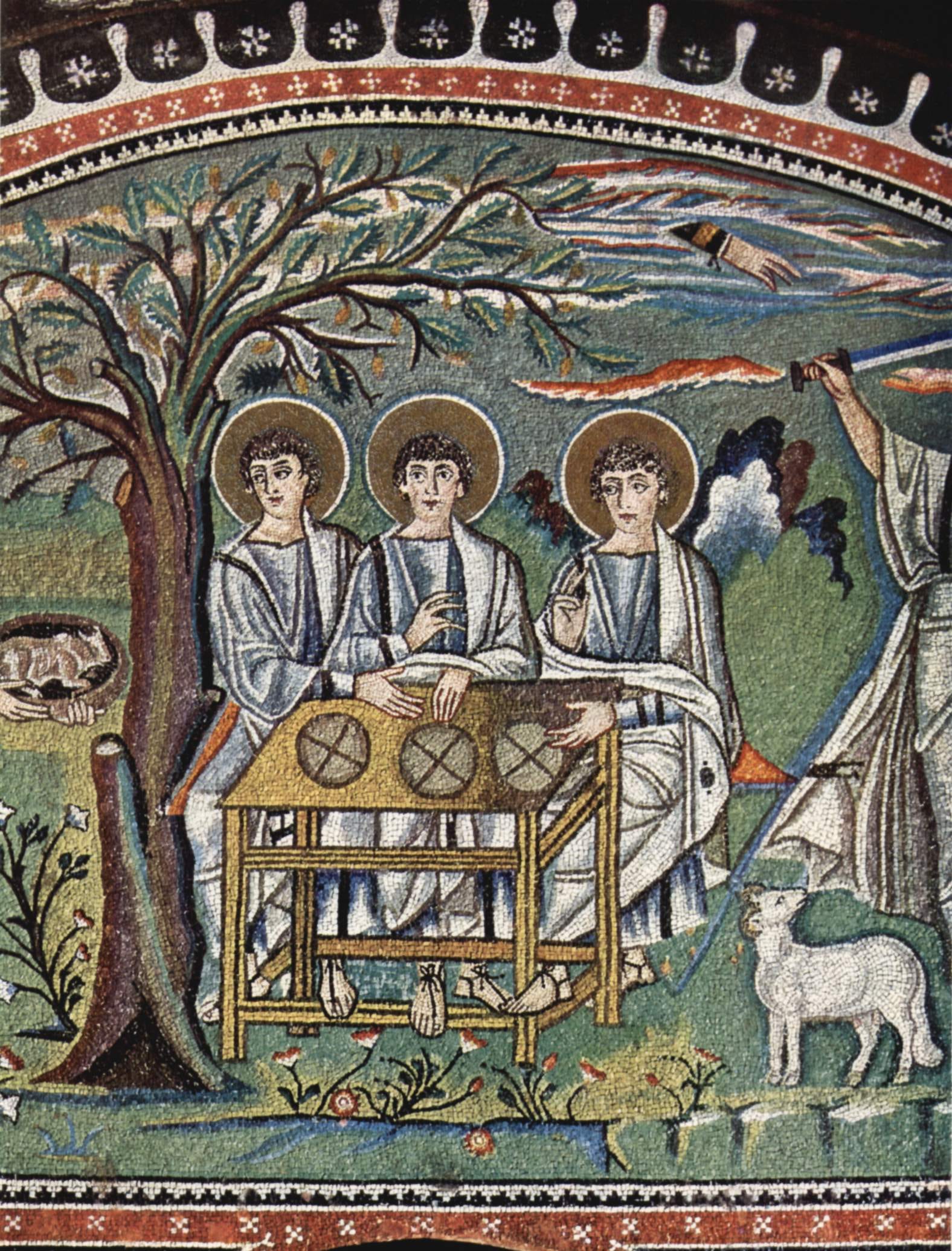
So, when the Old Testament repeatedly affirms the value of hospitality, in its events and teachings, we cannot dismiss it. Thus, the three angelic representatives of the Trinity only remained with Abram and Sarai because they received them with hospitality. Similarly, alone among the inhabitants of Jericho, the woman Rahab, despite being a Gentile harlot, was saved when Joshua and the Israelites conquered the city, precisely because she showed hospitality to the spies of Israel and sheltered them from the king. As St. Paul taught, “By faith Rahab the harlot perished not with the unbelievers, receiving the spies with peace.” (Heb 11:31)
Likewise, by his hospitality toward Raphael (disguised as the man Azariah), Tobias son of Tobit, who did not know at the time that he was “one of the seven, who stand before the Lord” (Tobit 12:15), was rescued from the devil, when “the angel Raphael took the devil, and bound him in the desert of upper Egypt.” (Tobit 8:3) This is why hospitality is repeatedly extoled in the New Testament, including in our epistle for today and elsewhere, as when St. Paul, perhaps recalling the hospitality of Tobias, reminds us, “And hospitality do not forget; for by this some, being not aware of it, have entertained angels.” (Heb 13:2) The grace of Christ enables us to fulfill and obey the law, as He did, not to ignore it.
One of the starkest reminders of the godlessness and barbarism of modern society is its total lack of hospitality and the related virtues of good manners, respect and deference, virtues which were once ubiquitously taught to children and expected of adults. People today are taught that they and everyone else are only animals, clumps of cells floating in a void, with no meaning or value beyond their productivity or popularity, so why should they be hospitable to anyone? This is why people who work in the service industry, teaching or other jobs dealing with the public – of any age – find their work so miserable and unbearable, all while often treating customers and those around them with just as little dignity as they are treated.
If we truly want to rechristen the culture, to return society to Christ, we must recover authentic hospitality and all its related virtues. This does not, nor has it ever, meant being a doormat, ignoring any offences people commit simply to look good or maintain proprieties; people often use this excuse for not being well-mannered, but they and their hearers know it to be a mere cop-out. Instead, we should treat others with respect - and expect respect from them in turn. This is how you foster a true culture of hospitality, correcting the excessively casual, animalistic and childish culture we live in today.
May we obey St. Peter’s exhortation, to “conduct yourselves with reverence during the time of your sojourning”, so that we may be enabled to see Christ in the breaking of the bread.
Join the Fellowship at Saint Tolkien!
Thank you for taking the time to write this. Hospitality for our little parish has been on my mind lately. Your timely article was just what I needed to read.