

*I originally began writing this as one article, but the length of it became too great, and so I decided to break it into three articles. Perhaps that will make it more digestible and able to be prayed with.

The Beatitudes
In the early pages of the Gospel according to St. Matthew, Our Blessed Lord delivers the Sermon on the Mount. He begins this discourse with what have come to be known as the Beatitudes. Our Lord teaches us:
“Blessed are the poor in spirit, for theirs is the kingdom of heaven.”
“Blessed are those who mourn, for they shall be comforted.”
“Blessed are the meek, for they shall inherit the earth. “
“Blessed are those who hunger and thirst for righteousness, for they shall be satisfied.”
“Blessed are the merciful, for they shall obtain mercy.”
“Blessed are the pure in heart, for they shall see God.”
“Blessed are the peacemakers, for they shall be called sons of God.”
“Blessed are those who are persecuted for righteousness’ sake, for theirs is the kingdom of heaven. Blessed are you when men revile you and persecute you and utter all kinds of evil against you falsely on my account.” Matthew 5:3-11.
Contained in these words is a roadmap of the interior life. The Spiritual Masters cite the Beatitudes as evidence of both the Moral Life being evident as well as the growth of the Interior Life and movement from one stage to another. In order to reach union with God, each soul must ascend through the Ages of the Interior Life. As the soul ascends, it leaves behind the love of worldly things and turns its gaze to God. These ages are continually reaffirmed by all of the Spiritual Masters, even if they do not always use the same terminology. In general, the Ages of the Interior Life are:
The Purgative Way, or the Way of Beginners
The Illuminative Way, or the Way of the Proficient
The Unitive Way, or the Way of the Perfect
Between the first and the second, as well as the second and third ages, occur the Dark Nights of the Senses and Soul, respectively. These are times of great purification where our reliance on sensible and spiritual consolations is stripped from us so that all we rely on is God.
This journey of the Interior Life is ordered toward fulfillment of the Greatest Commandment: “Love the Lord your God with all of your heart, and with all of your soul, and with all your mind.”1 The beauty of this commandment is that, where the other commandments tend toward a limit to fulfillment, the first and greatest commandment is a commandment without limitations. How does one love the Lord with our entire being and finally come to a point where we have satisfied the commandment? The others are more or less able to be satisfied by restraining ourselves from the sins they proscribe or, in the case of the third and fourth, giving due worship and honor to God and parents, respectively. But the first commandment is a love of God without limitations and one that can only be perfectly realized at the height of the ascension of the Ages of the Interior Life. Full maturation of these ages is realized in perfect union with God, that is, Deification of the soul. It is in this Beatific Vision of the Divine Essence that the first commandment is finally fulfilled to its perfection.
To this end, the Beatitudes lift the soul to union with God and are the evidence of an ever-maturing interior life, one that begins in fleeing from sin and culminates in contemplation of the Divine and union with Him.
The Beatitudes of Deliverance from Sin
We begin in the purgative way with deliverance from sin. It is fitting that we begin here, since union with God is the end to which we are directed, and that end can only come through an infusion of Charity, and with that Charity being perfected over a long and arduous journey. The Beatitudes, in sum, are an ascent to the Beatitude or Happiness of heaven. This can only be secured through first fleeing from sin and uprooting it from our souls. With the rooting out of sin, our Charity is slowly perfected. St. Thomas teaches us that there is a threefold perfection of Charity. The first perfection is possible only to God, as He is the only one who can love Himself as much as He is lovable. The second perfection is possible only for the creature in heaven, as it is a movement of the affective faculty tending toward God as much as it possibly can. The third, however, is possible in this world. St. Thomas says:
The third perfection answers to a totality neither on the part of the object served, nor on the part of the lover as regards his always actually tending to God, but on the part of the lover as regards the removal of obstacles to the movement of love towards God… Such perfection as this can be had in this life, and in two ways. First, by the removal from man’s addictions of all that is contrary to charity, such as mortal sin; and there can be no charity apart from this perfection, wherefore it is necessary for salvation. Second, by the removal from man’s affections not only of whatever is contrary to charity, but also of whatever hinders the mind’s affections from tending wholly to God. Charity is possible apart from this perfection, for instance, those who are beginners and in those who are proficient.”2
This third perfection of Charity is done in two ways. The first is the most necessary for the spiritual life, and that is freedom from mortal sin. Mortal sin destroys the virtue of Charity in the soul and renders the soul dead in sin.3 Thus, removal of mortal sin is a necessary action for salvation, as Thomas says. The second way is through the removal of man’s affections from whatever could hinder his charity from tending completely to God. This means that there are things in this world that draw our affections away from God. They are not sinful per se, but they are distractions, and they can draw our affections away from He who ought to be loved completely.
This type of perfection is very hard, and it is not found in the beginner or in the proficient, but only in the perfect. This is why we must begin in the purgative way, or the way of beginners, with a fleeing from sin. This will begin to cleanse us from mortal sin, first, and then gradually remove our affections from worldly things so that we can give them wholly to God. These two ways given to us by St. Thomas must occur in order. We cannot hope to remove our affections from worldly things if we are not in a state of Charity first. Thus, we must flee sin as a beginner so that we can be perfected later.
To that end, we find the first three Beatitudes in the purgative way.
“Blessed are the poor in spirit, for theirs is the kingdom of heaven.”
We begin with the first beatitude, which is given to the poor. Our Lord exalts the poor in spirit against the worldly veneer of riches, goods, and honors put forward by the world as what constitutes happiness. Contrary to this, Our Lord moves His followers toward an embracing of poverty. This is done in three degrees:
The first degree is those who “are poor without murmuring, without impatience, without jealousy, even if bread should be lacking, and who work while placing their trust in God.”4 These are the ones who embrace the state of poverty that they providentially find themselves in. Even though they see people around them with a plethora of worldly riches, material possessions, or honors according to the world’s measure, they are not envious, and they do not covet what their neighbor possesses. Instead, they turn their gaze toward God and trust in His provision for their needs.
The second degree is those “who are more fortunate, have not the spirit of riches, pomp, and pride, but are detached from the goods of this earth.”5 These are the people who have been given more in this world but possess in themselves a detachment from worldly riches. This detachment leads to great works of charity out of love of God and love of neighbor. While Our Lord rightly warns that it is difficult for a rich man to get to heaven,6 He reminds His apostles that all is possible through God. This is because for those who embrace the spirit of this beatitude through a detachment from the world they will be saved.
The third degree “are they who will leave all to follow Christ, who will make themselves voluntarily poor, and who will truly live according to the spirit of this vocation. They will receive the hundredfold on earth and eternal life.”7
This more perfect degree is found in those who willingly give up their worldly goods according to the evangelical counsel of poverty and devote their lives to the mission of Christ. They are voluntarily poor because they know God will provide for all their needs.
This beatitude is most especially connected to the Gift of the Spirit called Fear of the Lord. Garrigou teaches:
“These poor are they who, under the inspiration of the gift of fear, follow the road which, though narrow at first, becomes the royal road to heaven, on which the soul dilates more and more, whereas the broad road of the world leads to hell and perdition.”8
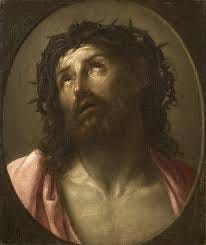
“Blessed are those who mourn, for they shall be comforted.”
This beatitude is given to those who suffer patiently with no consolation from the world. So many times, when suffering is given to us, we seek to find consolation in the things of this world instead of uniting our sufferings with those of Christ. This seeking out of worldly consolation is because our affections are tending toward material things in a disordered way. This keeps us from seeking God as our greatest love.
When suffering comes our way, we have an opportunity to pick up that cross and follow Christ.9 This does not mean that we will not mourn. With suffering comes mourning. But it is in the cross of Christ that we find consolation. Garrigou writes, “Blessed are they who, like the beggar Lazarus, suffer patiently without consolation from men, for their tears are seen by God. More blessed still are those who weep for their sins…”10
Tears of mourning, which are oriented toward contrition of sin, are greater still. This is connected to the Gift of the Spirit called knowledge. For through this gift we come to know that the greatest evil in this world is sin. Knowledge as a gift allows us to recognize that the things of the world to come are greater than those of this world and allows us to detach from this world. Thus, our mourning is less and less about the temporal sufferings that we experience and is oriented toward tears of contrition for sin. Thus, St. Catherine of Siena tells us that:
“Blessed are those who weep for love at the sight of the infinite mercy, of the goodness of the Savior, of the tenderness of the shepherd, who sacrifices Himself for His sheep. These receive even here on earth consolation infinitely superior to that which the world can give.”11
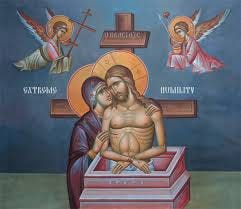
“Blessed are the meek, for they shall inherit the earth.”
The final beatitude in this section exhorts meekness and humility of heart. These humble of heart do not cling to the goods of the body or to reputation or to honor but seek only the Kingdom of God.12 The goods of this world inspire in man a love of this world and a disordered attachment to those things. This invites discord, envy, violence, and even war. This disordered attachment causes us to place these material goods, our reputation, some worldly honor, etc., above love of neighbor. Thus, meekness and humility are the antidote to these disorders.
The epitome of this is found in Our Lord on trial before the Sanhedrin. He does not open His mouth in defense of Himself. The rulers of the nation are attached to their reputations, and the power that they hold, and the coming of the Messiah challenges that. When they strike the Lord, He responds accordingly, “But I say to you, Do not resist one who is evil. But if anyone strikes you on the right cheek, turn to him the other also…”13 He lives this beatitude because He does not will to take vengeance on those who hate Him or to dominate those around Him. Nor should we.
This does not mean that we cower away from the truth or the salvation of souls:
“The meekness we are discussing is not that which does not offend anyone because it is afraid of everything; rather, it is a virtue which presupposes a great love of God and of one’s neighbor, the flower of charity, as St. Francis de Sales says. This meekness doubles the value of the service rendered. Moreover, it succeeds in stating the whole truth, in making counsel and even reproaches acceptable, for he who receives them feels that they are inspired by great love.”14
How many times do we wield the truth as a weapon of offense rather than love? This is not the meekness that Christ inspires. It is a veiled evil and only inspires hatred for the faith. Instead, we ought to be motivated by the Gift of the Spirit called piety, which enflames in us a love of God and a love of neighbor for God’s sake. Thus, “we do not judge rashly… do not see in their neighbor a rival to be supplanted but a brother to be helped, a child of the same heavenly Father.”15
This requires a supernatural meekness and a greater union with Christ: “Learn from Me, for I am meek and humble of heart.”16
Part II will cover the Beatitudes of the Active Life of the Christian…
For more from Dr. McGovern, visit his Substack at A Thomist, Dedicated to the Theological tradition of St. Thomas Aquinas. Exploring Thomas’ Spiritual Theology and topics in Christology and Mariology.
Matthew 23:37.
St. Thomas Aquinas, Summa Theologiae IIa-IIae, q. 184, a. 2.
Cf. Ibid. q. 24, a. 12.
Reginald Garrigou-Lagrange, The Three Ages of the Interior Life, Vol. I, 166.
Ibid.
Cf. Matthew 19:24.
Interior Life, 166.
Ibid.
Cf. Luke 9:23
Interior Life, 167.
Ibid. Cf. St. Catherine of Siena, Dialogue, chap. 89.
Cf. Interior Life, 166.
Matthew 5:39.
Interior Life, 167.
Ibid.
Matthew 11:29.
How long and arduous our journey is to God depends upon our willingness to surrender all. Ultimately, God is the one who strengthens us for avoiding sin. This strengthening happens after union with God. Without God, we are unable to sufficiently purge ourselves for avoiding sin. The fast track to God is to surrender all while we are in our weakened state; then, He does the purging with His peace that passes all understanding, as agape love enters into us.