

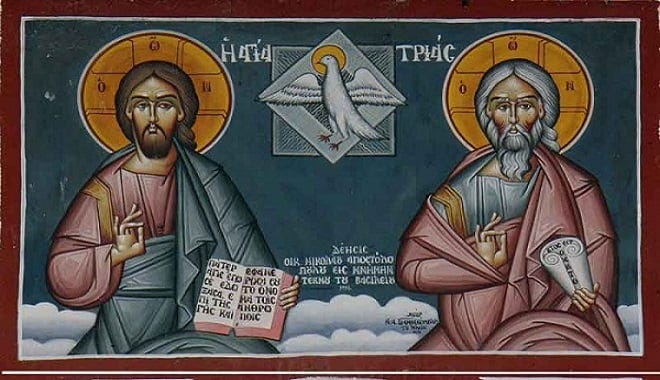
As we cross the threshold of the illuminative way to the unitive way, we come to the Beatitudes of the Contemplative Life, that of the pure of heart and the peacemakers. These two make fertile the soil of our souls for true intimacy with God and the greatest of the beatitudes, that of the persecuted.
“Blessed are the pure in heart, for they shall see God.”
We begin with the pure of heart. It is purity of heart that leads to the fulfillment of the promise attached, seeing God. It is not the powerful, the intelligent, those with great riches or influence in this world, that are promised the vision of God. It is the pure of heart. These devout souls may lack all manner of earthly goods and material wealth. They may not be endowed with great learning or even be able to explain the most basic theological tenet. But it is in their purity that they are most conformed to God and are thus granted the vision. This purity of heart is like a clear mirror in which the image of God is reflected.1
To attain this purity of heart, we must begin with a mortification of intention. We must remove the desire to be recognized by others for what we are doing and to only seek out the approval of God, who sees all in secret.2 God, then, becomes our only motivation. We seek His glory, and we love our neighbor for His sake. We then are able to see God in our neighbor, even in those who are opposed to God. We also begin to see God in all of the providential orderings of our lives, the good and, especially, in the trials. The pure of heart trust in God’s providence and welcome all manner of things, knowing that they are only ordered to their good.
The Gift that assists in this is Understanding. Garrigou speaks of this:
“Under the inspiration of the gift of understanding, this is the true contemplation which prepares us for that by which, properly speaking, we shall see God face to face, His goodness, and His infinite beauty. Then all our desires will be gratified, and we shall be inebriated with a torrent of spiritual delights.”3
Here, we see the beginnings of the grace of infused contemplation, that prayer in which God reaches down and raises the soul to Himself. Through this, the devout soul contemplates the mysteries of faith as an eagle would see while circling above the world. The devout soul sees the infinite beauty and goodness of God in these mysteries and in the world around him. The effect of this is unalterable peace.
“Blessed are the peacemakers, for they shall be called sons of God.”
It is here that the unalterable peace is brought about by abandonment to divine providence. Even those things which are painful and unexpected do not rob the devout soul of its rest in God. Docility to the Holy Spirit is found deep in the recesses of this beatitude, and peace radiates from the soul. This docility “gradually manifests to us the wonderful order of the providential plan even in those things, and at times especially in those things, which at first disconcerted us, in the painful and unforeseen events permitted by God for a higher good.”4
It is here that we see the Gift of Wisdom and its assistance in discerning the plan of God according to His providence. This gives us a peace that is not possible in the worldly sense. It is a peace that makes one a true child of God. This gift “makes us taste the mysteries of salvation and see, so to speak, all things in God.”5
St. Thomas comments on the relationship of these two beatitudes:
“And just as cleanness of heart disposes one to the vision of God, so peace disposes one to teh love of God, by which we are called and are sons of God; and thus it disposes one to the love of neighbor, because, for he who loves not his brother, whom he sees, how can he love God, whom he does not see? (1 John 4:20).”6
St. Thomas tells us that all of the preceding beatitudes can be reduced to these two.7 They are the effects of what has come before them. Poverty of spirit, mourning, and meekness lead to purity of heart. Justice and mercy lead to peace.8 These beatitudes are a type of bridge that leads one into union with God. This union can only be achieved through the virtue of Charity, which makes one like unto God. Of the theological virtues, faith apprehends God, hope reaches out for union with God, and Charity is that principle of unity with God. This is why Charity is most necessary for salvation. It is here, as a true child of God in Charity, that the devout soul comes to the most perfect of the beatitudes.
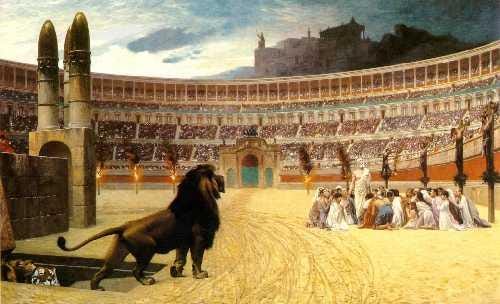
“Blessed are those who are persecuted for righteousness’ sake, for theirs is the kingdom of heaven. Blessed are you when men revile you and persecute you and utter all kinds of evil against you falsely on my account.”
All that Christ has taught up to this point in the beatitudes is confirmed in application borne with love, that is, persecution for the sake of righteousness. It is a promise, not of deliverance from current persecution, but of future happiness (beatitude) as a result of that persecution. It is here that we see the fullness of the command to take up our cross and follow Him.9
According to Garrigou:
“This is an altogether supernatural beatitude, which is practically understood only by those enlightened by God. There are, moreover, many spiritual degrees in this state, from that of the good Christian who begins to suffer for having acted well, obeyed, and given good example, up to the martyr who dies for the faith.”10
The devout soul has been elevated by God’s grace to an intimate union with Him, and thus, this enlightenment from God allows them to experience hatred, persecution, slander, and all the rest with unalterable patience and forgiveness toward their persecutors. They remain humble, meek, and merciful, in the image of Christ crucified in the most perfect sense.11 Additionally, the devout soul is conformed to the Mother of Sorrows, who, though she did not undergo a bodily martyrdom, tasted a spiritual martyrdom at the foot of the cross. This is the full perfection of the Christian Life, to be conformed to Christ crucified and His most sorrowful Mother. “It is realized especially in the last trials undergone by the perfect souls which God purifies by making them work for the salvation of their neighbor.”12
This conformity to Christ crucified is indicative of the unitive way of the Interior Life. It is a continued perfection of Charity and the prelude to eternal life.
Conclusion
It is the position of St. Thomas and Fr. Garrigou-Lagrange, along with the other spiritual writers, that the beatitudes are the superior acts of the virtues perfected by the Gifts of the Spirit and belong to the mystical order.13 They are in the normal order of human perfection and spiritual life. This means that the beatitudes are not a lofty, transcendent impossibility for the majority of Christians. They are the norm that Christ has called all to as a general and universal call to holiness. They are the normal prelude to eternal life through the perfection of Charity.14
St. Teresa of Avila writes:
“If a soul loves honors and temporal goods, it is in vain that it will have practiced prayer or rather meditation, for many years; it will never advance very much. Perfect prayer, on the contrary, frees the soul from these defects.”15
contrary, frees the soul from these defects.”
This great saint and mystic is saying that without perfect prayer, we will never reach the perfection of Christian life. This is why the beatitudes begin with a fleeing from sin and move to a doing of the good, inspired by love of God with our whole heart. From there, contemplation, ie, the beginnings of perfect prayer, is begun and followed toward intimacy with God. This is the normative path through the ages of the interior life to union with the Divine in heaven. We detach from the love of honors and temporal goods and move toward perfect prayer and love of God above all things.
This is the spiritual life that all are called to. “The beatitudes show it to us, not in an abstract and theoretical form, but in a concrete, practical, and vital manner.”16
For more from Dr. McGovern, visit his Substack at A Thomist, Dedicated to the Theological tradition of St. Thomas Aquinas. Exploring Thomas’ Spiritual Theology and topics in Christology and Mariology.
Cf. Interior Life, 169.
Cf. Matthew 6:4.
Interior Life, 170.
Ibid.
Ibid.
Commentary on Matthew, C. 5, L.2, 436.
Cf. Ibid. 437.
Cf. Ibid.
Cf. Luke 9:23.
Interior Life, 171.
Ibid.
Ibid.
Ibid., 172.
ST IIa-IIae, q. 184, a. 2.
The Way of Perfection, chap. 12.
Interior Life, 173.