
St. Anthony the Abbot
Saturday, January 17th Readings Reflection: Memorial of Saint Anthony, Abbot

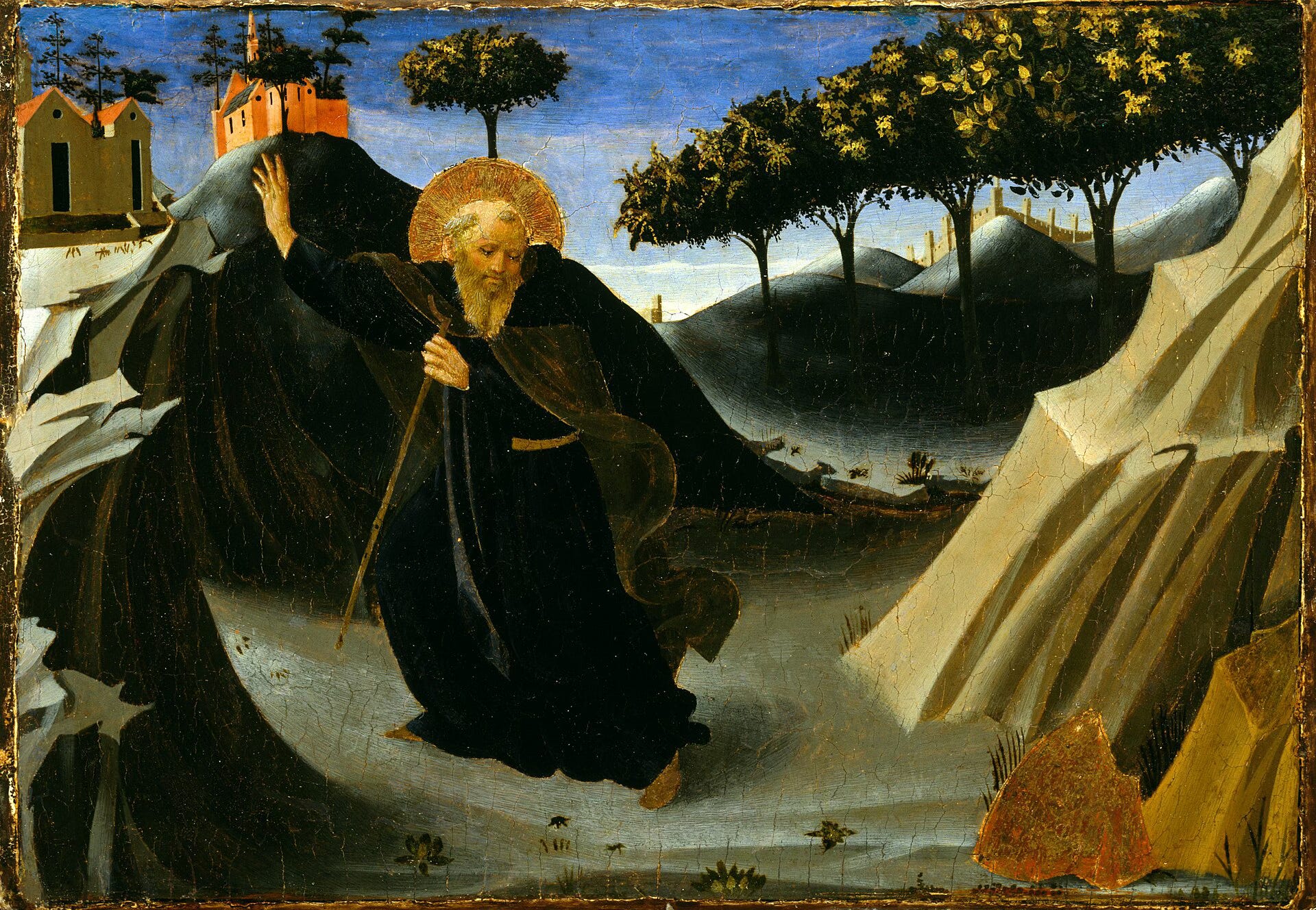
Today is the Feast of St. Anthony the Abbot (also known as the Great). He is distinct from St. Anthony of Padua, whom we invoke every time we lose something, but he nonetheless is an important saint in the history of Christianity. St. Anthony the Abbot, who lived from circa 250-356, is honored as the Father of Christian monasticism.1
We are blessed to have a biography of St. Anthony written by St. Athanasius, who knew St. Anthony personally. In his Vita Antonii, St. Athanasius describes his fellow saint’s great virtue and love for God: “That he was everywhere known, admired and desired by everyone, even those who had not seen him, is a sign of his virtue and God-friendly soul. In fact, neither for writings nor for a profane wisdom nor for any capacity is Anthony known, but only for his piety towards God—and no one could deny that this is a gift from God” (Vatican News).
St. Anthony the Abbot lived most of his long life as a hermit in the desert, devoting himself to prayer and penance. People were drawn to this holy man in the desert, and at one point, they broke into his hermitage to see him. Some of these people were so struck by this humble, holy hermit that they stayed to learn from his wisdom. This was the first monastic community in the Church’s history, although the men lived more as what we would today call hermits, living separately rather than as a community.
At one point, St. Anthony ran away from his community by night, fearful that he might succumb to pride or that his followers would love him more than God (Catholic Online). He knew that it was not himself who drew these men into the desert to share his life of prayer and penance but God, Who alone gives such a life meaning and eternal purpose. For the last forty-five years of his life, St. Anthony would leave his hermitage when necessary to preach and teach, especially to help fight the Arian heresy. Through his work opposing this heresy, he encountered St. Athanasius, who later wrote the aforementioned biography about him.
The hiddenness of St. Anthony’s life as a hermit can seem strange and even meaningless to those without faith. However, our faith tells us that a life lived for God is the most perfect way to spend our time here on earth. This world is merely our ship and not our home, as St. Therese tells us, and St. Anthony spent his long life on earth constantly seeking to live out the Gospel in radical new ways every day, so that he might grow in virtue and overcome vice. In the barrenness of the desert, he often physically encountered the devil, who treated the saint quite terribly. Yet, despite the hardships of his life, St. Anthony never once questioned his calling, instead dedicating himself even more to living out the Gospel.
May St. Anthony pray for us, that we too might be willing to leave everything behind that keeps us from fully loving and following Christ.
This is distinct from St. Benedict, who is the Father of Western monasticism.
What a beautiful meditation on this great north African Saint, the Kingdom is Vast.....
https://open.substack.com/pub/frcharalambos/p/life-as-a-pilgrimage-for-the-love?utm_source=share&utm_medium=android&r=26w20k
Grace and peace to you! HAPPY FEAST.....
https://substack.com/@robertcculwell/note/c-201042626?r=26w20k