
Of Jonah and Prefiguring Christ
Gospel Reflection for Wednesday, February 25th, 2026

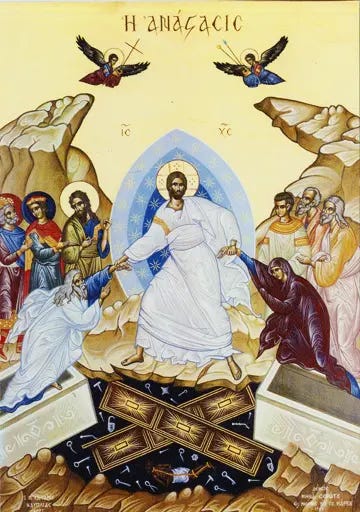
“While still more people gathered in the crowd, Jesus said to them, “This generation is an evil generation; it seeks a sign, but no sign will be given it, except the sign of Jonah. Just as Jonah became a sign to the Ninevites, so will the Son of Man be to this generation. At the judgment the queen of the south will rise with the men of this generation and she will condemn them, because she came from the ends of the earth to hear the wisdom of Solomon, and there is something greater than Solomon here. At the judgment the men of Nineveh will arise with this generation and condemn it, because at the preaching of Jonah they repented, and there is something greater than Jonah here.” Luke 11:29-32.
In the Old Testament, God tells man what He is going to do in the New Testament; the New Testament is God doing what He told man He was going to do in the Old Testament. There is a common danger these days to attempt to separate these two testaments as if they are autonomous entities with a merely accidental relation to one another, perhaps one of historical continuity alone. In reality, the Old and New Testaments are one book, a living covenant, with Jesus Christ as the subject, as St. Anselm said.
Today’s Gospel is a masterclass in the unity of the Old and New Testaments, with the connection of the prophet Jonah to Our Lord Jesus Christ. Our Lord, Himself, draws the biblical typology to the surface as He compares Himself to the prophet. As Jonah is a sign to the Ninevites, rising from the belly of the great fish, so too, with Christ, will be a sign to the people of His generation, rising out of the belly of the earth on Easter.
God, in His wisdom and providence, sent Jonah to the Ninevites for two reasons; first and foremost, it was to prefigure the Incarnate Son. The Incarnation was willed from all eternity as the means of redemption for the human race. So too was the prophet Jonah willed to go to the Ninevites, to run from his mission, and to “resurrect” out of the belly of the fish. Where Jonah fails in obedience, Christ is perfect in obedience. Where Jonah merely goes down into the belly of the fish and is coughed back up, Christ truly goes down into the belly of the earth, suffering a true death and descending to the place of the dead. He then resurrects triumphantly, with a true reunion of body and soul, glorified. Thus, the imperfection of the Old Testament figure, a shadow of the incomplete Old Covenant, is perfected in Jesus Christ, the fulfillment of the eternal New Covenant.
Thus, we have two signs. The Sign of Jonah, which calls the Ninevites to repentance. And the sign of Jesus Christ, which calls us to repentance. Will we be like the Ninevites and place ashes on our heads and fast for our sins, for we are an evil generation? Or will we be like the generation of Christ and allow the signs of the times to pass us by?
Lent is the time in which we take upon ourselves the spirit of the Ninevites and repent of our sins. During Lent, we are given this time of 40 days, just like they were,1 to prepare ourselves for the great Sign of Christ, the resurrection at Easter.
For more from Dr. McGovern, visit his Substack at A Thomist, Dedicated to the Theological tradition of St. Thomas Aquinas. Exploring Thomas’ Spiritual Theology and topics in Christology and Mariology.
Cf. Jonah 3:4.