
Humility: Gateway to the Virtues
Gospel Reflection for July 5, 2026 - Matthew 11:25-30

25 At that time Jesus answered and said: I confess to thee, O Father, Lord of heaven and earth, because thou hast hid these things from the wise and prudent, and hast revealed them to the little ones.
26 Yea, Father; for so hath it seemed good in thy sight.
27 All things are delivered to me by my Father. And no one knoweth the Son, but the Father: neither doth any one know the Father, but the Son, and he to whom it shall please the Son to reveal him.
28 Come to me, all you that labour, and are burdened, and I will refresh you.
29 Take up my yoke upon you, and learn of me, because I am meek, and humble of heart: and you shall find rest to your souls.
30 For my yoke is sweet and my burden light.
(Matthew 11:25-30 DRA)
In the Christian life, all of the virtues are important. The Old Testament incorporated the traditional Greek list of what are called the ‘cardinal virtues’: “And if a man love justice: her labours have great virtues; for she teacheth temperance, and prudence, and justice, and fortitude, which are such things as men can have nothing more profitable in life.” (Wis 8:7)
In the New Testament, the most important virtue is supernatural charity, the crown and perfection of all the virtues, which St. John equates with God Himself: “He that loveth not, knoweth not God: for God is charity.” (1 Jn 4:8) St. Paul also describes charity as greater than all the other virtues, gifts and charisms of the Holy Ghost in his great chapter-long reflection:
If I speak with the tongues of men, and of angels, and have not charity, I am become as sounding brass, or a tinkling cymbal. And if I should have prophecy and should know all mysteries, and all knowledge, and if I should have all faith, so that I could remove mountains, and have not charity, I am nothing. And if I should distribute all my goods to feed the poor, and if I should deliver my body to be burned, and have not charity, it profiteth me nothing. (1 Cor 13:1-3)
Despite all of this, however, it may be said that the greatest virtue of all – not so much in power or reward but as the access point to the whole virtuous life itself – is humility. This is why St. John Climacus taught, “Humility is the only virtue that no devil can imitate. If pride made demons out of angels, there is no doubt that humility could make angels out of demons.”
Similarly, in his repeated visions of demons who came to tempt and torment him, St. Anthony the Great, father of monasticism, noticed something unique about them: no matter what other attribute they took on, the demons had no knees. They couldn’t kneel because they have no humility.
Our Lord is the humblest man in history. From the beginning of His earthly life, His Incarnation itself was His greatest act of humility, alongside the Crucifixion: “For let this mind be in you, which was also in Christ Jesus: Who being in the form of God, thought it not robbery to be equal with God: But emptied himself, taking the form of a servant, being made in the likeness of men, and in habit found as a man. He humbled himself, becoming obedient unto death, even to the death of the cross.” (Phil 2:5-8) This is why He chose to ride into His great royal triumph on Palm Sunday on the foal of a donkey, one of the humblest of all animals, as prophesied in the first reading.
Everything about Christ’s earthly life, from His parentage to his origin in Galilee to his poor/working class upbringing, all demonstrate His infinite humility – none of which He needed because of sin but which He chose purely out of love for His Father and to provide an example for us.
Our Lady imitated and shared in the humility of her Son, as shown by her great Magnificat: “And Mary said: My soul doth magnify the Lord. And my spirit hath rejoiced in God my Saviour. Because he hath regarded the humility of his handmaid; for behold from henceforth all generations shall call me blessed.” (Lk 2:46-48) This is also why Christ chose the humblest members of society to be His apostles – mere uneducated fishermen, those hated by others (such as a tax collector), etc. – just as God chose the least powerful people in the world (the Israelites) and their humblest members (younger sons, those with personal or social deficiencies, etc.) to be His Chosen People, His prophets, and His saints throughout the Old Testament.
In today’s Gospel, Christ exhorts His disciples to this same humility, to be one of “the little ones”. This doesn’t mean, of course, that wisdom and prudence aren’t virtues – as we saw above, God loves these virtues and Scripture repeatedly promotes them, as have the saints. But without humility, every other virtue becomes merely a signal for boasting and an emblem of pride, so that they are no longer true virtues at all.
Catholics today should remember this. No rank of office in the Church, no degree of education, no amount of accumulated wealth, no fame or popularity, no physical fitness or athletic accomplishment, no heroism in battle, no political status, no membership in a special interest group, no ethnic or cultural origin – no human qualification can give us access to the virtues or to holiness. Without humility, all of these become vain, empty, vacuous distractions from God, but with humility, all the other virtues are both made possible and perfected, so that we attribute all that is good to God, we rely entirely on Him, and our virtues become beacons of divine light, pointing to Him rather than to ourselves.
It may be that, if we are judged worthy of Heaven, we will see not only canonized saints enrolled there but also those of whom no one has ever heard except God: an impoverished father in Africa who worked himself to death to provide for his family and his church while living a virtuous life; a middle class Southern mother who prayed ceaselessly for her non-Catholic family’s conversion while struggling with her own temptations; a parish priest who went about his daily duties, cared for his spiritual children, and endured false accusations, mistreatment and temptations, all without acclaim or promotion.
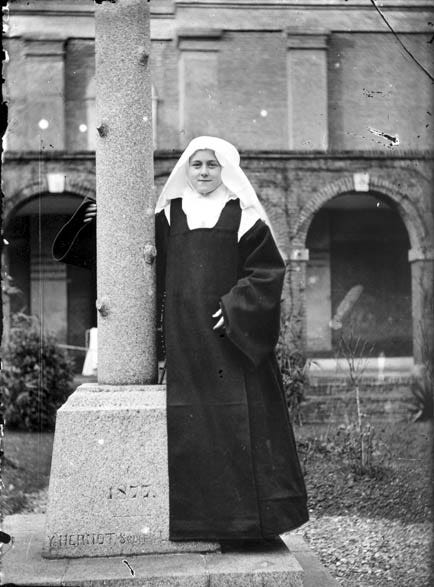
We may see these and others standing beside St. Peter, St. John Chrysostom, St. Thomas Aquinas, St. Padre Pio, and other great heroes of the Faith, representatives of the “Little Way” advocated and exemplified by the “Little Flower” St. Therese of Lisieux, who also knew how to avoid the grave sin of false humility:
It seems to me that if a little flower could speak, it would tell simply what God has done for it without trying to hide its blessings. It would not say, under the pretext of a false humility, it is not beautiful and without perfume, that the sun has taken away its splendor and the storm has broken its stem when it knows that all this is untrue. The flower about to tell her story rejoices at having to publish the totally gratuitous gifts of Jesus. She knows that nothing in herself was capable of attracting the divine glances, and His mercy alone brought about everything that is good in her.
Join the Fellowship at Saint Tolkien!
Thank you for sharing this excellent post on humility. I recently published a column on how to defeat your demons like a devout Catholic, and concluded by reminding ourselves that humility is key in the battle against Satan's forces.
"But without humility, every other virtue becomes merely a signal for boasting and an emblem of pride, so that they are no longer true virtues at all." So very well said Kaleb. Thank you for such a great reflection. God Bless!