
Your Biggest Conflict Is Inside You: How the Pressures of Life Shape Your Character from the Inside Out

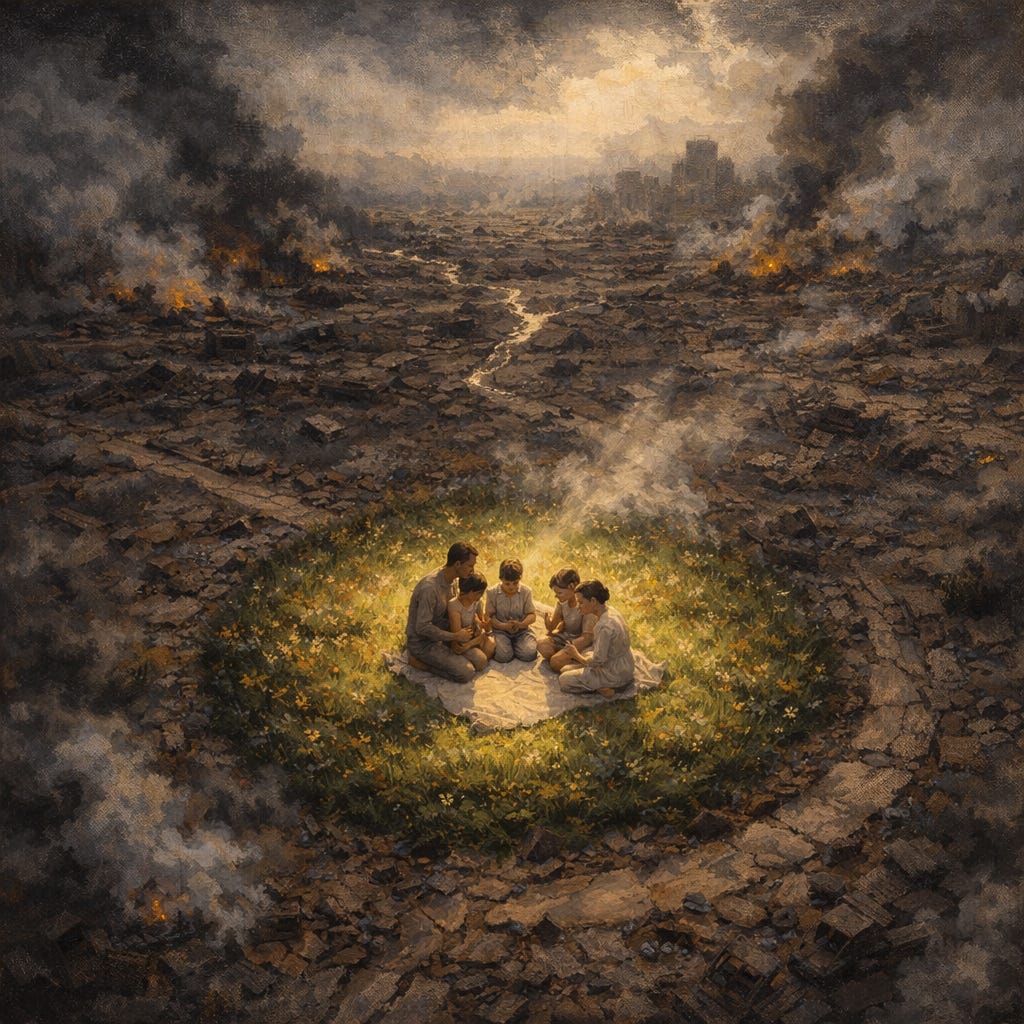
This morning I have heard or read the same word more times than I can count: “crisis.” Like many people, I live with a running list of concerns. I think about my young adult children—their faith, their choices, their safety, and their future. I think about whether they’ll stay close, if not by geography then at least by heart. I want them to like each other, to forgive each other, and when they are on their own to visit home happily. I think about my wife and me, and what happens when the house gets quieter and we’re left looking at each other across the table. I think about our health as we age, and my father’s health, and who will need what next. I think about work, inflation, taxes, the economy, the cost of everything, and the way politics and war and unrest loom. I think about friends who are struggling, and about stories I hear that I can’t imagine going through, and then I wonder: what if it were me or someone in my family? I think about where we’ll retire, where we’ll be buried, how we’ll pay for it, how we’ll help our kids start their lives. I think about what I don’t understand—artificial intelligence, viruses, toxins, supplements, what’s safe to eat, what’s hype, what’s real, what’s fear. Some days all these thoughts race for center stage.
That word “crisis” is usually reserved for the big things—war, unrest, collapse. But most days, crisis doesn’t arrive as one dramatic event. It arrives as ten smaller problems that show up. And even when today’s problems are manageable, part of you knows life is cyclical and fragile. There will be another round—another surprise expense, another diagnosis, another conflict, another tense conversation or even harder decision, and another stretch of uncertainty. It’s that low, steady awareness adults carry once they’ve lived long enough to know that some crises are loud and public but most are private and ordinary. Either way, this is the human condition: we live under pressure, and we’re trying to hold a life together while the ground beneath our feet keeps shifting.
But most days, crisis doesn’t arrive as one dramatic event. It arrives as ten smaller problems that show up.
We live inside a storm of words, images, and arguments. Some of it is true. Some of it is slanted. Some of it is designed to make you afraid so you’ll buy, vote, click, or hate. Meanwhile you still have to be a spouse, a parent, a son or daughter with aging parents, a neighbor, a worker, a person with limits and a body that gets older. You’re trying to do the right thing and you’re tired. You want peace, but you also want clarity. You want to be good, but you also want relief.
It’s easy to assume the biggest problem you face is the problem in front of you. We fixate on the external: money is tight, a child is drifting because of their choices, a marriage feels strained, grief has knocked the wind out of us, the country feels unstable. We tell ourselves that if we fix and eliminate the problem, then presto—the box is checked and we can move on. Those problems are real, and they demand attention. But the deepest danger is what they do inside you while you carry them. Pressure does not only test you; it shapes you. When your inner life loses its center, fear and ego begin to run the show, and you start making decisions from panic, pride, or escape. The same situation that could deepen humility and love can also harden you into suspicion, anger, and control. That is why the first work is internal: to notice what is forming you and to re-aim the will toward God and love. Your biggest problem is what your own mind is becoming in the pressure-cooker of life.
The Catechism teaches we are each responsible for our choices: “By his deliberate actions the human person does, or does not, conform to the good promised by God” (CCC 1700). In other words, your dignity is lived out in what you choose under pressure. With grace, those choices can grow virtue and help you refuse sin instead of being shaped by fear and ego.
By stating, “your mind is the main problem,” I don’t mean the problem is that you’re not smart enough or informed enough. I mean your mind is the part of you that interprets life and decides how you will respond—what you pay attention to, what you believe, what you fear, what you excuse, and what you choose. And the mind doesn’t sit in the middle as a neutral judge. It gets trained. Over time it learns a default way of reacting—toward humility and love, or toward self-protection and control—based on what you rehearse every day.
That’s why two people can live in the same house, watch the same news, face the same bills, and end up in two different moral worlds. One becomes more honest, humble, and steady. The other becomes more suspicious, loud, and cruel. It’s not mainly because they got different information. It’s because their inner life is pointed in different directions.
The strange power you carry every day
Human beings are not just intelligent animals. We are the kind of creatures who form ideas, not just reactions. We don’t only see what is in front of us; we can think about what is not in front of us. We can picture futures that don’t exist yet. We can ask “Why?” and keep pressing. We don’t just ask once; we keep chasing causes, meaning, purpose, and the whole of the thing until we either find a resting place or we get exhausted and shut down.
A dog can learn routines and read your tone. A computer can process patterns fast. But neither one wakes up at 2 a.m. thinking, “What is the point of my life?” Neither one feels the ache of guilt and the need to be forgiven. Neither one says, “I want my marriage to be good, not just functional.”
That’s not because we have bigger brains alone. There is more going on. The core of the human person is not made of matter. Call it “soul” if that word still works for you. I don’t mean a ghost floating inside a body. I mean the living center of a person—the part that knows, chooses, loves, and answers to God. Your body matters. Your brain matters. But your mind is not only chemistry. You can tell because you can step back from your own thoughts and judge them. You can say, “That idea is wrong.” You can say, “That desire is not good for me.” You can say, “I should not do that,” even when part of you wants it.
This power is vast. It can conceive truth. It can reveal truth. It can also hide truth. It can persuade. It can manipulate. It can heal. It can damage. And the more intelligent you are, the more dangerous you can become if love is not guiding you.
People tend to talk about “truth” today as a tool. They use it like a club. “My side has facts.” “Your side is propaganda.” We so often treat truth as a means to an end, not as something we owe reverence and obedience to. “Truth” becomes a weapon for winning, shaming, controlling, protecting status, or punishing enemies. It’s not pursued to understand reality; it’s deployed to dominate a conversation. But truth is not a club. Truth is meant to be light. Truth’s proper role is to reveal reality so we can live rightly—to clarify, correct, humble, and guide. Light doesn’t just expose others; it also exposes me. Light helps you walk without tripping. Light makes it possible to repent, forgive, and repair.
When truth is joined to love, it makes you more sure-footed, reliable, kinder, harder to bribe, and harder to scare. Truth should be carried by a moral aim: the good of the person, not the satisfaction of my ego. When love governs truth, truth becomes courageous and careful: it tells what’s real without enjoying the harm it causes. It seeks repair, not victory. When truth is separated from love, it becomes ammunition. Jesus says, “If you continue in my word, you are truly my disciples; and you will know the truth, and the truth will make you free” (John 8:31–32). When we stay close to his words, truth becomes more than information; it becomes liberation from the lies and habits that keep us trapped.
You’ve seen this in history. You’ve seen it in your own family. Entire nations have been led into cruelty because smart people twisted words and called it “truth.” Groups have used slogans and selective facts to justify hatred. Propaganda is not just lying. Often it is part-truth arranged to produce the wrong love. It aims the heart at the wrong target.
That same trick can happen in a home. A husband can take one true sentence—“You disrespected me”—and turn it into a whole false world: “You never honor me. You don’t care. I’m the victim. I get to punish you.” A wife can take one true sentence—“You hurt me”—and turn it into another false world: “You are unsafe and I can’t trust you. You always ruin things. I will protect myself by shutting down and despising you.” A parent can take one true sentence—“My kid is drifting”—and turn it into panic, control, or despair.
The mind is powerful enough to build whole worlds out of a few bricks. That is both your dignity and your danger.
The hunger that won’t leave you alone
Our desire for understanding is bigger than our capacity. We want to know enough to feel safe, settled, and sure. But reality is too large, and our minds are finite. We can gather real knowledge, but we can’t contain the whole of it. We don’t just want useful facts. We want full understanding. We want the deeper “why”—purpose, moral order, what’s good, what’s worth suffering for, and what we can trust when life feels unstable. We want a coherent account of reality, not a pile of disconnected explanations. This hunger is built into us.
You know this hunger. You see it when you watch people try to explain everything with politics, or money, or psychology, or “science,” as if one label can cover the whole of life. You see it when your own heart keeps asking, “Yes, but why?”
That hunger is a relentless human ache, and it is not a flaw. In modern life, this restlessness is usually framed as pathology: stress, anxiety, insecurity, and unrealistic expectations. “You want too much.” “You need to accept uncertainty.” But sometimes restlessness isn’t neurosis. Sometimes it’s the mind noticing it was built for more than temporary answers. It points to what you are made for. Desires aren’t random. They reveal orientation. Hunger points to food. Thirst points to water. And the mind’s desire for complete truth and lasting good points beyond finite things. St. Augustine famously wrote at the opening of his Confessions that God made us for Himself and the heart stays restless until it rests in Him. Augustine is naming the underlying condition behind a lot of modern misery.
If a person is made for God, then trying to settle the soul on lesser things will keep producing agitation—either loud (panic, rage, compulsions) or quiet (flatness, cynicism, low-grade dread). Augustine is describing the pattern: misdirected love leads to perpetual churn; ordered love leads to rest.
Even when you stop believing in God, you don’t stop seeking something like God. You look for perfect security. Perfect control. Perfect validation. Perfect pleasure. Perfect belonging. Perfect “being at home.” The mind keeps reaching for something that feels complete.
If you recognize your mind’s limits and you still keep reaching, you are already acting like a person made for more than the material world can supply. That pull you feel toward perfect truth, goodness, beauty, and love reveals your design.
This explains why modern life makes people anxious. We live in a world that gives us endless information but not enough meaning. We have endless opinion but little wisdom. The mind was made to seek truth, goodness, and love together. When you tear them apart, the mind gets sick because we attach our “final” hunger to substitutes (control, ideology, pleasure, identity, status).
Love is the guide.
Let’s talk about love, because we’ve cheapened the word.
Love is not primarily a feeling-state that comes and goes. Feelings can accompany love, but they don’t define it. Love is not chemistry or a vibe. It is not “I feel warm toward you.” If love is only a feeling, then I’m excused when I don’t feel it. Rather, love is something you do. It is a choice to seek the real flourishing of the other person—what helps them become whole and holy: truth, safety, dignity, growth, healing, virtue. Not what they want in the moment, and not what makes me comfortable. Love may comfort, but it also may confront. Love requires sacrifice—your time, ego, pride, convenience, comfort, money, control, the right to be petty, or the pleasure of ‘winning.’
Love is the governing capacity that orders everything else—reason, speech, strength, creativity—toward their proper end. It is the highest human power because it aims us outward. Love turns your attention away from self-absorption toward reality: God and neighbor. Intelligence without love becomes dangerous. Skill without love becomes manipulation. Strength without love becomes domination. The alternative to love is not merely “hate.” It’s inward collapse: self-preoccupation, self-protection, self-worship. True love breaks the prison of self. It makes real shared life possible: trust, mutual responsibility, forgiveness, truth-telling, sacrifice, loyalty—family life, friendship, church life, and a society that holds together.
Without love, society becomes a collection of individuals negotiating power. Without love, a home becomes roommates, rivals, or consumers of one another.
Here’s a simple test: when you say you’re “just being honest” and telling the truth, what are you trying to do to the other person? Are you trying to help them see and grow, or are you trying to corner them, shame them, or secure your position? The facts might be accurate and still be toxic. “Let us love one another… And this is love, that we walk according to his commandments” (2 John 1:5–6). In other words, love and truth can’t be separated: love has direction, and that direction is obedience. Love cleans the motive by tethering it to what is truly good. This keeps you dealing with a person, not an obstacle.
Your motives settle into habits. If you rehearse contempt, you will speak with contempt. If you practice repair, you will learn to repair.
How the mind breaks: vanity, false self, and the comparison trap
Now we need to name what damages the mind, because it is not only “bad people out there.” It is also the daily habits that form you in secret.
One of the most common ways the mind collapses is through vanity—not just the shallow kind, but the deeper kind where your image replaces your identity. You begin to live for how you are perceived. You manage impressions and you start editing your words, your opinions, even your emotions, so they represent your own personal brand. You measure your worth by reactions—approval, attention, respect, desire—and you fear the moment the social atmosphere shifts: the smile fades, the energy cools, the conversation moves on, the laughter doesn’t come, the praise doesn’t land, the group doesn’t affirm you, the person you hoped would notice doesn’t. Over time, life becomes reputation management. Other people become an audience. And you stop asking, “Is this true?” or “Is this good?” and start asking, “How does this make me look?” Your identity shifts from being rooted in God and truth to being built on perception.
The result is not confidence but emptiness. Because the false self is always hungry. It can never be filled. It is built on approval, and approval never lasts. That emptiness turns into shame. Shame turns into anger. Anger spills into the people closest to you.
The comparison game is a special kind of poison. It doesn’t only make you sad. It makes you resentful. It makes you suspicious. It makes you interpret life as an insult. It produces jealousy, ego-rage, and a low-grade hostility that spreads through a home.
Comparison deforms a person depending on what they most fear losing (status, security, control, relevance, hope). A man comparing himself to stronger men becomes bitter or reckless. A woman comparing herself to more “together” women becomes harsh or despairing. Parents comparing their kids to other kids become anxious and controlling. Grandparents comparing today’s world to the past become cynical and harsh.
Comparison turns gifts into grudges. Comparison corrupts gratitude. What should be received as gift (your life, your spouse, your children, your abilities, your opportunities) gets reinterpreted as evidence of unfairness. You stop seeing what you’ve been given and start tallying what you lack. A gift becomes a charge against God, life, or other people. It invites a kind of darkness because it trains you to see other people as threats instead of neighbors. Comparison produces entitlement. It trains you to believe you are owed something—respect, ease, admiration, comfort. Entitlement makes you angry when life is life. When you think you are owed, you become easy to manipulate. Anyone can steer you by pressing your sore spots—your sense of injustice, humiliation, or fear of being left behind. You’ll trade clarity for the feeling of being validated. This is how propaganda works. It doesn’t need to convince you of everything—only to activate your grievance so you stop thinking clearly.
When desire turns predatory: pornography as a case study
We also have to face the ways the mind is damaged by certain behaviors that people now defend as “normal.” Pornography is a clear example because it doesn’t just affect private thoughts. It trains a person to consume others. It trains desire to be selfish. It trains the imagination to separate sex from love, and the body from the person.
This damages marriages. Not only because of betrayal, but because it reshapes the mind. It makes real intimacy harder. It makes our attention shallow and produces less capacity for sustained, real presence because we are always reaching for stimulation and chasing a quick payoff. It makes people more isolated. Porn is solitary by design: it makes desire private, controlled, hidden, and self-directed. For many, it deepens depression and doubt because it produces shame and a divided life.
And it is not only a “men’s issue.” It is a human issue. It is about what kind of person you are becoming when nobody sees.
When the will is repeatedly bent under an addictive pattern, freedom shrinks. You still make choices, but your choices are weaker. You become less able to do what you know is right. That is what slavery looks like inside. Porn is one clear example, but it’s not the only one. The same shrinking happens with endless scrolling on social media, watching reels, smoking, alcohol-use, rage, shopping, food, and work—anything we binge or use as relief instead of facing life.
If you’ve lived that battle, you know it’s not solved by “try harder.” It is solved by a different kind of strength—humility, honesty, confession, help, a serious plan, and grace.
The real battleground: two directions inside you
Every day you are moving in one of two directions.
You can aim your life toward God, toward love, toward truth, toward the good of others. Or you can aim your life toward yourself—toward comfort, ego, dominance, and escape.
Those choices over time become habits, and habits become character. Character becomes destiny. Because destiny is less a sentence handed down and more a self you slowly become.
This struggle has long been known as the battle between the “old self” and the “new self.” You can call it the lower and higher self if that helps. The lower self is driven by basic cravings and ego needs: pleasure, control, praise, revenge, comfort. The higher self is driven by conscience, empathy, truth, justice, beauty, and the desire for God.
The lower self is not only about sex or food. It is also about pride. Pride is not mainly thinking you are great. Pride is living as if you are the center. Pride is refusing to be taught. Pride is refusing to repent. Pride is needing to win.
The first sin was not ignorance. It was self-centeredness. The human story began with a choice to grasp and define good and evil on our own terms. That choice wounded us. We still want God, but we want Him on our schedule. We still want goodness, but we want it without a cross. We still want love, but we want to stay in control.
That inner tension is why you can love your family and still snap at them. It’s why you can pray and still gossip. It’s why you can believe and still feel pulled toward despair.
This does not mean you are fake. It means you are human in a fallen world. You are a battleground.
And yes, there is more than psychology here. There is also temptation, which often starts as a small invitation to self-protection or escape. There is discouragement, which tells you to stop trying, to settle into the worst version of yourself, and to call it “realism.” There is accusation, which is not the same as conscience: conscience calls you back to the good, but accusation tells you you are the problem and can’t change. There are spiritual forces that love confusion and division and work through ordinary weakness. They don’t need you to become openly evil. They can do plenty of damage through small, repeated distortions—fatigue, irritability, self-pity, cynicism, simmering resentment, habitual distraction—until you become less free, less present, less loving, more reactive.
How change actually happens
Most people think transformation is a big emotional moment. They think if they really “get it,” they will change. But the mind doesn’t change because of insight. Insight matters, but it’s not the main engine of transformation. The mind—and the will—change the way bodies change: through repeated actions that become a pattern, then a habit, then a new default.
Real change is practiced. You don’t become patient because you now “get” patience. You become patient because you repeatedly choose patience when you don’t feel like it. You don’t become chaste, honest, courageous, or forgiving because you had a moving moment. You become that kind of person because you train—again and again—in the small moments where you’d rather react, justify, or escape.
Transformation isn’t a weekend event. It is a life.
Conversion means turning from the lower self’s disordered desires and learning to love what is actually good. It means learning to want the right things in the right order. It means letting your conscience regain its voice. It means admitting where you are weak. It means making peace with being a creature, not a god.
You cannot do this alone. The human person is made for dependence and communion—not self-sufficiency. We come into the world needing others. We mature through teachers, mentors, parents, friends, and communities. Spiritually, we’re also made to receive life from God. Trying to become holy by sheer willpower is like trying to breathe underwater. The design requires help from outside the self. God gives grace. He gives strength that is not you. Grace is God acting within you as an actual aid that heals and strengthens the will. You are not limited to your current willpower, personality, or emotional energy. You cooperate, but you’re not the sole engine. If your plan is ‘I will fix myself by trying harder,’ you will either become proud when you succeed or crushed when you fail. Grace keeps you humble and hopeful because the power isn’t just self-generated.
While grace strengthens the person from the inside, it does not erase your freedom. It heals your freedom so you can use it.
Why the faith is practical: concrete helps for a concrete struggle
Christianity offers much more than a path or call to “be a better person.” Our Christian faith is more than advice. It is a rescue and a rebirth.
God’s help comes in ordinary, physical, repeatable ways. It comes through prayer, yes. It also comes through the life of the Church: baptism, communion, confession, anointing in suffering. God meets us not only in our head, but in our whole life.
Baptism is not just a symbol of starting over. It is God’s claim on a person. It is cleansing and new life. It is the beginning of a new identity that does not depend on the image we project or our achievements.
Communion is not just a reminder. It is ongoing nourishment. Love isn’t an idea you adopt or a mindset you master. You can understand all the right concepts—about marriage, sacrifice, virtue, boundaries—and still fall short. The mind matters, but the will needs more than insight. Love has to be formed, and formation requires more than information. “Self-improvement Christianity” poses that the main problem is that we haven’t learned enough. The truth is, knowledge can point the way, but it can’t supply the power. We receive love. We receive Christ. It’s about God giving Himself. Through the sacraments and the Eucharist in particular, we are strengthened by a gift we did not create. That changes the will over time. It gives real peace and real courage because it feeds the soul with Christ Himself—strength you don’t talk yourself into and can’t fake.
Confession is simply bringing the real you—especially the messy parts—back into God’s care, instead of pretending. When you do wrong, you don’t heal by hiding. You heal by telling the truth, saying you’re sorry, and being forgiven.
It is the epitome of sanity or reality-based living. It is bringing what’s hidden into the light. Sin makes people distort, excuse, minimize, blame-shift, or double down. Confession is sanity because it ends the pretending. It puts you back in truth: I did it. It was wrong. I need mercy. I want to change. It is refusing the fake self. Confession isn’t only a one-time repair; it re-trains your conscience and your will. It forms habits: honesty, humility, responsibility, faster repentance, less rationalizing, more self-control. Over time it changes your reflexes. You learn to tell the truth about yourself without self-hatred. You learn to take responsibility without despair. You learn that God doesn’t just talk about mercy—He gives it.
And when suffering comes—illness, aging parents, grief, fatigue—anointing and prayer are not magic. They are ways of uniting pain to Christ’s own suffering, so pain does not become pointless or bitter. That does not erase grief. It changes what grief does to you.
All of this is aimed at one thing: strengthening the higher self—your capacity for truth, love, and goodness—and weakening the lower self’s grip.
Prayer as a reorientation
Prayer is much more than a religious duty. It is the daily re-aiming of the mind toward God. It is how you stop being driven only by the loudest voice in your head.
Some prayers are long and quiet. Some are short and blunt. Don’t underestimate the importance of the short ones. “Help.” “Lord, have mercy.” “Give me patience.” “Protect my family.” “Forgive me.” Short prayers may feel too simple for adult problems, which may be why some people dismiss them as if real spirituality requires polished words, long sessions, or the right emotional state. When we find ourselves experiencing profound pressure, the lower self tends to take over—panic, anger, control, escape, self-pity. These quick prayers interrupt that takeover. They re-aim the will toward God, conscience, and love so you respond instead of react. They don’t fix the whole situation, but they restore governance—they put the best part of you back in charge.
Prayer also forms intention. Most of us drift through the day ruled by whatever we want in the moment. But you can choose your aim. You can wake up and name it: I want to please God today. I want the good of others today. I want to become the person God made me to be today.
That kind of intention does not make life easy, but it gives your mind a north star. It makes you harder to manipulate.
Structured seasons of prayer matter too. Retreat. Silence. Reflection. Taking stock. This is a form of spiritual maintenance. If you never step back, you will be ruled by whatever is urgent. If you never get quiet, you will forget what you actually believe.
The virtues
A lot of people hear “virtue” and think “nice.” That’s not what virtue is. Virtue is strength shaped into goodness. Virtue is a trained power.
You need prudence, which is the ability to see clearly and choose wisely. Prudence is not “playing it safe.” It is reality-based judgment. It helps you sort good desires from bad ones.
You need temperance, which is the ability to say no to the lower self when it wants to run your life. Temperance is not self-hatred. It is self-government.
You need fortitude, which is the ability to endure discomfort for the sake of the good. Fortitude is not being tough and flexing your muscles. It is staying faithful when it demands something of you.
These are not personality traits you either have or don’t have. They are formed through repeated choices, and they are strengthened by grace.
This is how a person stops being controlled by outrage, lust, fear, or pride.
A word about politics and the mind
Politics can matter, but it cannot carry the weight we put on it. If you expect politics to give you meaning, you will become cruel or despairing. If you expect it to save your children, you will become frantic. If you expect it to be your moral compass, you will lose your compass.
The mind’s hunger for ultimate truth and ultimate good is not satisfied by an ideology. When it tries to be, ideology becomes a substitute religion. It demands total loyalty. It divides neighbors into saints and demons. It turns every conversation into warfare.
That kind of thinking leaks into your home. You start treating your spouse like an opponent. You start treating your kids like projects or threats. You start treating your parents like burdens. You stop seeing persons and start seeing positions.
The remedy is not ignorance. The remedy is order: truth under love, politics under God, opinion under humility. As Thomas Aquinas puts it in the Summa Theologiae, truth is “the conformity of the intellect to the thing.” In plain terms: truth is when the mind matches reality. That’s why politics can’t be your god and opinions can’t be your compass. If you lose contact with reality, you lose your footing. Order means keeping first things first. It is staying committed to reality, speaking truth with love and holding your opinions with humility. Politics needs to stay where it belongs: important, but not ultimate. You can have convictions without becoming possessed.
One practice you can do today
Tonight, before you go to sleep, sit down for five minutes in silence. No phone. No screens. Ask yourself three questions and answer them as honestly as possible.
Where did my mind move toward love of God and love of neighbor today, even in a small way? Where did my mind move toward self today—comfort, control, pride, escape? What is one concrete act of repentance and repair I will do tomorrow?
Then say a short prayer: “Lord, have mercy. Teach me to love. Give me strength to choose Your good.” If you need to make amends, do it within twenty-four hours. If you need help for a hidden sin, ask for help this week, not someday.
Small steps, done earnestly, start to change a person. That is how the higher self grows. That is how a home gets rebuilt—one unglamorous choice at a time, under the steady mercy of God.
Thad Cardine is the CEO of Shield Bearer Counseling Centers, a charitable ministry providing affordable licensed counseling to individuals and families who are struggling. He writes for Grow Grit & Virtue (In Pursuit of God) to help support Shield Bearer and provide scholarships for services. If you would like to read more articles by Thad, please visit his newsletter!
Mind - blowing Thad. Humbling. Thank you.
Thank you 😊!