

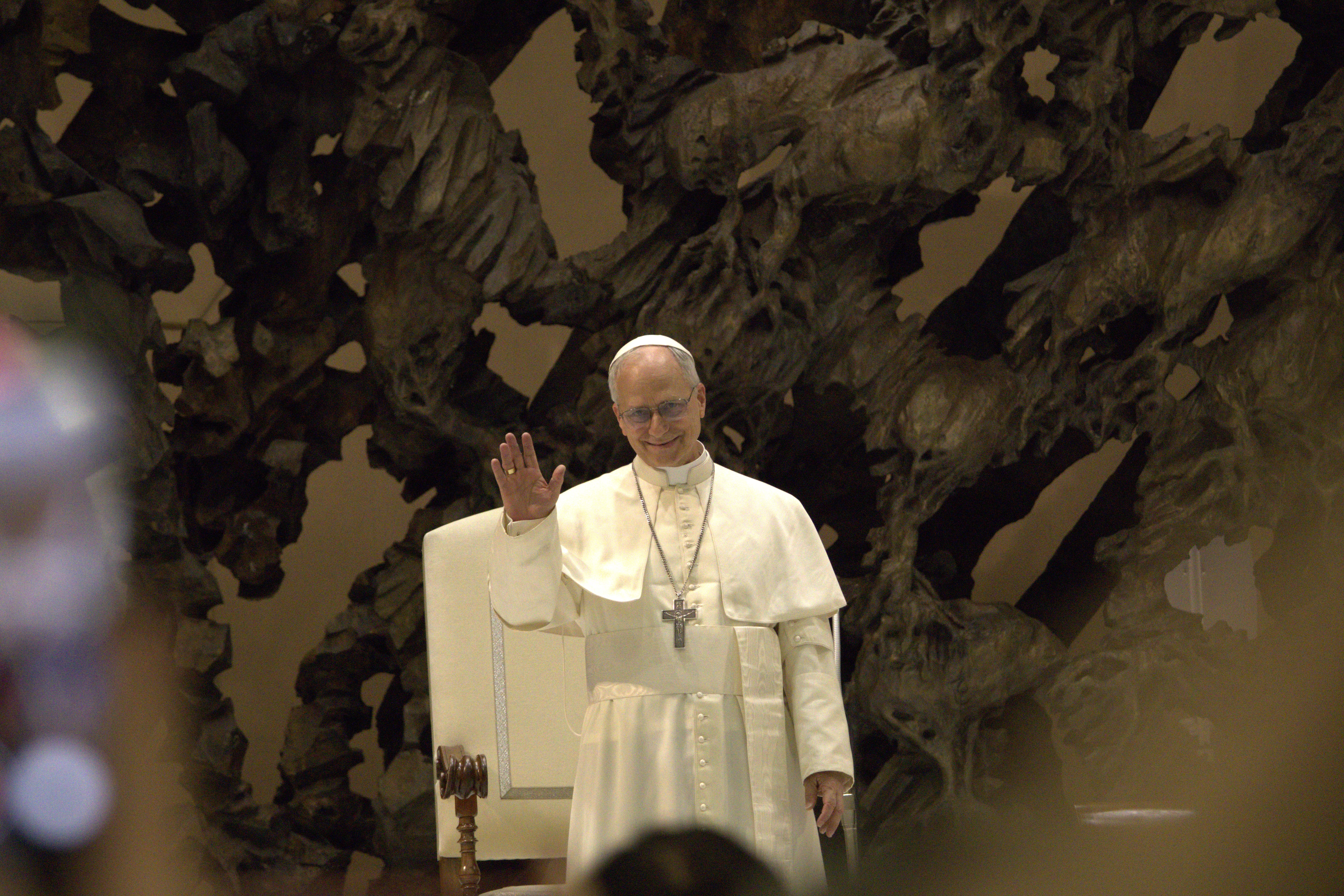
I recently had the honor of speaking with Adeline Khouri about Pope Leo XIV’s visit to Lebanon and her experience as she witnessed spiritual hope and healing for her country. Adeline is a Franco-Lebanese woman dedicated to sharing the profound beauty of Saint Pope John Paul II’s Theology of the Body (TOB), a certified member of the World Youth Alliance, and she teaches TOB internationally.
Jenny: I heard you speak about your incredible experience witnessing Pope Leo XIV’s historic visit to your home country of Lebanon, and the joy in your eyes as you spoke was utterly inspiring. We’d love to hear more.
Adeline: Thank you for inviting me to share my reflections. Pope Leo XIV’s visit to Lebanon was nothing short of a visitation of hope, an intervention of grace in a wounded land longing for renewal. For us Lebanese, the Holy Father’s presence felt like a breath of heaven entering a nation exhausted by economic collapse, political turmoil, mass emigration, and the lingering trauma of the Beirut port explosion one of the largest non-nuclear explosions in history. His visit came at an hour when many had stopped believing that anything could change.
Jenny: What did this visit mean for Lebanon as a country?
Adeline: Pope Leo arrived not as a distant leader, but as a disciple of peace, fully aware of the profound need for reconciliation in our region. His repeated appeals for unity, dialogue, and healing touched every community. In his speeches, he reminded us:
“Lebanon, you are called to be a beacon of coexistence and peace for the world.”
And to the youth he declared with fatherly fervor:
“Young people of Lebanon, become strong like the cedars and make the world bloom with hope!”
His words restored dignity to a people who have been silenced, discouraged, and forgotten.
Jenny: What was your personal experience at the Youth Gathering?
Adeline: I had the grace of joining the Youth Gathering with the Holy Father—an experience I will carry forever. Thousands of young people stood together, singing, crying, praying… and yet radiating an unexplainable joy. These are youth who have endured war, economic collapse, displacement, catastrophic explosions, loss of family members, and deep uncertainty about the future—yet they came with courage, music, and celebration.
At one moment, when the young people began chanting their love for Christ and for the Church, the Pope began to cry. Seeing the Holy Father in tears made me cry as well. It was as if he suddenly saw, with astonishment and tenderness, the faithfulness and heroic resilience of our youth. We were not a broken generation we were a resurrected one.
In that moment, I recalled the words from the Song of Songs:
“Come from Lebanon, my bride… come” (Song 4:8).
It felt like Christ the Bridegroom Himself was calling His Lebanese youth to rise, to come forward, to sing the Song of Love that is stronger than death.
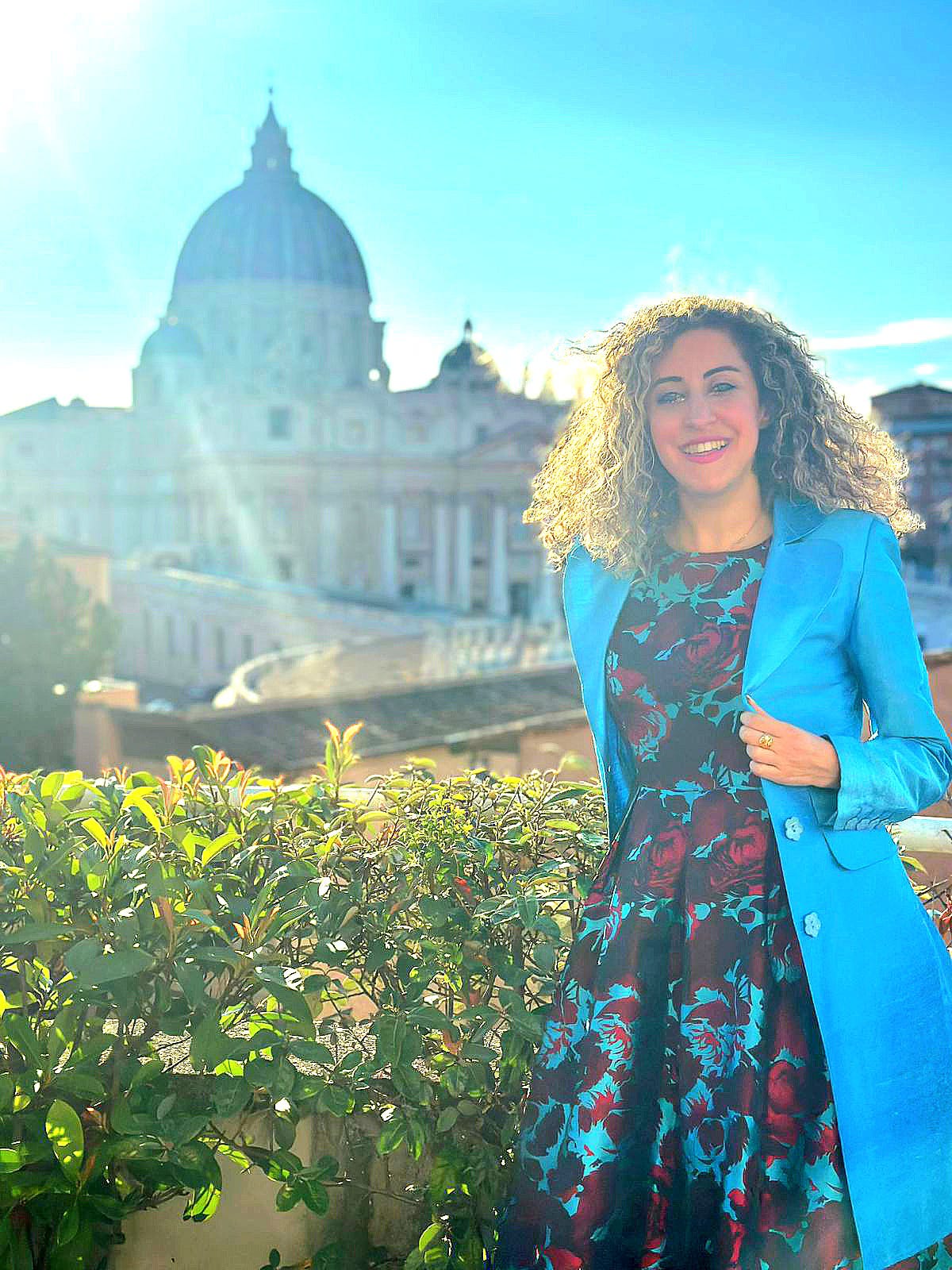
Jenny: Can you explain to us the meaning this visit had for your ministry: The Song of the Bridegroom
Adeline: For me personally, this visit was a divine confirmation of my mission and calling. My ministry, The Song of the Bridegroom, seeks to awaken in every person the thirst for the passionate love of Jesus the Bridegroom, who is singing His Song of Love to the world from Lebanon.
It’s a mission rooted in the Song of Songs—the great love poem of Scripture—which has been woven for centuries into Lebanon’s culture, spirituality, and Eastern liturgical tradition. Lebanon is, in a very real sense, “the land of the Song”: a place where the divine Bridegroom’s voice echoes through our chants, our poetry, our mountains, and our people’s vocation to communion and beauty.
The Pope’s presence affirmed that Lebanon is meant to sing this Song to the world, and that The Song of the Bridegroom is part of that prophetic mission. His presence affirmed that Lebanon still has a prophetic vocation: to be a place where the Bridegroom’s voice is heard… where reconciliation becomes possible… where the wounds caused by Original Sin—division, fear, suspicion—are healed by love.
His visit renewed my conviction that the Bridegroom is coming, and He desires His Bride the Church to learn to sing His Song again. When we sing with Him, we become one with God, and peace, unity, and harmony flow again into our land.
A sign from Heaven: the Rainbow
On the last day of the visit, a rainbow appeared above the Shrine of Our Lady of Lebanon in Harissa—the Bride from Lebanon. Later a rainbow appeared above the Mass in Beirut—precisely where the world’s third-largest explosion had devastated the city. It was as if Creation itself responded to the Pope’s presence.
For us, this rainbow was unmistakable. God was signing a new covenant with Lebanon: a covenant of renewed peace, abundance, reconciliation, unity, and hope.
It felt like the Father was saying, “I have not abandoned you. My promise still stands.”
Jenny: What impact did the visit have on the citizens of Lebanon?
Adeline: People who had lost all trust in institutions suddenly rediscovered trust in God. Hearts opened. Many returned to confession and prayer. Others who were planning to leave Lebanon decided to stay. Families testified to feeling “visited” and “seen” by the Church.
The visit transformed despair into expectation.
In summary, Pope Leo’s pilgrimage was a turning point for Lebanon and for me. It reawakened our national vocation and personally confirmed my ministry’s call to spread the Song of the Bridegroom from Lebanon to the world, inviting every person, especially the wounded, the forgotten, and the spiritually thirsty to encounter the healing love of Jesus through the Song of Songs. “Peace is much more than a mere balance… Peace is knowing how to live together, in communion, as reconciled people… A reconciliation … that will teach us to work together for a shared future side by side.” In 2025, Pope Leo XIV, in his address to the Eastern Churches, called them a “Song of Hope” for a world in spiritual crisis, echoing his message during his pastoral visit to Lebanon, where he urged us to guard our identity, rekindle our cultural and spiritual heritage, and offer it again to the world as a living testimony of hope. The Pope also said: “Your homeland, Lebanon, will bloom once again beautiful and strong like the cedar.”
As a Maronite Catholic and Franco-Lebanese woman, my mission is to bring this message to the Latin West: to bridge, unite, heal, and renew the quiet “divorce” between East and West by presenting Theology of the Body through the integrated lens of both traditions.
The Eastern tradition offers TOB a luminous vision rooted in:
• mysticism and beauty
• the language of desire
• liturgy as encounter
• the body as icon
• the heart as sanctuary
• healing as union with the Bridegroom
The Pope during his visit said:
“I think of the fragrance that rises from Lebanese tables, known for the variety of foods and the strong communal dimension of sharing. It is a fragrance made up of a thousand scents that strike by their diversity and sometimes by their harmony taken together. Such is the fragrance of Christ.”
For decades, the Latin Church has longed to rediscover the vibrancy, mysticism, and biblical imagination of the Eastern Catholic tradition.
With gratitude and hope,
Adeline Khouri
Adeline Khouri, Lebanon - Consultant & Board Member

Adeline Khouri is a Franco-Lebanese Theology of the Body (TOB) educator, coach, and advocate for human dignity and life. She teaches TOB internationally, offers personalized coaching, and collaborates with the Bureau Pastoral de la Famille Bkerke to lead initiatives in Lebanon, the Holy Lands, and the Middle East. As a consultant and Board member at TOB Educators, she develops content, organizes webinars and pilgrimages, and leads courses and retreats.
A member of the World Youth Alliance and a Pro-Life activist, Adeline is committed to fostering spiritual and emotional healing through the transformative love of the Bridegroom (she is a team member of Hope’s Garden). She is also a skilled life coach, trauma-healing facilitator, and multilingual speaker fluent in English, French, and Arabic.
With a background in civil engineering and experience in leadership coaching, youth mentoring, and international advocacy, Adeline bridges theology, personal growth, and mission, developing initiatives such as the Song of Songs pilgrimage in Lebanon to inspire renewal and hope.
