

Then Jesus came into the neighbourhood of Caesarea Philippi; and there he asked his disciples, What do men say of the Son of Man? Who do they think he is? 14 Some say John the Baptist, they told him, others Elias, others again, Jeremy or one of the prophets. 15 Jesus said to them, And what of you? Who do you say that I am? 16 Then Simon Peter answered, Thou art the Christ, the Son of the living God. 17 And Jesus answered him, Blessed art thou, Simon son of Jona; it is not flesh and blood, it is my Father in heaven that has revealed this to thee. 18 And I tell thee this in my turn, that thou art Peter, and it is upon this rock that I will build my church; and the gates of hell shall not prevail against it; 19 and I will give to thee the keys of the kingdom of heaven; and whatever thou shalt bind on earth shall be bound in heaven; and whatever thou shalt loose on earth shall be loosed in heaven. 20 Then he strictly forbade them to tell any man that he, Jesus, was the Christ.
(Gospel of St. Matthew 16:13-20 Knox Translation)
The readings for this Sunday, particularly the first reading and the Gospel, are two of the key passages (though certainly not the only ones) used in Catholic doctrine to define, and in apologetics to defend, the truth of the papacy, its prefigurations in the Old Testament (including the role of king’s steward), and its establishment by Christ. These passages, taken together with other significant verses and with the whole of the New Testament, make it undeniably clear that Christ did establish St. Peter and his successors as His vicar on Earth and the visible head of His Church, with the unique authority that would come to be defined dogmatically as papal supremacy and infallibility at the First Vatican Council.
Like the “Spirit of Vatican II,” all other ecumenical councils in history have had a “spirit” that followed after them that exaggerates, misunderstands, or misapplies what it taught – sometimes this comes from ambiguity intended by some of those involved in the council itself, as with Vatican II, and sometimes not, as with the Council of Chalcedon. Vatican I also had a “spirit” that followed it. Despite its clear intent to strictly limit the scope of the pope’s infallibility, applying only when he hands on what has already been taught or condemns errors that contradict Tradition and only when these rulings concern faith and morals and apply to the universal Church as a whole, many since Vatican I have taken papal infallibility to mean that everything the pope says and does is infallible, and even that the pope himself is impeccable, i.e. somehow incapable of sin.
This is obviously not at all what Vatican I meant to teach, but it has nevertheless become a popular and even standard view by Catholics ever since (something certain participants at Vatican I like St. John Henry Newman feared might happen if such a definition was made). Passages like those in our first readings and Gospel today are often used without proper explanation, according to the “spirit of Vatican I”, as though everything the pope says and does is absolutely binding and unalterable. The respect, honor, and consideration due to the pope’s “ordinary” or daily magisterium are often conflated with this exaggeration of Vatican I’s definition and Sacred Scripture’s Petrine proofs.
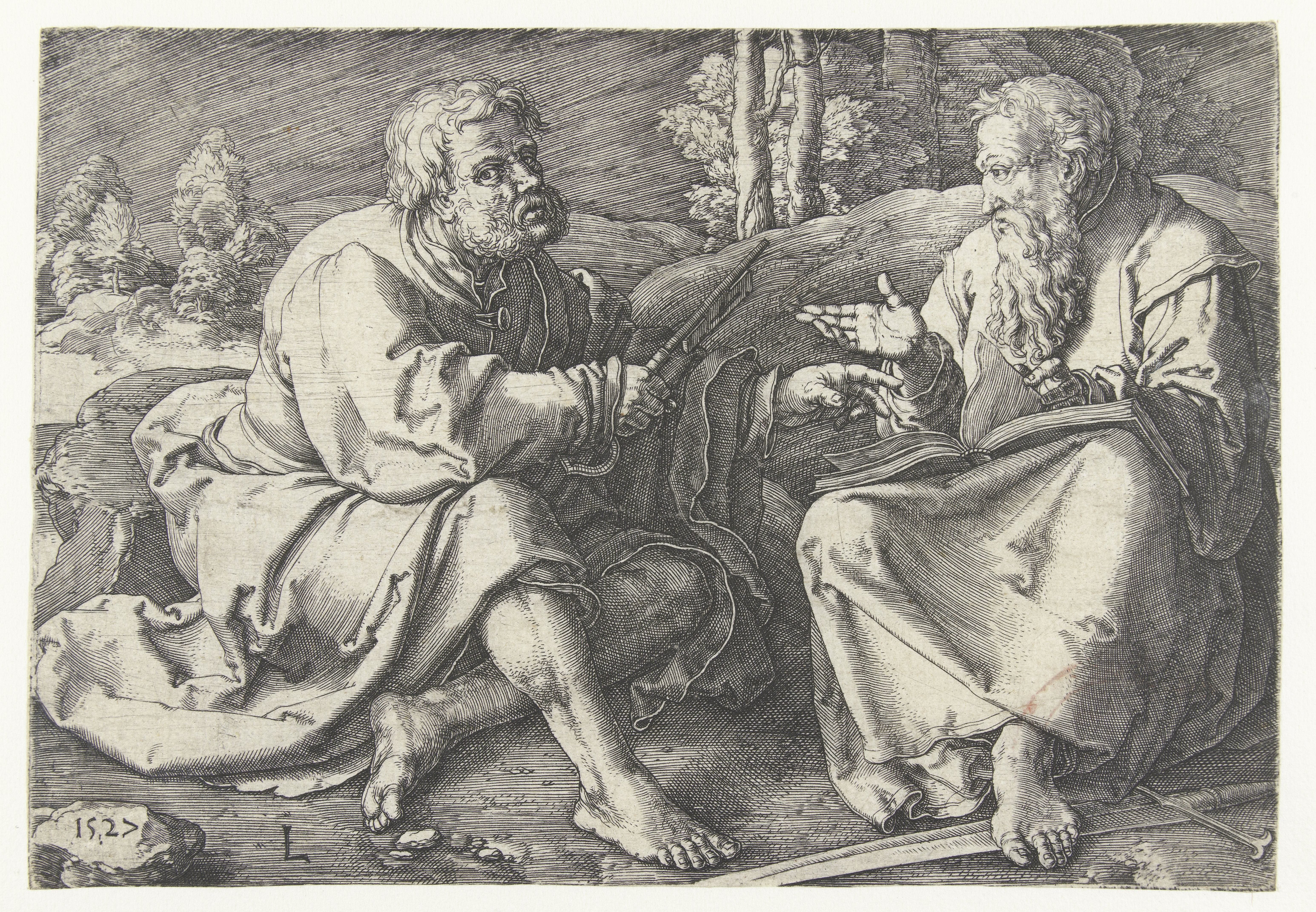
In truth, we can see from St. Peter himself that his authority was limited from the beginning; he was meant only to be a servant of Tradition and of the servants of God, not their Lord and Master, and the disciplinary and ordinary teaching authority he possesses, although superior to other bishops, is never infallible on its own. Indeed, immediately after today’s Gospel, Christ prophesied His Passion, and in response St. Peter “began remonstrating with him; Never, Lord, he said; no such thing shall befall thee.” But Our Lord didn’t take this particular statement of the first pope’s as binding: “At which [Christ] turned round and said to Peter, Back, Satan; thou art a stone in my path; for these thoughts of thine are man’s, not God’s” (Mt 16:22-23) St. Peter consistently makes error after error in the Gospels, culminating in his threefold denial of Christ that effectively made him a temporary apostate. What truly separated St. Peter from other leaders in Scripture and Church history was his humility; he recognized his own limits and freely admitted his sins, thus Christ permitted him to retain his office.
St. Paul also understood the limitations of St. Peter’s office. Although recognizing his special authority, as when St. Paul specifically asked to meet with the Holy Father in Jerusalem three years after his conversion (Gal 1:18), he also publicly corrected St. Peter for what was essentially an error of discipline, as St. Paul explains: “Afterwards, when Cephas [Peter] came to Antioch, I opposed him openly; he stood self-condemned. He had been eating with the Gentiles, until we were visited by certain delegates from James; but when these came, he began to draw back and hold himself aloof, overawed by the supporters of circumcision” (Gal 2:11-12). St. Peter caused scandal and became like “[t]he rest of the Jews [who] were no less false to their principles” (Gal 2:13), but St. Paul was merciful enough to correct him, and St. Peter was humble enough to accept his correction.
Why are these caveats important to note? Because as we said, the “spirit of Vatican I,” what Dr. Peter Kwasniewski calls “hyperpapalism”, is rampant in the Church today, and those who try, in charity, to correct the pope’s erroneous teaching, disciplines, or actions tend to be “canceled” rather than received with humility as St. Peter received St. Paul. It is just as important to accept the doctrine of the papacy as it is to recognize its limits, so that we will be true Christians, prioritizing Christ and the Tradition faithfully preserved by His Spirit in the Church for two millennia, instead of being subject to the whims, fashions, and accommodations of whoever happens to be pope today, which only weakens the authentic ministry of the pope and misleads Catholics and non-Catholics alike.
Melchior Cano, one of the greatest theologians in Catholic history and an expert at the Council of Trent, gave this pertinent warning:
Now one can say briefly what [those do] who temerariously and without discrimination defend the supreme pontiff’s judgment concerning everything whatsoever: these people unsteady the authority of the Apostolic See rather than fostering it; they overturn it rather than shoring it up. For... what profit does he gain in arguing against heretics if they perceive him as defending papal authority not with judgment but with emotion, nor as doing so in order to draw forth light and truth by the force of his argument but in order to convert another to his own thought and will? Peter does not need our lie; he does not need our adulation.
Join the Fellowship at Saint Tolkien!