
The Irony of Greatness: You Must Become Small

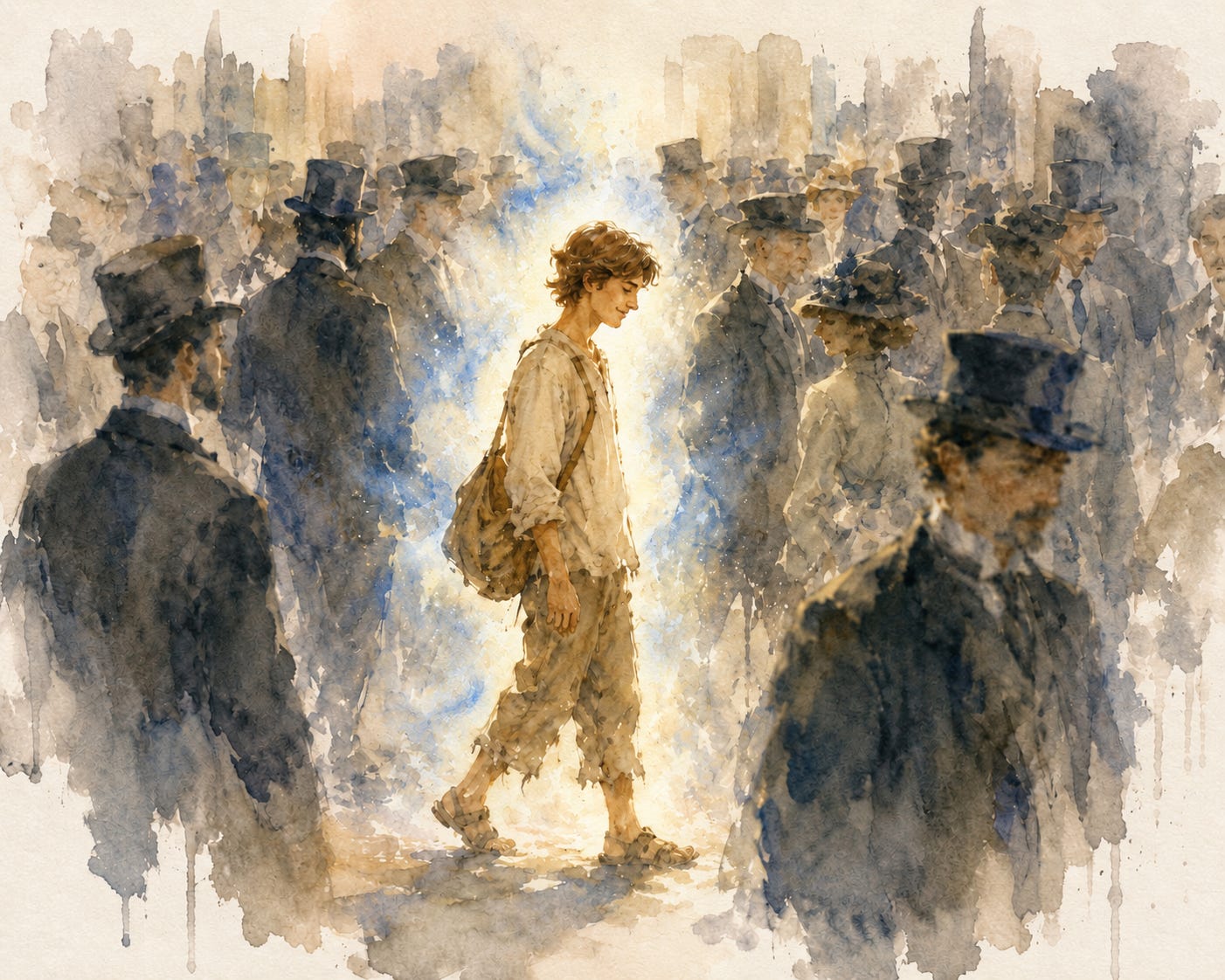
I recently sat in a room with several nonprofit and ministry leaders talking about growth, support, outreach, sustainability, and how to serve the people entrusted to our care. It was a good conversation filled with thoughtful people who genuinely wanted to do meaningful work in the world. But somewhere in the middle of that discussion, another thought slipped into my mind. It had less to do with growing organizations and more to do with the human heart itself. Beneath many conversations about success, influence, growth, recognition, and impact lies a deeper question that touches almost everyone.
A surprising amount of human pressure comes from trying to prove we matter more than other people.
Not because they are selfish in some cartoon-villain way. Most people are not twirling mustaches and dreaming of world domination. But underneath our exhaustion, jealousy, insecurity, and pressure to compare is the same hidden fear:
“What if my worth is not secure unless something outside of me confirms it?”
For some, it looks like a deep need for public affirmation. For others, it looks like a consuming need for self-protection.
You can see it everywhere these days.
We live in a culture that constantly tells us to build ourselves into something impressive. It tells us to become more successful, attractive, admired, influential, and impressive than the person next to us. It tells us to stand out, get ahead, and show only the version of ourselves that feels safe.
But here is the strange thing: much of what we assume about greatness is backwards.
A person can spend a lifetime chasing these things and still become smaller inside.
We are all looking for security, peace, and meaning.
So we instinctively seek those things through self-exaltation: proving ourselves, protecting our image, staying ahead of others, managing perception, seeking approval, hiding weakness, and accumulating wealth or status so we cannot be dismissed.
But the very strategies we use to secure ourselves slowly destroy the thing we actually want.
Trying to become untouchable makes us fragile.
Trying to become admired makes us restless.
Trying to become superior makes us lonely.
Trying to protect our image makes us dishonest.
Trying to prove our worth makes us empty.
And then comes the shocking reversal.
What we actually want is found not through self-exaltation, but through humility, surrender, dependence on God, and self-gift.
The constant need to prove yourself slowly shrinks the soul. When your identity depends on being admired, every criticism feels threatening. Every failure feels crushing. Every success of another person feels personal.
And into that exhausted, comparison-driven world, Jesus says something completely opposite to everything we naturally assume about greatness:
“For all those who exalt themselves will be humbled, and those who humble themselves will be exalted.”
— Luke 18:14
This is a completely different way of being human.
The strongest people are not those constantly pursuing superiority, but are those secure enough in God’s love to live with humble, active service and integrity.
The world says greatness means becoming the center of attention.
Jesus says greatness means becoming the kind of person who can love.
And then He says something even more surprising:
“Take my yoke upon you and learn from me, for I am gentle and humble in heart.”
— Matthew 11:29
Think about that for a moment.
Jesus, the Son of God, describes Himself as gentle and humble. The One who made the world does not brag. The One who has all authority does not strut around trying to impress people. The One who deserves all praise does not need human approval to know who He is.
He is humble.
That tells us something important. Humility is not weakness. Humility is strength.
Jesus’ idea of greatness is not the same as the world’s. In God’s kingdom, greatness means becoming the kind of person who can serve—defined by active love and selfless character.
When we talk about the Kingdom of God, we do not mean only heaven after death. We mean God’s reigning presence at work through Christ—His goodness, love, mercy, and power entering the world now and calling us into faithful participation. The kingdom is not only a future heaven; it is God’s life made present and active in ordinary human life. The Kingdom of God becomes visible whenever a person chooses God’s way over selfishness. It grows when someone forgives instead of seeking revenge, serves quietly instead of performing for praise, tells the truth instead of protecting an image, and chooses love when selfishness would be easier.
Our version of greatness usually asks, “How do I become more admired, successful, and important than other people?”
Jesus’ version asks, “How do I demonstrate love in a way that helps someone else rise?”
Our version is often built on comparison. Am I smarter? Better looking? More successful? More admired? More talented? More spiritual? More important?
Jesus’ version is built on love. Am I faithful? Am I honest? Am I merciful? Am I willing to serve? Am I becoming more like God in the way I treat people?
That difference changes everything.
A lot of pride actually comes from fear. Proud people often spend enormous energy trying to look important because they are terrified of being vulnerable and rejected. They compare themselves constantly. They keep score. They become emotionally dependent on external validation. Without that attention, they experience a profound sense of worthlessness and emotional depletion. Every criticism feels like an attack. Every success of someone else feels threatening.
Pride turns life into a contest.
Humility turns life back into relationship.
Jesus does not destroy our desire to do something meaningful with our lives. He cleans it up and redirects it. Wanting to make a difference is not wrong. Wanting to build something that lasts is not wrong. Wanting your life to matter is not wrong. Those desires can be very good.
But without God, those desires can bend inward. Greatness becomes about my reputation, my legacy, my influence, my success, my platform, my control. Even service can become a disguised form of pride if I use it to prove that I am needed, admired, or better than others.
Jesus changes greatness by changing three things.
He changes the motive. Instead of doing things to be praised, I learn to act out of love.
He changes the measure. Instead of asking, “Did people notice me?” I learn to ask, “Was I faithful to what God asked of me?”
He changes the method. Instead of climbing over people, I learn to give myself for people.
The same pattern appears when Jesus tells the story of two men in prayer at the temple: one is absorbed in comparison, the other stands before God in truth. The first is a Pharisee, a religious leader. He does many outwardly good things, but his prayer is full of self-praise. He thanks God that he is not like other people. He lists his religious achievements. He compares himself to sinners and thinks he is better than they are.
The other is a tax collector. Tax collectors were often seen as dishonest and morally compromised. This man does not come to God with a list of accomplishments. He does not brag. He does not compare. He simply stands before God and says:
“God, be merciful to me, a sinner.”
— Luke 18:13
We’re told this humble man, not the proud one, went home forgiven and restored before God.
Why?
Because humility sees reality clearly and stops pretending.
Humility is not pretending you are worthless. It is not hating yourself. It is not walking around acting timid or ashamed. Humility means seeing reality clearly. God is God. I am not. I am deeply loved, deeply valuable, and deeply dependent on Him.
Imagine a balloon that keeps getting puffed up bigger and bigger. It wants everyone to notice it. But the more it inflates, the more fragile it becomes. One sharp edge can pop it. Pride works like that. When a person builds their whole identity on a sense of competitive superiority and perfection, then one embarrassment, one failure, one rejection, or one criticism can feel like the end of the world.
Now imagine a little cup. A cup does not look impressive. It does not float above the room or demand attention. Humility is like that. A humble person does not have to appear bigger than everyone else. A humble person is open enough to receive help, correction, forgiveness, wisdom, and grace from God. The balloon expands itself but cannot receive. The cup stays small but can be filled.
A humble heart is open. It has room for God. Room to learn. Room to apologize. Room to grow. Room to receive correction. Room to love people instead of constantly competing with them.
That is real greatness.
Small things become great when they are done with love.
Humility calms the soul.
Pride exhausts it.
One of the biggest moments of understanding in the spiritual life is realizing how much anxiety comes from trying to control what only God can control. We try to control how everyone sees us. We try to manage our image. We try to guarantee success. We try to make ourselves important enough to feel secure.
But Jesus says:
“Blessed are the poor in spirit, for theirs is the kingdom of heaven.”
— Matthew 5:3
“Poor in spirit” can sound strange if you have not heard it explained. It does not mean worthless, miserable, and weak. It means knowing you need God. It means you stop pretending you are self-sufficient. It means you understand that your life depends on grace, mercy, help, forgiveness, and love.
To be poor in spirit is to finally say:
I need God.
I need grace.
I do not have to prove my worth every second.
I can be loved even when I fail.
I can be corrected without falling apart.
I can let someone else shine without thinking I have disappeared.
That is freedom.
Humility reminds us that we are loved by God, but we are not God.
Self-giving love seeks the good of the other person, even when there is no reward. It is not just being nice. It is not just having warm feelings. It is the love Jesus shows when He welcomes sinners, forgives enemies, feeds the hungry, washes feet, carries the cross, and gives His life for the world.
We have a God-centered purpose. We were not made to build little kingdoms around ourselves. We were made to love and serve God, and to let every other part of life find its proper place under Him. Our talents, friendships, work, ambitions, money, influence, and opportunities are all meant to serve love of God and neighbor.
When greatness gets separated from God, it easily turns into vanity, burnout, arrogance, control, and contempt for people who seem less useful or impressive. A person can outwardly appear to achieve the world’s version of greatness and still collapse internally, lose their peace, and neglect the hidden life of the soul.
That is why Jesus keeps pulling us back to the Kingdom.
“But seek first the kingdom of God and his righteousness, and all these things will be given you besides.”
— Matthew 6:33
To seek first the Kingdom means to put God first in the real places of life. Not just in religious moments. In your friendships. In your family. In your choices. In your habits. In the way you speak. In the way you use your phone. In the way you handle anger, embarrassment, success, failure, and temptation.
It means asking, “What would be faithful to God here?” before asking, “What will make me look good?”
That is how greatness is changed. It does not disappear in Christ. It becomes clean. It becomes properly ordered. It becomes love.
Instead of status, Jesus gives us service.
Instead of comparison, Jesus gives us relationship.
Instead of self-promotion, Jesus gives us self-gift.
Instead of ego, Jesus gives us love that builds His Kingdom.
And strangely enough, the people who stop trying to look great are usually the ones who become truly great. Not because they chased greatness, but because they became the kind of people others can trust, love, learn from, and rest around. That person becomes strong in the deepest way.
Prayer
Jesus, gentle and humble of heart, teach me how to stop living for external approval. Help me stop comparing myself to others and trying to prove my worth. Give me the courage to be honest about myself without fear. Teach me to become small enough to receive Your grace, wise enough to learn, and secure enough to love others without comparison.
Help me seek first Your Kingdom. Reorder my desires. Purify my ambition. Change my heart and how I measure greatness, and how I pursue it. Make me someone who builds Your Kingdom in the small places of daily life. Make my heart peaceful, teachable, faithful, and free. Amen.
Application
Pay attention today to the moments when pride starts rising:
Is there an argument I am determined to win, even if winning damages the relationship?
Is someone else receiving the attention, praise, invitation, or recognition I wanted for myself?
Has someone corrected me, and am I feeling offended, embarrassed, or defensive?
Do I feel ignored, overlooked, dismissed, or forgotten?
Am I trying to impress someone or manage how they see me?
Is there someone who needs help that I am intentionally avoiding because helping them feels inconvenient, uncomfortable, or beneath me?
Do I want credit, praise, or recognition more than I want to love well?
Instead of reacting immediately, pause and ask:
“What would humility do here?”
Then ask a second question:
“How can I love this person in a way that helps them?”
Let these two questions change your life.
Today, look for opportunities.
Help someone quietly and anonymously.
Apologize.
Let someone else get credit.
Listen without interrupting.
Sit with someone who feels left out.
Ask for help without pretending you have everything together.
Do one small act of service without needing it announced.
Then offer that hidden act to God.
Because the people most filled with God are usually not the ones shouting, “Look at me.” They are the ones humble enough to finally look at Him.
And that is the hidden irony of the spiritual life: the self that insists on becoming large enough to be secure is often the self that becomes small, while the self that becomes small before God is the self that finally has room to become great in love.
The world says, “Climb higher so everyone can see you.”
Jesus says, “Come closer to Me, learn humility, and love the people in front of you.”
And in the Kingdom of God, that is greatness.
Thank you for taking the time to read and reflect with me. I’m grateful to Missio Dei for the opportunity to share this piece and for their work in helping people think more deeply about faith, formation, and the life God calls us to live.
If this reflection stirred something in you, I’d love to have you join me at my Substack, Grow Grit and Virtue, where I write about faith, family, virtue, mental health, and the slow work of becoming more fully alive in Christ.
Thad
"Because humility sees reality clearly and stops pretending."
Thanks, man.
Wonderfully said and a perfect article for my heart right now.