


The Beatitudes of the Active Life of the Christian
Turning now, we come to the Beatitudes of the Active Life. By Active Life, St. Thomas and the theological tradition mean the external workings of the person which proceed from the practical or active intellect. This is distinguished from the Contemplative Life, that is, a life ordered toward knowledge of truth itself.1 These two lives are exemplified by Sts. Martha and Mary.2 It is here that the devout soul, being freed from his attachment to sin, turns and seeks God with his whole heart. Thus commences the illuminative way, the way of proficients. These beatitudes are set down to the working of good.
“Blessed are those who hunger and thirst for righteousness, for they shall be satisfied.”
This is the beatitude of justice. Justice, as a cardinal virtue, gives to each what is due to them.3 In relation to God, it renders to God just worship and love, and then, out of love for God, renders to neighbor what is due to him. It is here that we come to the beatitude itself. For those who hunger and thirst for justice, it means that they are not only merely practicing the virtue of justice in a human sense but have it perfected in Charity and have formed that habit and are oriented toward being just in all things.
This hunger and thirst are meant to be insatiable. We ought to desire to render justice in every situation without delay. St. Thomas comments on this, “And the Lord wills that we pant after that justice in this way, because we will never be, as it were, satisfied in this life, just as the greedy man is never satisfied.”4 This hunger and thirst persist beyond this world and can only be satisfied by He who is justice. It is here that we truly understand the words of Christ:
“If anyone thirsts, let him come to me and drink.”5
The Gift of the Spirit called Fortitude is connected to this beatitude. Garrigou teaches us:
“That we may keep this thirst when sensible enthusiasm falls away, and preserve this hunger and thirst for justice in the midst of contradictions, hindrances, and disillusions, we must receive with docility the inspirations of the gift of fortitude. This gift prevents us from weakening, from letting ourselves be disheartened, and it lifts up our courage in the midst of difficulties.”6
The Spirit makes up for when we are lacking in our natural virtue. When faced with the inevitable difficulties and contradictions, His holy wind blows in the sails of our boat and directs us toward the good. We are kept from weakening and continue to strive for justice despite the arduous path before us.
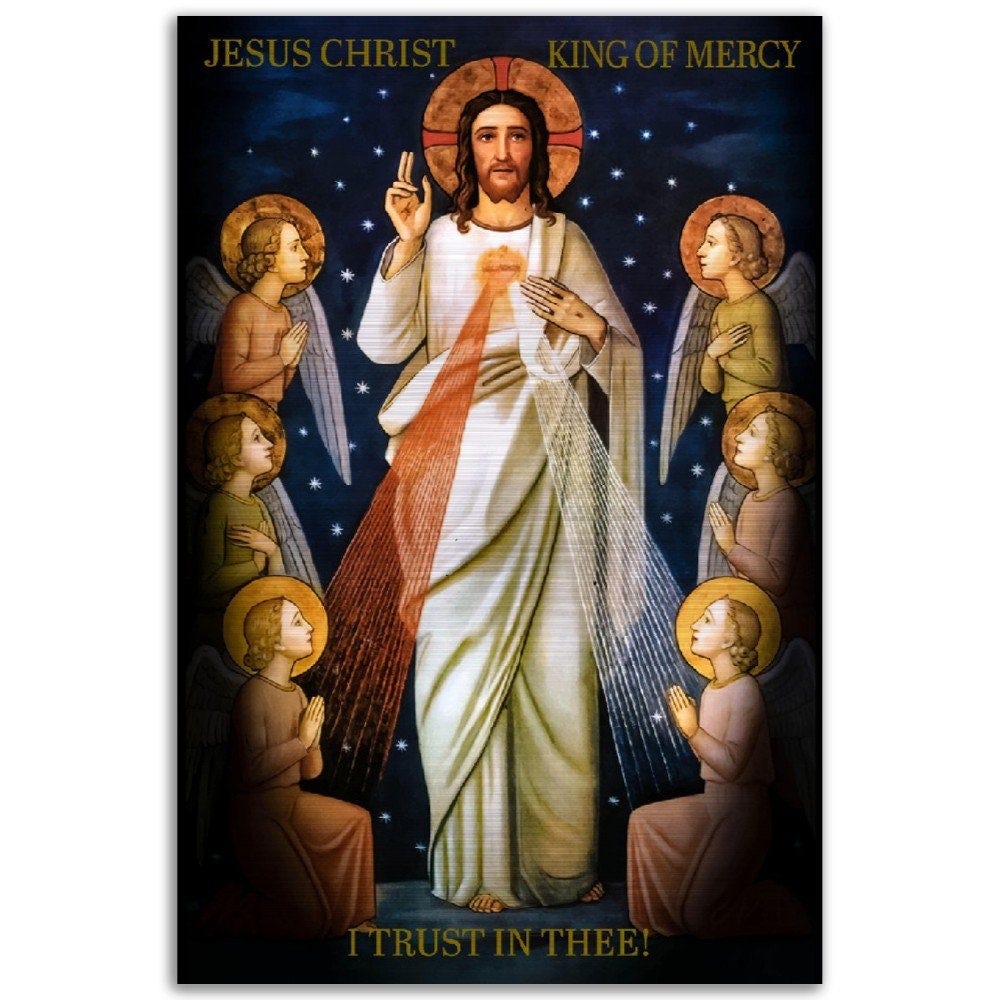
“Blessed are the merciful, for they shall obtain mercy.”
In the course of the practice of virtue, justice must always be united to mercy. Thus, the Lord adds to the beatitude of justice one that exhorts mercy. This is to make sure that the Christian’s hunger and thirst for justice are not tainted by bitter zeal and hatred for the guilty.7 We must reflect God in our actions. In God, justice and mercy are united without admixture or confusion, as one presupposes the other.8 So, too, in the Christian’s action, we ought to embody both.
This beatitude moves us to be merciful since one cannot be perfect without coming to the aid of those who are broken, sick, afflicted, etc. This is exemplified in the parable of the Good Samaritan.9 This beatitude promises that the Lord will respond to the merciful with mercy. Thus, if we wish to find mercy at our judgment, we ought to show it to those who are in need of it.10 Garrigou writes:
“The Christian should be happier to give than to receive. He ought to pardon offenses, that is, to give to those who have offended him more than is due to them; he ought to forget insults and, before offering his gift at the altar, go and be reconciled with his brother.”11
We always want to remember that there is nothing that we possess that we haven’t been given by another, in particular, given by God. Thus, we ought to be more inclined to give to others past the point that justice demands, for it is better to give than to receive.
This is aided by the Gift of Counsel, as it is through Counsel that we are inclined to mercy. This gift makes us attentive to the suffering state of others and causes us to respond to them with compassion, that is, a co-suffering with them. Thus, we are able, through the guidance of the holy spirit, to find that which might be comforting to them.
Through these beatitudes of justice and mercy, the devout soul is disposed to work as God works. It is through these two virtues, and the Gifts that accompany them, that “our souls would find even here on earth a holy joy and would be truly disposed to enter into intimacy with God.”12
Part III will continue with the Beatitudes of Contemplation and Union with God
For more from Dr. McGovern, visit his Substack at A Thomist, Dedicated to the Theological tradition of St. Thomas Aquinas. Exploring Thomas’ Spiritual Theology and topics in Christology and Mariology.
See ST IIa-IIae, q. 179, a. 2.
Cf. Luke 10:38-42.
See ST IIa-IIae, q. 58, a. 1.
St. Thomas Aquinas, Commentary on the Gospel of Matthew, C. 5, L. 2, 427.
John 7:37.
Interior Life, 168.
Cf. Ibid., 168-169.
Cf ST Ia q. 21, a. 4.
Cf. Luke 10:25-37.
Cf. Matthew 25:31-46.
Interior Life, 169.
Ibid.