
The Authors of Scandal
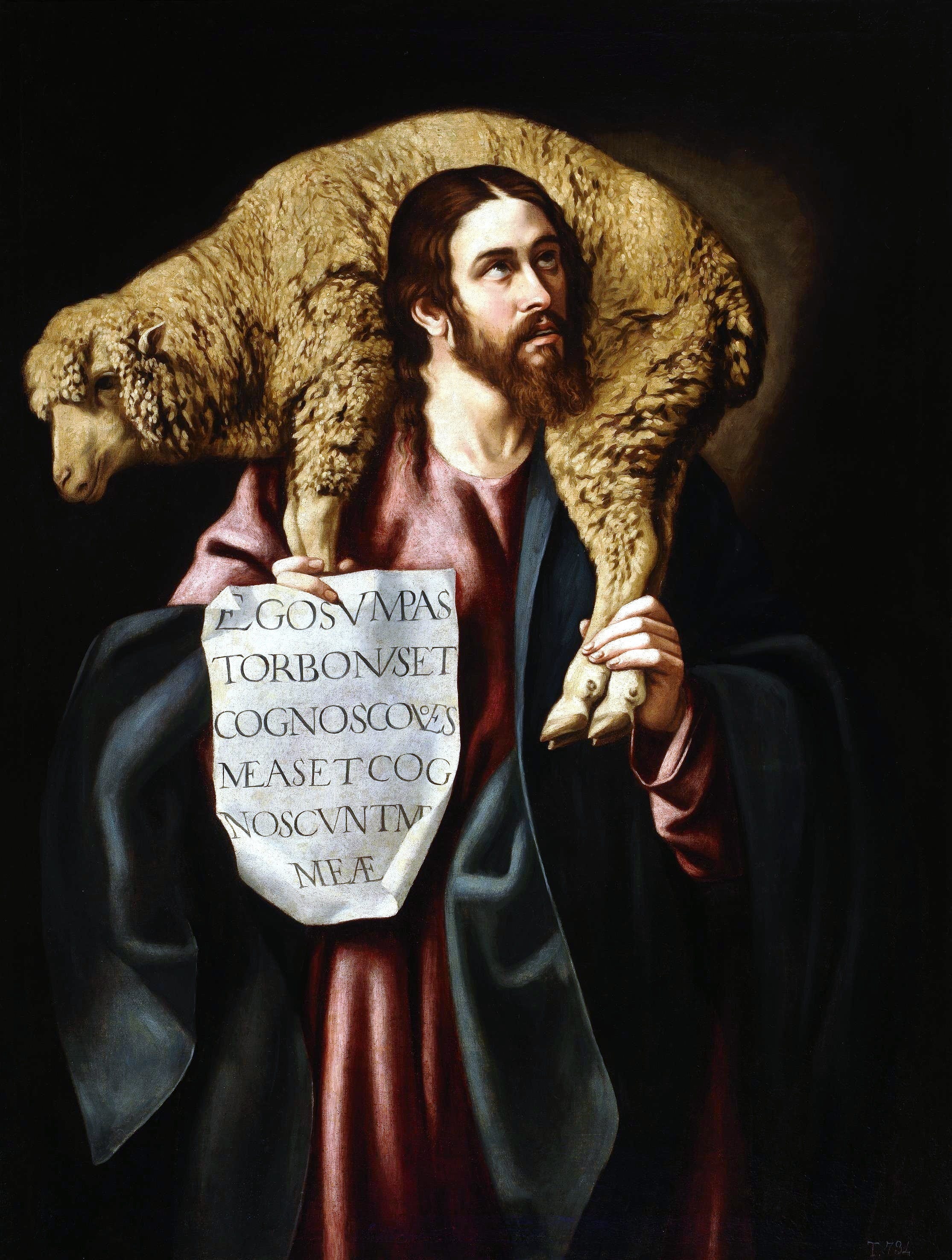
Gospel Reflection for April 26, 2026, the Fourth Sunday of Easter - John 10:1-10

1 Amen, amen I say to you: He that entereth not by the door into the sheepfold, but climbeth up another way, the same is a thief and a robber.
2 But he that entereth in by the door is the shepherd of the sheep.
3 To him the porter openeth; and the sheep hear his voice: and he calleth his own sheep by name, and leadeth them out.
4 And when he hath let out his own sheep, he goeth before them: and the sheep follow him, because they know his voice.
5 But a stranger they follow not, but fly from him, because they know not the voice of strangers.
6 This proverb Jesus spoke to them. But they understood not what he spoke to them.
7 Jesus therefore said to them again: Amen, amen I say to you, I am the door of the sheep.
8 All others, as many as have come, are thieves and robbers: and the sheep heard them not.
9 I am the door. By me, if any man enter in, he shall be saved: and he shall go in, and go out, and shall find pastures.
10 The thief cometh not, but for to steal, and to kill, and to destroy. I am come that they may have life, and may have it more abundantly.
(John 10:1-10 DRA)
St. Alphonsus Liguori once wrote,
The wolves that catch and scatter the sheep of Jesus Christ are the authors of scandal, who, not content with their own destruction, labour to destroy others. Be careful, then, never again to give the smallest scandal. And if you wish to save your soul, avoid as much as possible those who give scandal.
In our Gospel reading for this fourth Sunday of Easter, Our Lord uses one of His most famous parables, that of the shepherd and the sheepfold, to teach us an important lesson, one which is perhaps more relevant in our age of casual conversations reaching immediately to audiences of millions all around the world: scandal is a grave sin.
In all His verbal duels against the Pharisees, Sadducees and other Jewish sects of the time, Christ rarely if ever corrected their actual teachings on faith and morals. Indeed, He even said, “All things therefore whatsoever they shall say to you, observe and do: but according to their works do ye not; for they say, and do not.” (Mt 23:3) Instead, He shows that it is precisely their other acts, what we as Catholics today would call their non-infallible magisterial acts, their sayings as private theologians and their lived examples, that were causing scandal.
In Our Lord’s proverbial symbolism, which He interprets for us in the second part of this reading, He explains that those who steal souls are the ‘thieves and robbers’ who came before Him, i.e. who teach apart from the Gospel and His divine authority, whether before His Incarnation or after. By this time in the history of the Jewish people, the Pharisees had usurped for themselves the authority to judge sins and to teach authoritatively, roles once belonging exclusively to the Levitical priests or to those given special priestly authority, such as the Davidic kings (priests in the order of Melchizedek) and the prophets.
Now, instead of teaching the truth of God clearly and unequivocally and living it out faithfully in their lives, the Pharisees ignore Christ’s fulfillment of prophecy, prioritize ritual cleanliness over moral virtue and prefer the sacrifices of the Temple above works of mercy and charity - all of which contradicts the spirit of the Law as elucidated by the prophets. Similarly, the Sadducees compromised politically with Rome and even rejected all the books of Scripture besides the Pentateuch.
The Pharisees and Sadducees are represented by the thieves and robbers mentioned by Our Lord. Like thieves, the Pharisees stole souls from Christ by attempting to hinder His mission and lead people away from Him. Like robbers, the Sadducees lay in wait and sprang their spiritual banditry, trapping the people through sophistry as they attempted to do to Christ (unsuccessfully).
Sadly, the legacy of the Pharisees and Sadducees as thieves and robbers of souls did not end with them. The Church has been afflicted with such false shepherds for two millennia to varying extents. This is perhaps truer today than ever before, not as though all bishops, priests, theologians and other teachers of the faithful are corrupt – which they are not – but because, for most of history, little of what these people said or did was known by most Catholics throughout the world. Besides the identity and the major documents of popes, very few papal statements, or even the canons of councils, would have trickled down to the laity or even to all priests. For most Catholics, their primary contact with the Church was through their local parish and their traditional devotions.
But today, practically all Catholics are literate, and most have access to the monuments of Tradition and the sources of theology, both historic and current, to a degree unimaginable by people in history. This is good, because it gives Catholics the opportunity to grow in their faith through study of the Fathers, Doctors and Magisterium of the Church, but it also makes less authoritative statements from popes and bishops immediately accessible to all Catholics, even airplane interviews or other off-the-cuff, casual conversations. We have seen especially in the last 15 years how scandalous these ambiguous comments can be to the faithful.
The goal today, especially for Catholic parents, religious education teachers, catechists and those who teach the Faith online or elsewhere, should be to help Catholics drink deeply from the sources of the Faith and to thus lay the foundation by which they can scrutinize current statements, whether from popular culture, fellow lay Catholics or even the hierarchy of the Church, to compare all things to Tradition and to hold to what is perennial, not fashionable. This is true Catholic orthodoxy, as opposed to the relativism of progressive Catholics who value only what is new and innovative. Although laypeople are not the interpreters of Tradition, we are responsible for our own faith and the faith of those we influence, and these should be based on the clear truth of Tradition, not opinion, following St. Paul’s guideline, “But prove all things; hold fast that which is good.” (1 Thess 5:21)
In this modern world of instant worldwide communication and widespread lack of solid catechesis, Catholics, most of all those with public influence, should be more careful than ever before to not cause scandal. As St. Alphonsus warned, scandal is a truly grave sin, which is why Christ so often mentions it in the Gospels and why in our reading today He characterizes these scandalizers as thieves and robbers of souls. Not only the explicit, obvious meaning of our written statements are important – we should also be careful of the implications of what we say and do, which are just as liable to cause scandal.
May we enter through the Gate legitimately, let in by the porters whom Christ has given a share in His authority, wisdom and sanctity, so that we may hear and respond to the unique voice of our Good Shepherd.
Join the Fellowship at Saint Tolkien!
Amen!
Yes, today's Catholics are literate, but still woefully ignorant of Church teachings. Ask the average Catholic in the pews about any of the recent papal documents. Ask them why the Church views IVF as immoral. Ask if they ever listen to or watch Catholic radio or TV programs. Do they subscribe to Catholic papers and magazines? Are they aware of resources like Misseo Dei Catholic? Our Church still has a long hard road to travel in instructing and evangelizing our own.