
Love is Now Mingled with Grief
Gospel Reflection for March 29, 2026, Palm Sunday - Matthew 26:14-27:66

(For readings, see usccb.org – Matthew 26:14-27:66)
Today is Palm Sunday, the first day of Holy Week which will culminate in the Holy Triduum and Easter, the holiest day of the year, when Our Lord, thought dead and buried, conquered sin and death forever through His Resurrection. This week, we will relive the events that led to Easter – Spy Wednesday, when Judas betrayed Him; Maundy Thursday, when He instituted the Holy Sacrifice of the Mass at the Last Supper; and Good Friday, when His ‘hour’ was completed and He offered Himself as the true Eucharist on the Cross, consummating God’s love story with mankind which began with Adam and entailed many millennia of sorrow only to be reversed in the ultimate eucatastrophe of Easter.
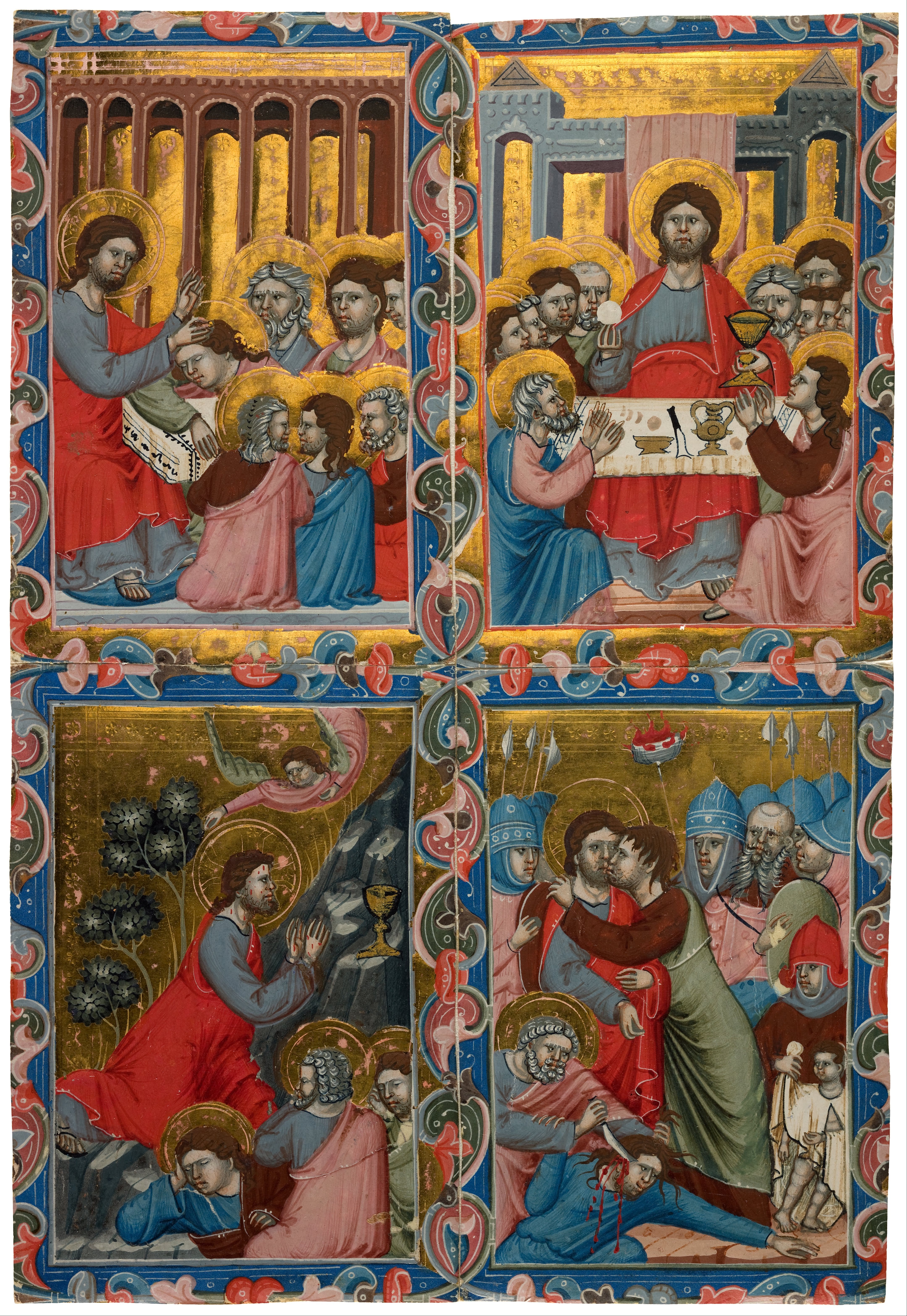
For this reflection, I would like to focus on one element of the Gospel reading in particular: Jesus’s profound grief in the Garden of Gethsemane. Last week, for Passion Sunday, we heard the shortest verse in the Bible: “And Jesus wept.” (Jn 11:35 DRA) Together, these passages show that Our Lord was truly and unmistakably human, contrary to the Gnostic, Monophysite and Monothelite heretics of the early Church. Because of His divinity, He assumed not only one human being but humanity itself, thus He felt the full weight of pain and grief that men have experienced since the Fall, every injury and illness, loss and betrayal, abuse and exploitation, hatred and prejudice, derision and mockery – all in the Garden of Gethsemane, even before enduring many of these personally in His Passion.
St. Thomas Aquinas, commenting on Christ’s sorrow in the Garden, once wrote,
Christ grieved not only over the loss of His own bodily life, but also over the sins of all others. And this grief in Christ surpassed all grief of every contrite heart, both because it flowed from a greater wisdom and charity, by which the pang of contrition is intensified, and because He grieved at the one time for all sins, according to Isa. 53: 4: “Surely He hath carried our sorrows.” But such was the dignity of Christ’s life in the body, especially on account of the Godhead united with it, that its loss, even for one hour, would be a matter of greater grief than the loss of another man’s life for howsoever long a time. Hence the Philosopher says (Ethic. iii) that the man of virtue loves his life all the more in proportion as he knows it to be better; and yet he exposes it for virtue’s sake. And in like fashion Christ laid down His most beloved life for the good of charity, according to Jer. 12: 7: “I have given My dear soul into the hands of her enemies.”
For Christ, the horrific torture He knew He was about to endure was not the primary cause of His sorrow, though of course as a man it was part of it. But even more so, He grieved for the sins of those who would kill Him, and not only for them but for all sinners. He felt not only the effects of all sins ever committed but also the daunting weight and incomparable burden which sin places on the souls of all sinners. He knew that God is our life and without Him we are utterly doomed.
Since sin is the rejection of the gift of divine life, the severing of one’s relationship with God and the eviction of Him from one’s soul, there is truly no greater pain than that of sin – even if many who live a life of unrepentant sin appear to be contented with their worldly rewards. Christ knew that, despite all His tortures during the Passion, His soul was inviolate, whereas the souls of those who hated, ridiculed and crucified Him were mangled and shredded even more than His flogged and nailed flesh.
He also knew that all His apostles would soon abandon Him, even St. Peter the first pope and St. John the Beloved Disciple. Only the women would remain with Him throughout the Via Dolorosa, all the way to the Cross and the discovery of the empty tomb. He felt the weight of St. Peter’s threefold apostasy when he denied Christ, the chains of doubt and despair that prevented the other apostles from even remaining as close to Him as St. Peter, and worst of all, He felt the heart-piercing bitterness of Judas’s betrayal, his unwillingness to return to Christ and finally his suicide, for which he would suffer the ultimate penalty of eternal damnation.
Our Lord said elsewhere, “as long as you did it to one of these my least brethren, you did it to me.” (Mt 25:40) These “least brethren” include the apostles themselves and the self-inflicted wounds of their own sins. Christ knew that sin harms the sinner more than the victim, and it was for the reparation of this spiritual suicide, the reclamation of souls from the living Hell of mortal sin and the redemption of men from enslavement to Satan that He became incarnate in the world and voluntarily offered Himself on the Cross.
Christ offers this same remedy to us today – not to make us immune to the effects of sin, but to be freed from the torture of remorse and the dark pit of guilt in which Satan longs to keep us, and instead to imitate Him by bearing our sufferings willingly, remaining faithful to God throughout and offering them as a penitential gift of charity for ourselves and all mankind. While the first Adam sought pleasure in the Garden and thus lost his grace of original justice, the new Adam experienced suffering in the Garden and by doing so merited infinite grace.
This is the true heart of the Gospel, the ‘scarlet thread’ running through all salvation history and the glorious, divine vocation to which God calls each one of us this Holy Week. In the words of J.R.R. Tolkien,
The world is indeed full of peril, and in it there are many dark places; but still there is much that is fair, and though in all lands love is now mingled with grief, it grows perhaps the greater.1
Join the Fellowship at Saint Tolkien!
J.R.R. Tolkien, The Lord of the Rings (Mariner Books, 2004), 348. Kindle.