
Practice Self-Denial Without Despising Good Things: The Tension of Life & Death
Why Pain Is Not Proof and Pleasure Is Not the Enemy

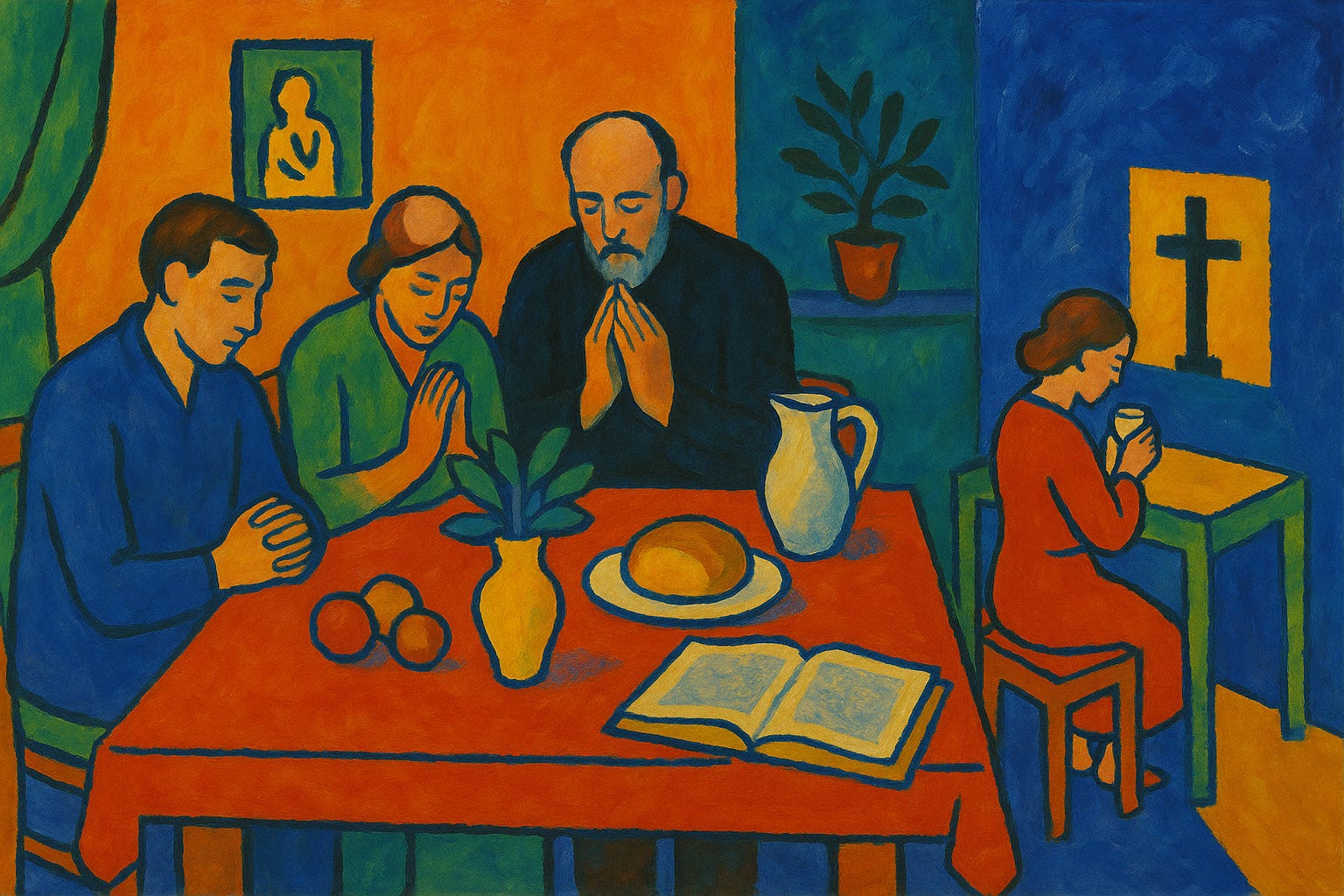
A Christianity that avoids self-denial is false. A Christianity that despises created goods is false. Both errors wound real people and misrepresent Christ. Most of us don’t intend to choose either error. We often slide there, leaning hard into “life” and ignoring the cross, or clinging to “death” and forgetting the gifts God calls good. Let’s look at how and why we tend to drift and discover a better way to hold both truths together.
Is it wrong for a Christian to earn a strong salary and enjoy good things? Exploring Jesus’ answer may unsettle us. He tells the rich young man to choose Him over wealth. He praises a widow who gives everything. He says you cannot serve God and money. He blesses the poor in spirit. It is clear, the message we receive from scripture, from our Lord’s very words, and from Church tradition is that lasting joy is not found in purchases. The Kingdom asks for inner freedom. Is your plan mostly about getting ahead or about becoming holy? Jesus both blesses generosity and warns about wealth. He offers new life and then calls us to die with Him. So take inventory before we go on. What do you pursue first? What do you refuse to release? Do your habits lean toward comfort without the cross or severity without gratitude? This is the tension we will face together.
Scripture consistently speaks about “life” and “death” from the start of the gospel to the end. There are numerous passages that promise life in Christ and others that call us to die with Him. These two aspects are not separate choices but a single path leading to our divine destiny. Because many of us tend toward one extreme, we need to learn again how to hold both together as Jesus teaches.
Let’s consider these passages that focus on the new and abundant life offered through Christ and let them speak to you directly and personally. John begins by naming Jesus the source of life who brings light to people (John 1:4). He sets out Christ’s purpose: not bare survival but abundant life with Him (John 10:10). At a graveside He proclaims that He is the resurrection and the life, and those who trust Him live even when they die (John 11:25–26). He also promises daily provision as the bread who sustains us (John 6:35). Paul describes what changes in us: the law of the Spirit of life in Christ sets us free from the tyranny of sin and death (Romans 8:2), and our identity shifts so that we live, yet not we, for Christ lives in us by faith (Galatians 2:20). Peter lifts our eyes to the horizon: by grace we become partakers of the divine nature (2 Peter 1:4).
If this doesn’t stir gratitude and hope, what would? Christ is the source of life who brings light to dark minds. He promises abundance, not mere survival. He raises the dead and gives a life that does not end. He feeds us with Himself and sustains us. He breaks the law of sin and death and brings us out of darkness and into the Father’s kingdom. And all of this is real because of grace. By grace we are adopted as children, the Holy Spirit dwells in us, faith, hope, and charity take root, and we become partakers of the divine nature. Grace doesn’t cancel our humanity—it heals it and lifts it. Thought clears. The will steadies as virtues take hold. Desire learns its place through practiced habits so love governs what we do. When people live this in worship, truthful thinking, restraint, forgiveness, and service, they begin to look like a new creation. The old patterns fall away. Bonds heal. Meaning deepens and resilience grows. This is sanctification, a life reshaped in God. The promise of life in Christ isn’t hype. It is a coherent way of becoming fully alive under God.
We could take a breath and stop there on the wildly generous gift of abundant life. If this were a press tour, the headline would write itself. LIFE in big letters. Any campaign would hang the whole message on that. Cue the music. Roll the credits. That’s what I’d pitch if I were His PR manager. Jesus doesn’t bite. He refuses half-truths and won’t gift half a gospel. With the same voice that promises new life through Him, He now calls us to die with Him.
Listen to how Scripture speaks about dying with Christ and how it pairs with His promise of new life. Jesus sets the pattern for every disciple. Deny yourself each day and take up your cross (Luke 9:23). He also states the paradox at the heart of following Him. Whoever tries to save his life loses it, and whoever loses his life for His sake finds it (Matthew 16:24–25). He explains the logic of fruitfulness. Life comes through self-gift, like a grain that dies and bears much fruit (John 12:24–25). Paul grounds this not in feeling but in baptismal reality. We were united to His death so that we might walk in newness of life (Romans 6:3–11). Since we have died with Christ, we must put to death what is earthly in us (Colossians 3:3–5). The power is not ours. By the Spirit we put to death the deeds of the body and we live (Romans 8:13). The result is changed desire. Those who belong to Christ have crucified the flesh with its passions and desires (Galatians 5:24). And the rhythm is daily. Paul says it plainly as if it’s part of his routine: “I die every day” (1 Corinthians 15:31).
Some will say this is a harder pill to swallow. To die with Christ will change the way we live. It touches comfort, reputation, public image, plans, money—everything. It interrupts habits, rewrites calendars, and confronts pride. It means naming sins without excuses and making repairs that cost time, money, and, yes, our pride. It asks for boundaries friends may not understand and accountability we do not enjoy. It means refusing the compulsions that used to numb us. The world calls this repression. In truth it is freedom, because charity can finally breathe when idols stop calling the shots. After the bright promises of life, the Cross is a tough headline. This is where Jesus’ PR manager would clear his throat. How do you sell daily self-denial next to abundant life? You don’t. Jesus refuses to soften it, and we should too.
When Christ gives life, He does more than lift our emotions. God gives sanctifying grace so we truly live as sons and daughters. This is adoptive sonship and real participation in His life. The Holy Spirit dwells in us. He gives faith, hope, and charity and the gifts that steady the mind and will. The mind learns to judge by God’s truth and not by our own excuses. Our will, through continual cooperation with God’s grace, begins to prefer the highest good over shifting desire. Our passions learn obedience so they serve love. This new life is nourished in the Church through Word and sacrament. Baptism begins it. The Eucharist sustains it. Penance restores it when sin wounds it. From this life flow obedient acts of goodness: we tell the truth, we forgive, we show mercy, we’re patient, in essence we are Christlike. We learn the Beatitudes and practice virtues. We are drawn to it because it offers healing, freedom, purpose, and communion with God. It promises growth into “partakers of the divine nature.” But, recall, there is one path and the life Christ gives is inseparable from dying to sin with Him. If a way offers life without the cross, it is not His way. And the grace that makes us alive is the same grace that enables the daily deaths love requires.
Because this new life is real, the old self must actually die. When Scripture calls us to die with Christ, it does not celebrate misery. It commands conversion. In baptism we were joined to His death, so we must let the old self be put to death each day. The Holy Spirit gives grace so the will can withdraw consent from sin and choose the good. We cooperate by honestly facing our faults, truly intending to change, and making the appropriate concrete adjustments. We examine our conscience, remove near occasions of sin, and accept limits that protect prayer, marriage, family, work, and health. We practice the virtues that oppose our vices. So when someone wrongs us and we want to retaliate, we must turn and choose a better option. When our feelings are hurt and we’re compelled to self-protect, we must resist and choose a better option. Temperance checks excess. Fortitude bears difficulty without quitting. Chastity orders desire to love. Patience refuses revenge. Justice repairs harm. This is real mortification. It is the Spirit teaching us to put to death the deeds of the body so charity can live. And by cooperating with God’s grace we are able to turn from pride, lust, greed, anger, envy, gluttony, and sloth. We stop making peace with lies and we invite others to hold us accountable. This process of dying is obedience to Christ and friendship with Him. These are not competing agendas. Christ promises abundant life (John 10:10) and commands daily self-denial (Luke 9:23). The apostles preach both burial with Christ and rising with Him (Romans 6). The Christian life holds both—at once.
After all, there is no resurrection without a crucifixion.
Still, two distortions are common. The first embraces the promise of life and quietly treats the cross as optional, prizing visibility, momentum, and reach.
It helps to ask why we lean. Many of us reach for the “life” side because we are starving for it. People at rock bottom want a clean start. The grieving want comfort that heals, not a quick dose that masks sorrow. The lonely want a family. The poor who already carry a cross want strength to keep going and the hope of a fuller future. Others chase “life” because they love achievement. They want results, influence, and a sense of progress. That desire can be good when it turns into service and generosity. It turns dangerous when “abundant life” becomes a rationalization that excuses greed, envy, or the need to win.
When the “life” instinct leads, the upside is obvious. In many active parishes and ministries, leaders focus on growth, staying connected, and a reputation for good work. The aim is a community that feels alive: high engagement, strong programs, steady momentum, and a public witness that says, “You belong here.” There’s a lot to affirm. The mission has heat. People volunteer. Giving is generous. Newcomers feel at home. And yet, when the cross arrives with limits, repentance, and rest, the engine can outpace the soul.
Yet this is only one side of the Christian path. When the call to die shows up, this approach often resists: honest self-reflection that admits sin, feedback that makes us wince, celebrating the Lord’s Day that interrupts productivity, boundaries that protect prayer and family, pruning that slows expansion, hidden service that will not be seen. Limits look like fear. Repentance sounds like legalism. Quiet intercession feels unproductive. The cross seems like a distraction from the “real work.” The result is activity without depth, fatigue dressed up as zeal, strained homes and teams, and a self left unexamined. Where this impulse is purified by daily conversion and real rest, it mobilizes gifts quickly, welcomes the outsider, and meets real needs. Where it refuses the cross, work multiplies but holiness does not.
Then there’s the second distortion, with those who lean hard to the “death” side. Some have tried pleasure, status, and success and still feel empty. Others carry a history of sin and want clear lines and safety. Some are exhausted by noise and distraction and long for silence and control. Those instincts can be good when they become repentance, simplicity, and watchfulness. They become harmful when suspicion of gifts hardens into contempt, when fear dresses up as holiness, or when self‑denial becomes the measure of worth.
Those who have an unhealthy relationship with self-denial and taking up their cross harbor a deep distrust of ordinary good things. They’re wary of joy, beauty, friendship, rest, and celebration, treating every good thing as if it’s a potential trap. This approach piles on rules beyond what the Gospel asks, and it measures holiness by how much you subtract from your life. Suspicion often gets mistaken for wisdom. Legalism boils obedience down to checklists, and scrupulosity blurs the lines between temptation and sin, or minor faults and grave matters. Conscience becomes a relentless alarm. The soul, in this state, seeks control instead of trust. You see false humility and piety: people might speak lowly of themselves but then refuse help, decline comfort as if accepting it were a failure, or say ‘I am unworthy’ while rejecting the good God offers. By shying away from Christ’s gift of life, this posture inadvertently treats the generosity of God with suspicion, responds to it with ingratitude, and prioritizes personal austerity over God’s kindness—which, let’s be honest, is a form of pride. Even with all that, there’s still some real good here: sin is serious, limits do protect the heart, and discipline does train our desires. Many who lean this way persevere, stay vigilant, and suffer without complaint.
But this, too, is just one side of the Christian path. When the ‘life’ side shows up—things like genuine gratitude, celebrating with good food in its season, the joy of the Mass, deep friendships, appreciating beauty, marital intimacy and play, or welcoming others—the reaction is often uneasy. Gratitude feels risky. Feasting seems like a compromise. Joy feels too relaxed. Friendship and beauty appear dangerous. Marital intimacy and play are viewed with suspicion, even when they’re rightly ordered. Hospitality is avoided because welcoming others can feel uncontrollable. The end result can be fear dressed up as holiness, families chilled by severity, communities closed off to the hurting, prayer that feels grim, and a thin hope. However, when this impulse is purified by ordered love and wise guidance, it transforms into a watchfulness that protects charity, a custody of the senses that preserves peace, steady fasting that leads to giving to the poor, and quiet service that truly heals. But when it rejects the goodness of creation, pain becomes a badge of honor, gifts are scorned, and charity simply withers away.
There is a better way, and the Church has taught it from the beginning: the end of the Christian life is charity—real love of God and neighbor. Augustine calls holiness rightly ordered love: God first, then neighbor, then the self rightly cared for; things are used, persons are loved. Jesus proclaimed that the greatest commandments are love of God and neighbor, and “on these two hang all the Law and the Prophets” (Mt 22:37-40). That’s an end claim that every command tends toward charity. “The end (telos) of the commandment is charity from a pure heart” (1 Tim 1:5). “Love is the fulfilling of the law” (Rom 13:8–10). “Above all these put on love, which binds everything together in perfect harmony” (Col 3:14). “So faith, hope, and love abide… but the greatest of these is love” (1 Cor 13:13). Love “never ends” (1 Cor 13:8); by contrast, faith turns to sight and hope to possession. Jesus said that love is the mark of discipleship and a sign of union with him: “By this all will know that you are my disciples, if you have love for one another” (Jn 13:35). “God is love… whoever abides in love abides in God” (1 Jn 4:8,16).
When love gets out of whack, even good things can actually hurt us. This happens when we start preferring lower goods over higher ones. The higher goods are things like God and anything that leads us closer to Him: worship, genuine love, truth, the dignity of every person, keeping our promises, and living virtuously. Lower goods are still gifts, but they’re secondary: comfort, reputation, efficiency, money, pleasure, and tools. When that order gets flipped, we start treating things as ultimate goals and people as mere means to an end. We start using people to reach goals, keep appearances, or secure comfort. We protect schedules and products more than persons and prayer. We talk about values, but attention, time, and money flow elsewhere.
By gifts I mean the created goods God gives for our good: work, food, money, sexuality, rest, success, and even ministry. These are good in themselves. When love is disordered, they turn against us in practice. Work crowds out prayer and family. We say we value God and marriage, yet we give our best hours to output and leave scraps for the people we love. Food slides into excess. We chase comfort and end up dulled and less free. Saving becomes hoarding. Prudence gives way to fear and distrust, and we turn our heads to the poor. Sexual desire forgets chastity and covenant. Persons are reduced to use, and intimacy breaks trust. Rest decays into avoidance. Recovery becomes escape, and duties are postponed. Success feeds vanity. Recognition becomes the goal, and humility withers. Even ministry becomes self-promotion. We serve to be seen and begin to measure worth by reach and followers.
Why do these patterns make us anxious and create in us a smaller capacity to love? Because anxiety comes from building your life on things you can lose. When status and image set the rules, other people feel like competitors, not neighbors. They become threats. We start using people to protect what we want, and that is injustice. Repetition does the rest. What we look at, we start to love and the heart learns by repetition. Put yourself first long enough and attention turns into attachment. The heart shrinks and what we repeat, we become.
But when love is properly ordered, God truly comes first, and everything else falls into its rightful place. Truth guides our minds. Our will consistently chooses those higher goods. Our passions learn to obey. And then, those same gifts that once caused trouble actually become sources of healing instead of harm. Work becomes service. Food strengthens fellowship. Money becomes prudence and alms. Sexual desire serves faithful love. Rest restores strength for duty. Leisure opens space for friendship, beauty, and worship. Created goods fulfill their purpose because charity, prudence, justice, fortitude, and temperance govern their use.
Balance is possible because of grace. Grace does not erase our humanity; it heals it and lifts it toward God. It repairs the intellect and will wounded by sin, infuses faith, hope, and charity, and aims the moral virtues at our true end. Grace makes us children and friends of God, clarifying reason and strengthening freedom so we can love what God loves. Grace also elevates nature beyond its own power, ordering us to share in God’s own life. In practice, this means we can know revealed truth, will the divine good, endure trials with the Spirit’s help, and find renewal through the Church’s life. Under grace, we neither despise gifts nor idolize them. We receive them with thanksgiving and put them to work for love.
Is it wrong to enjoy a good house, a safe neighborhood, a vacation, a meal out, or a healthy retirement account? No. Created goods are good. Scripture says God richly provides for our enjoyment and, in the same breath, commands those with wealth to set their hope on God, to be rich in good works, generous, and ready to share (1 Tim 6:17–19). The question is not whether granite is allowed. The real question is whether this house serves God and neighbor, or whether you serve it. Enjoy as children, not as slaves. Keep gratitude, detachment, justice, and generosity in place so gifts do not become gods.
We are to enjoy God as our final good and use created things as helps on the way to Him. Consider the good use of riches, which means directing money and possessions toward right ends: family duties, works of mercy, the parish, and the poor. Our riches are tools. This is interior freedom. Not everyone is called to sell everything, however, everyone is called to have an interior detachment that prefers Christ to everything. The goods of the earth have a purpose for all and should flow under justice and charity. So we do not despise gifts, and we do not absolutize them. We receive them, govern them, and share them.
On the ground this looks simple. Buy a house you can tend and keep a budget that leaves room for almsgiving. Let your neighborhood become a place of hospitality. Take rest that restores prayer and family. Save and invest with a plan to give, not just to accumulate. Enjoy good food and beauty with moderation. Upgrade the car if it fits your vocation and your works of mercy still come first. If a purchase crowds out generosity, truthfulness, or time for the people in your care, it is out of order. If it helps you love God and neighbor more steadily, you are likely on the right track.
Receive the life Christ gives and choose the daily deaths love requires. Each night ask where you refused the cross and where you refused grace, then begin again.