
Passiontide: Participating in the Cross of Christ
Saturday, March 21st Readings Reflection: Saturday of the Fourth Week of Lent

Today’s Epistle gives us a prophecy of Christ’s Passion and Death from the Prophet Jeremiah. The Jews of Anathoth were plotting to kill Jeremiah in such a manner that, unbeknownst to them, prophesied the Passion and Death of the Messiah.
Jeremiah writes that he “was as a meek lamb, that is carried to be a victim” (Jer 11:18 DRB), a prophecy that clearly points to Our Lord’s meek acceptance of His Passion like a sheep being led to the slaughter. Jeremiah continues that his enemies plotted against him in various ways: “Let us [his enemies] put wood on his bread, and cut him off from the land of the living” (Jer 11:19). In commentating on this passage, a third century Roman Christian writer explains that the wood points to the wood of the Cross, and the bread signifies Christ’s Body that was nailed to the Cross. This symbol of bread is also significant, as it perhaps points to the Holy Eucharist as well. Like Jeremiah, Christ’s enemies sought to “cut him off from the land of the living… [so that] his name [might] be remembered no more” (Jer 11:19).
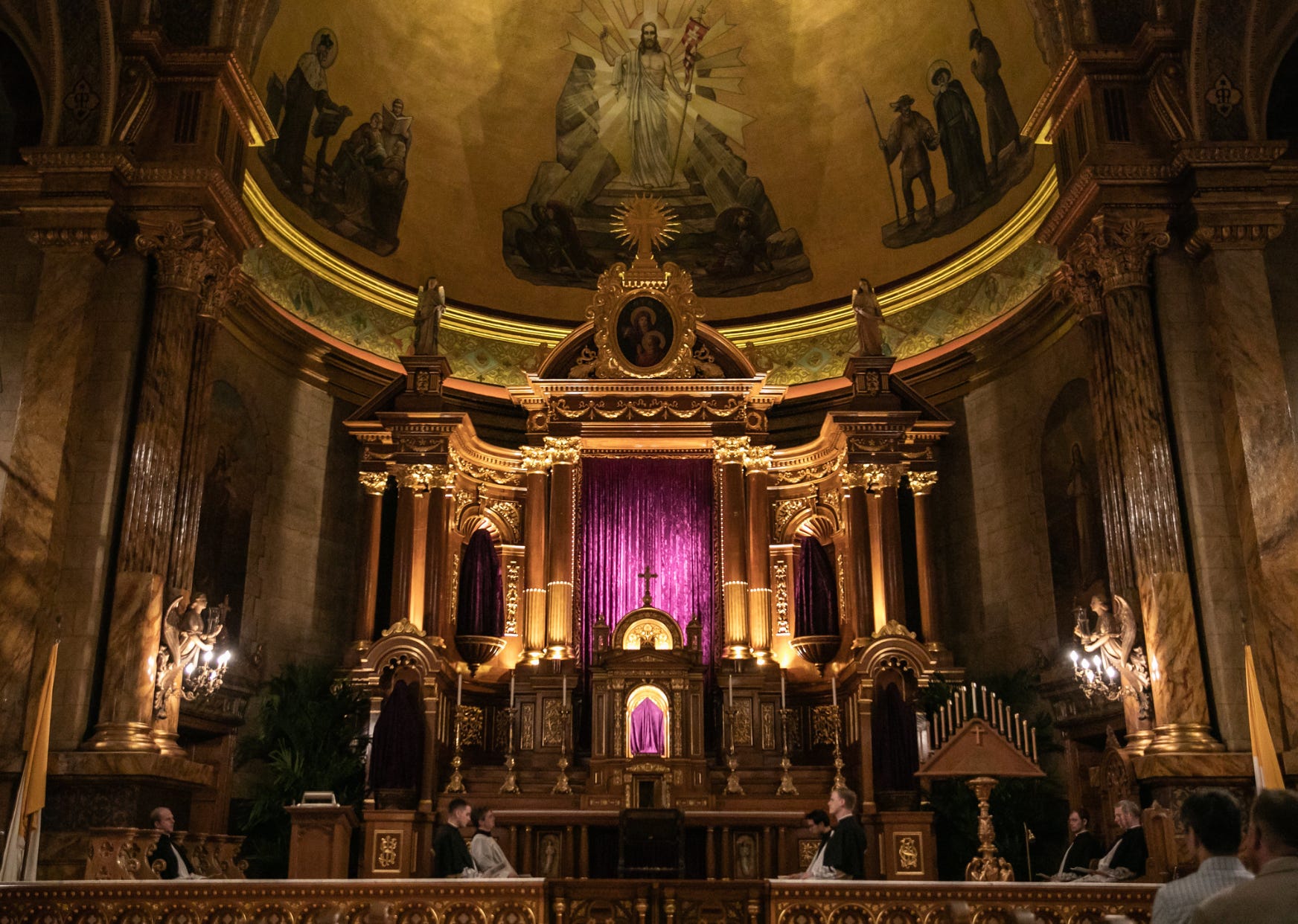
Tomorrow begins Passiontide, the last two weeks of Lent in which the Church enters even more deeply into the mystery of Christ’s Passion and Death. Starting tomorrow, statues and paintings will be veiled in our churches, and even the Crucifixes themselves will be hidden behind purple cloth. The Church veils those religious items that bring us joy and remind us of spiritual realities, since by them we adore and venerate the persons represented therein.
This visual reminder of Christ’s sufferings, along with the more somber readings that we hear already in today’s Mass, help to further immerse us—body and soul—in the mysteries that we liturgically commemorate during these next two weeks. This observance of Passiontide not only helps to further purify our hearts from all that separate us from God, but it also serves as a source of hope for us in our own sufferings.
In his Lenten meditations, St. Thomas Aquinas writes how Our Lord experienced no consolation or relief in His sufferings; He suffered to the greatest possible extent without the slightest relief from anything. Our Lord’s mental and spiritual sufferings were the most acute of all, even more than His physical sufferings, because He bore the weight of all the sins of all men throughout all of time. He suffered the most extreme mental and spiritual anguish possible, including fear, rejection, desolation, and abandonment.
When we experience spiritual desolation, a sense of abandonment, rejection, and fear, we are experiencing sufferings that Christ has borne before us. Through Him, our sufferings take on a new meaning, for we are able to unite ourselves to the sufferings of His Passion. Rather than viewing our sufferings as a burden or something to be avoided at all costs, this holy observance of Passiontide invites us to embrace our sufferings, not because they are good in themselves, but because they enable us to experience in a small way a taste of Christ’s own Passion. In these last two weeks of Lent, may we pray for the grace to embrace our crosses with newfound strength and courage, knowing that in doing so, we are embracing the Cross of Christ Himself.
Great reflection. Thanks for sharing!