
How We Inherited Religious Freedom in the United States
And What Philosophies Led to Religious Tolerance in the New World

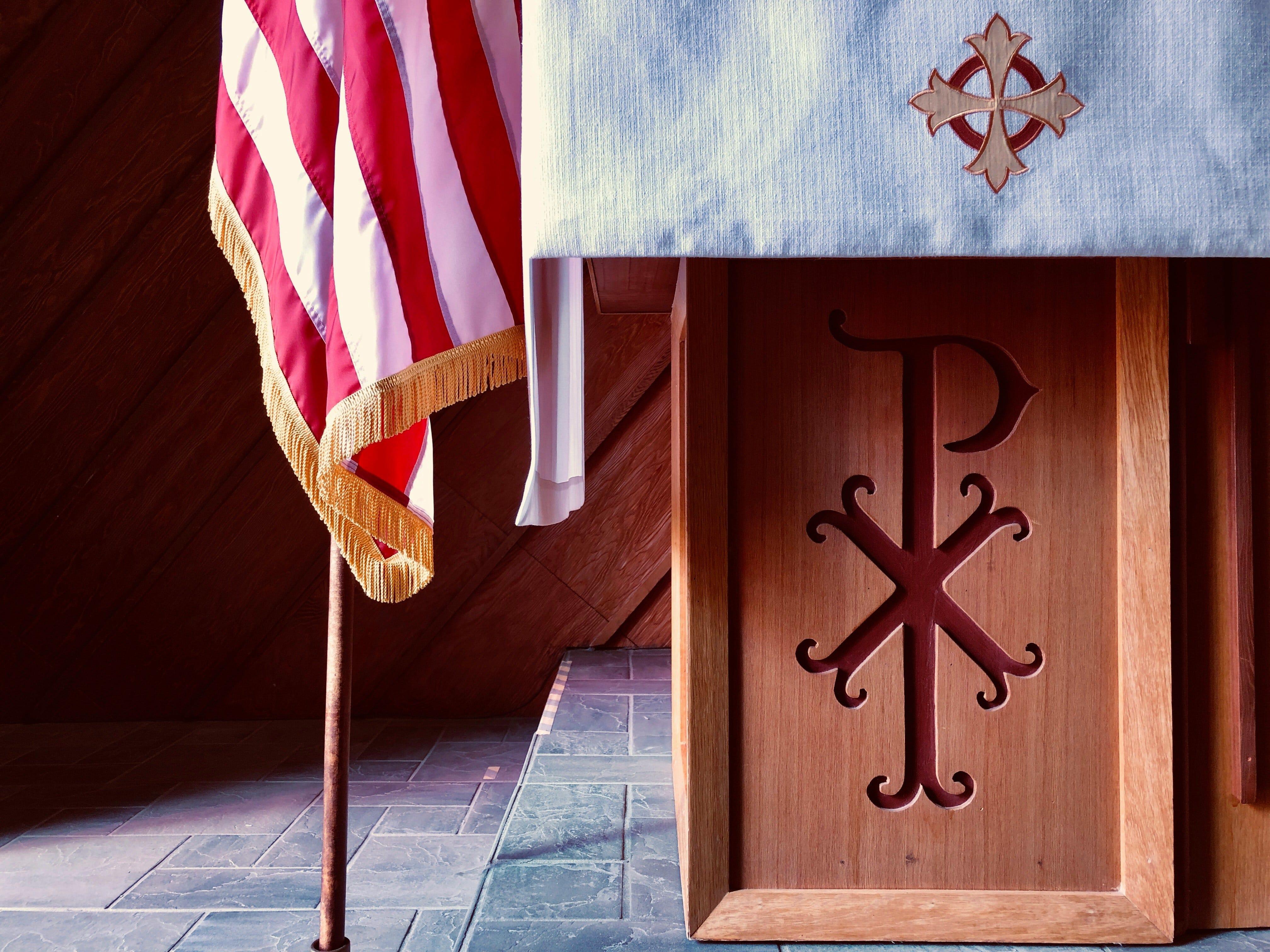
Where would we be without our parents? In the most fundamental way, we would not be here without them. For many of us, we also wouldn’t be the people we are today without their influence. As we have grown older, we have likely come to recognize our parents’ imperfections. This does not warrant our disrespect but rather an acknowledgement of our universal human frailty.
The case of the “Founding Fathers” is comparable. The United States would not be the nation, or the people, we are today without the enduring ideas of the founders. A 250-year-run is nothing to scoff at.
Still, we have to come to terms with the truth: Many of the founding figures led morally deviant lives behind closed doors, and more than a few held heterodox conceptions of God. Yet, they were also the heirs of centuries steeped in the reading of Scripture and were part of the philosophical lineage comprised of medieval scholasticism and traced back to the thought of the ancient Greeks. This body of knowledge, mixed with various elements of liberal Enlightenment thinkers, who themselves were not entirely detached from the tradition, led to the democratic republic we enjoy today.
We don’t want to fall into the illusion that the mere marching of time will bring about some vague moral progress destined to end in self-perfection. Nevertheless, we recognize that Jesus Christ, as Lord of history, knows what is best for us and that his Church is tasked with deepening her understanding of the Gospel truths and learning how to apply them in an ever-changing world.
Below, we explore some of the philosophies reflected in the ideals of the early Americans and how they connect to the Catholic understanding of freedom.
The Tolerance of Locke
The Enlightenment thinker John Locke is a controversial figure for Catholics. His early years saw him pursue first an education in ministry and then in medicine. Before being immersed in the physician’s world of empiricism, Locke’s education had already shaped him into an expert in Greek, rhetoric, and moral philosophy.
With such a diverse background, this man – who did not set limits on his own achievements – turned to writing reflections on the human condition and what is beneficial to the individual person and to society.
In History of Contemporary Ideas, historian and philosopher Msgr. Mariano Fazio Fernández discusses the significance of Locke, how he stays in touch with the tradition of his forebears, and also his distaste for Catholicism.
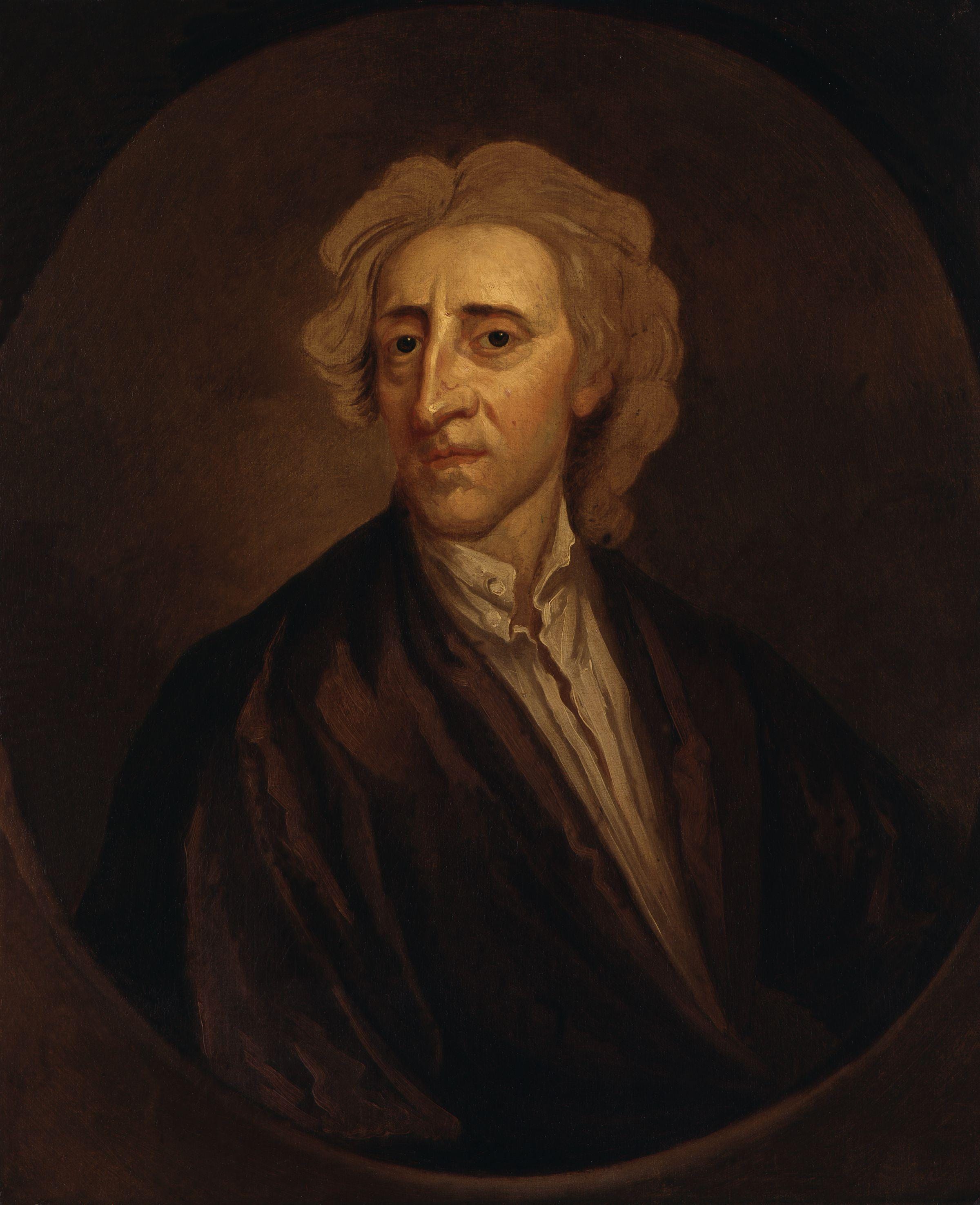
Locke took natural law as the foundation for his political ideology, Msgr. Fazio explains. For Locke, a human law was valid insofar as it conformed to natural law. In his Letter from Birmingham Jail (1963), the revered civil rights leader, Martin Luther King Jr., similarly referenced the criterion for just laws to be based on natural law while also invoking the most famous of the scholastic philosophers:
An unjust law is a code that is out of harmony with the moral law. To put it in the terms of St. Thomas Aquinas, an unjust law is a human law that is not rooted in eternal and natural law.
Beyond the supremacy of natural law in guiding human actions, Locke favored limited government, equality, and the protection of one’s life, health, liberty, and property. He viewed political authority as being based upon human nature and the consent of the
people being governed. When it came to this perspective, and despite his anti-Catholic biases, Fazio observes, “Locke was quite close to the theoretical position of the cardinal St. Robert Bellarmine.”
Of course, one of the great hallmarks of Locke’s thought that has been impressed upon modernism is that of tolerance, which he would consider a great virtue. In contrast with extremism, Fazio writes that moderation “is a dominant trait in Locke’s empiricism. The same moderation [features] in his political theory.”
Though he despised Catholicism as much as atheism, Locke recognized Christianity as the one true religion since, as far as he was concerned, it possesses the core beliefs about reality that people can discern through reason. Locke often had recourse to Scripture, which influenced both his private and public life. Notably, he advocated the separation of Church and State, relegating each to different but complimentary spheres of influence.
Locke reduced Christianity to a “minimal credo,” which “is to believe that Jesus is the Messiah,” says Fazio. This does away with the specifics of doctrine, which Locke likely perceived as the cause for dispute among various Christian sects. This outlook on faith opened up to a view towards tolerance, an acceptance of other people and their beliefs while, at the same time, not necessarily adhering to those particular beliefs oneself.
In America on Trial, Robert Reilly (whose comments in Islamic studies Fazio is familiar with) summarizes Locke’s notion of toleration and its relevance to brutal disagreements between differing denominations and religions:
Religious uniformity could no longer be a desideratum of civil order because it was precisely this requirement that was tearing society apart by transforming politics into a form of spiritual warfare. Religious toleration became, if for no other reason, a political necessity.
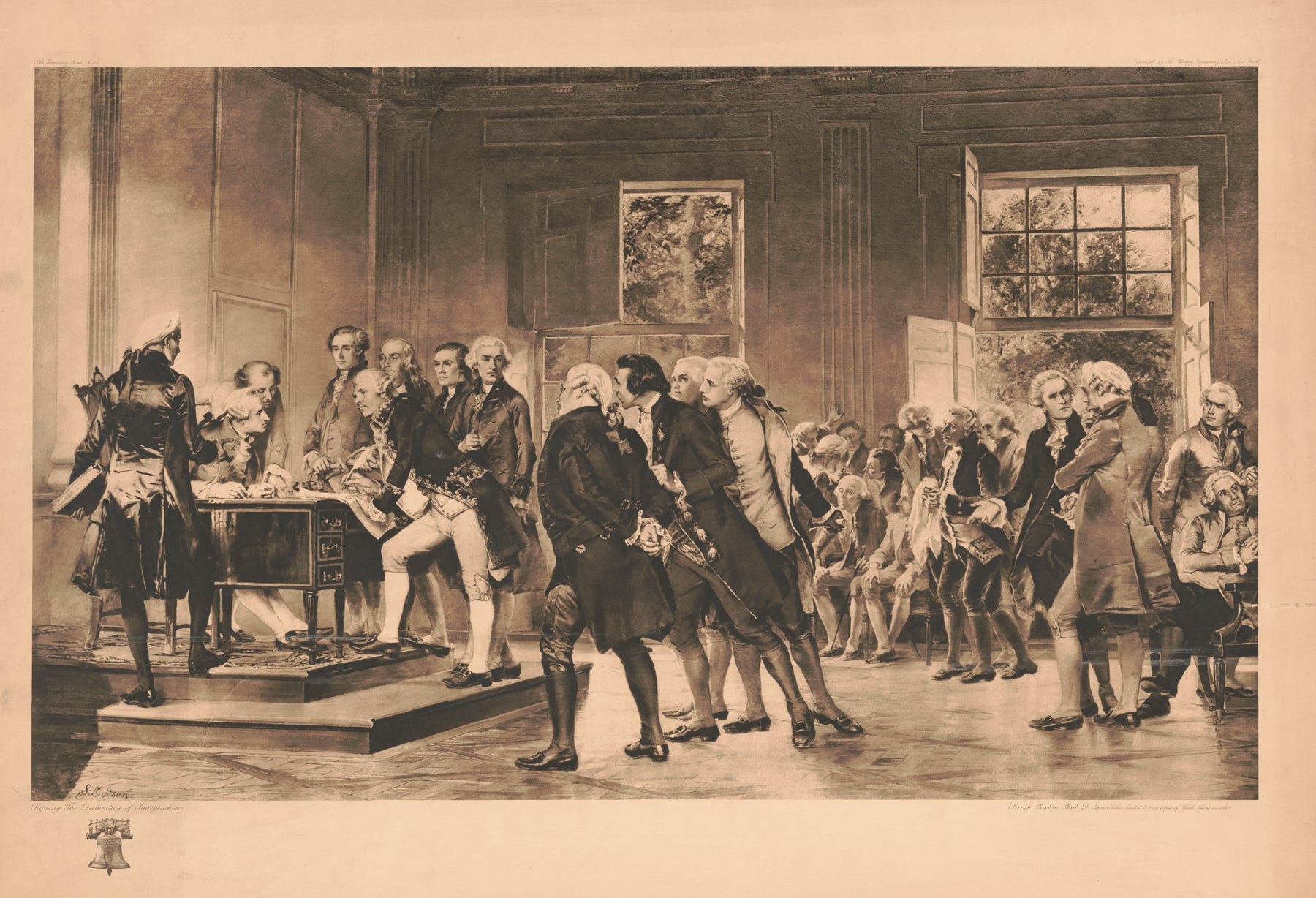
We know for a fact that Locke influenced the beliefs of the founders of the United States of America. Thomas Jefferson and John Adams, members of the committee tasked with drafting the Declaration of Independence, readily admitted in various letters that Lockean principles informed their revolutionary impulse. The Declaration even uses terms that readers of Locke would find familiar, such as “the laws of nature and of nature’s God” and “governments are instituted among men, deriving their just powers from the consent of the governed.”
Humboldt and Human Freedom
Since colonial times, the American “melting pot” of cultures and ideas has allowed for the advancement of freedom in the pursuit of self-fulfillment, in the practice of one’s faith, and in the unravelling of scientific wonders.
Jefferson, Benjamin Franklin, and others established the American Philosophical Society, which has been called “the most important scientific forum in the United States” in the early 19th century.
Jefferson’s natural interests included botany, meteorology, and paleontology. When it came to political matters, he preferred a small centralized government. One of his contemporaries called Jefferson “the enlightened philosopher…the father of our Country, the faithful guardian of our liberties.” While serving as president, Jefferson would meet Alexander von Humboldt: philosopher, naturalist, and geographer extraordinaire. The famous German thinker visited the president in 1804, and the two men had a mutual understanding of and admiration for one another.
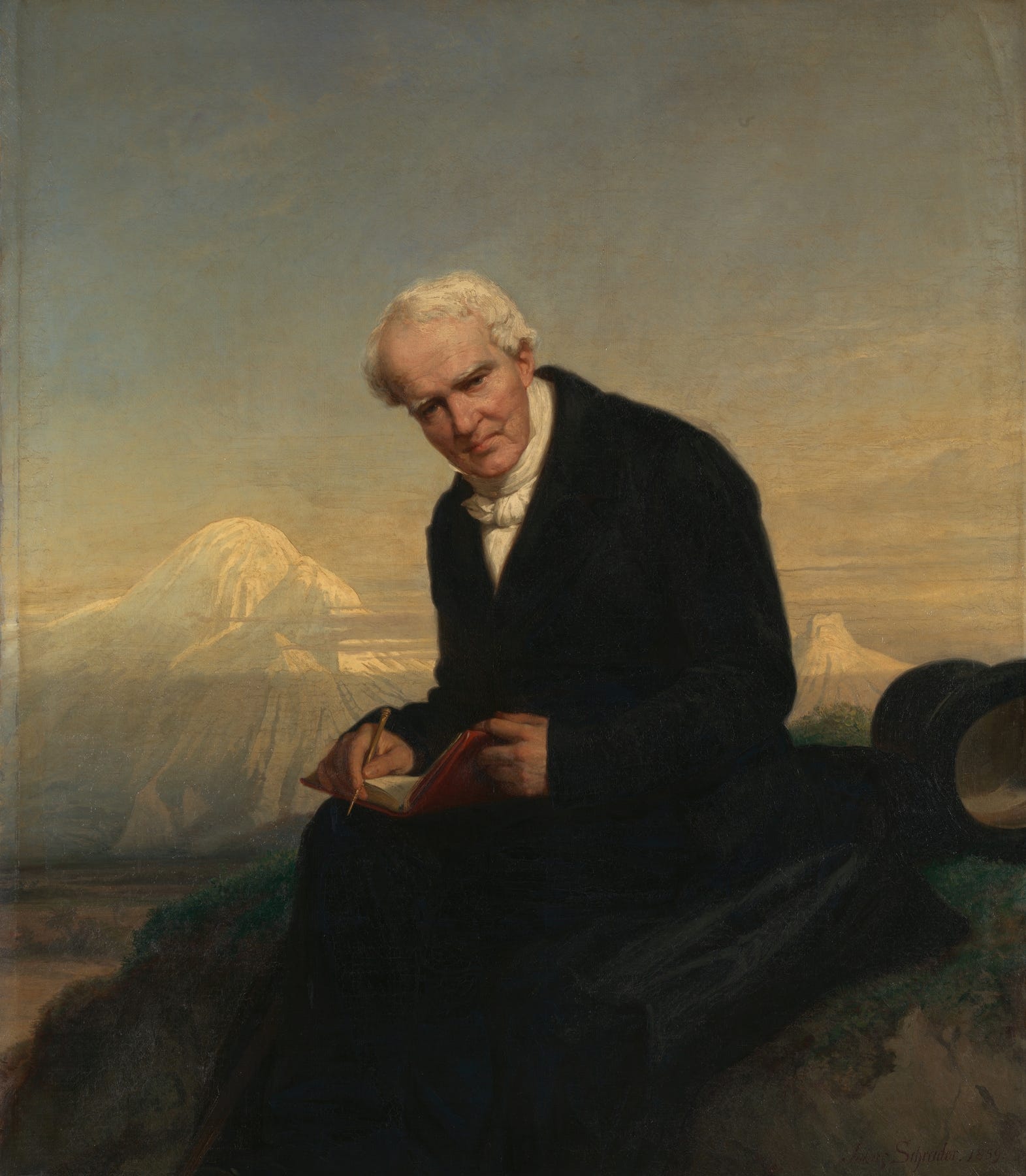
Humboldt appreciated the form of government adopted by the US, which he perceived to be moving closer to perfection. In The Invention of Nature, a book exploring Humboldt’s legacy, Andrea Wulf writes:
Humboldt, like Jefferson, believed that only an agrarian republic brought happiness and independence. Colonialism, by contrast, brought destruction.
Colonialism brings about subjugation, something Humboldt strongly opposed. He believed a ruling authority was necessary but, in Msgr. Fazio’s words, “it should be subject to civil society.” Governmental structures are intended to serve men, not the other way around.
Fazio continues in commenting on Humboldt’s thought:
The State should not impose a virtuous life from above; otherwise, the result would be “uniformity and coerced behavior throughout the nation.”…Having thus established the purpose of the State, religious freedom, freedom of teaching, and the principle of subsidiarity must reign in modern societies.
This last part really smacks of Catholic social teaching, which also emphasizes the right to religious freedom and the primacy of subsidiarity, or the preferential method of making decisions at the most localized level possible. This is both in keeping with the desire for limited government shared by figures like Locke and Jefferson and with the ethical principle of being responsible for one’s own conduct. The most local, most private, level of decision-making occurs within the will of the self.
Tocqueville on American Democracy and Religiosity
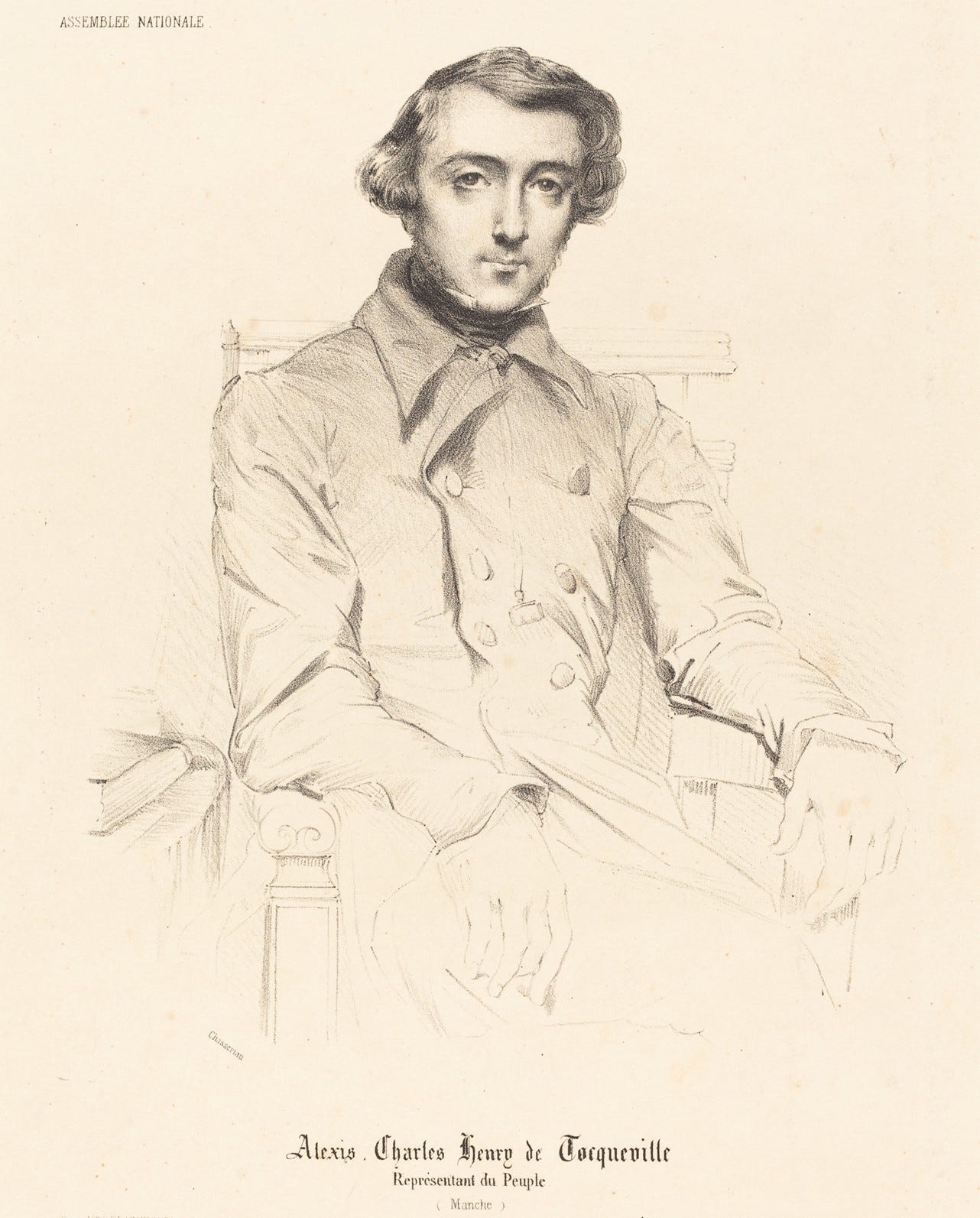
While we thus have an imperative to ensure that we are making the best decisions in our own moral lives, we do not deal with our own affairs and leave everyone else to their own devices. We live in a society. That means citizens not only have rights but responsibilities too. That’s what the 19th-century aristocrat, historian, and sociologist Alexis de Tocqueville believed.
The French politician readily acknowledged democracy’s blessings and pitfalls. He observed that, while democracy could safeguard certain rights, it also had the tendency to inculcate in its citizens an individualism that manifested in people living only for themselves and not caring about the common good of society. Citizens are called to give back to the society in which they live.
Tocqueville found the United States a prime example of democratic principles put to the test. As Fazio explains:
Tocqueville thinks that the nineteenth century confirms the triumph of democracy: It would be unwise to resist this historical process. It is, rather, a matter of understanding it and trying to lead it toward the ideal political order, which is freedom. The first home of democracy, as a political system based on universal vote and as the expression of popular will, is in the United States of America.
And beyond individual rights and a cultural milieu disposed to producing virtue…
there is the need for religion, specifically Christianity. Tocqueville was struck by the importance of religion in American society and held it as the most important safeguard of freedom. The only remedy to correct the tendency of men to live a comfortable life and to reduce existential ideals to material matters is a transcendent understanding of man.
Tocqueville’s observations remind us how integral our faith and the ethics that follow from it are to living well as responsible citizens. The first U.S. president, George Washington, shared something of this sentiment, which he expressed in his Farewell Address (1796), saying, “Of all the dispositions and habits which lead to political prosperity, religion and morality are indispensable supports.”
St. John Paul II and Religious Freedom Today
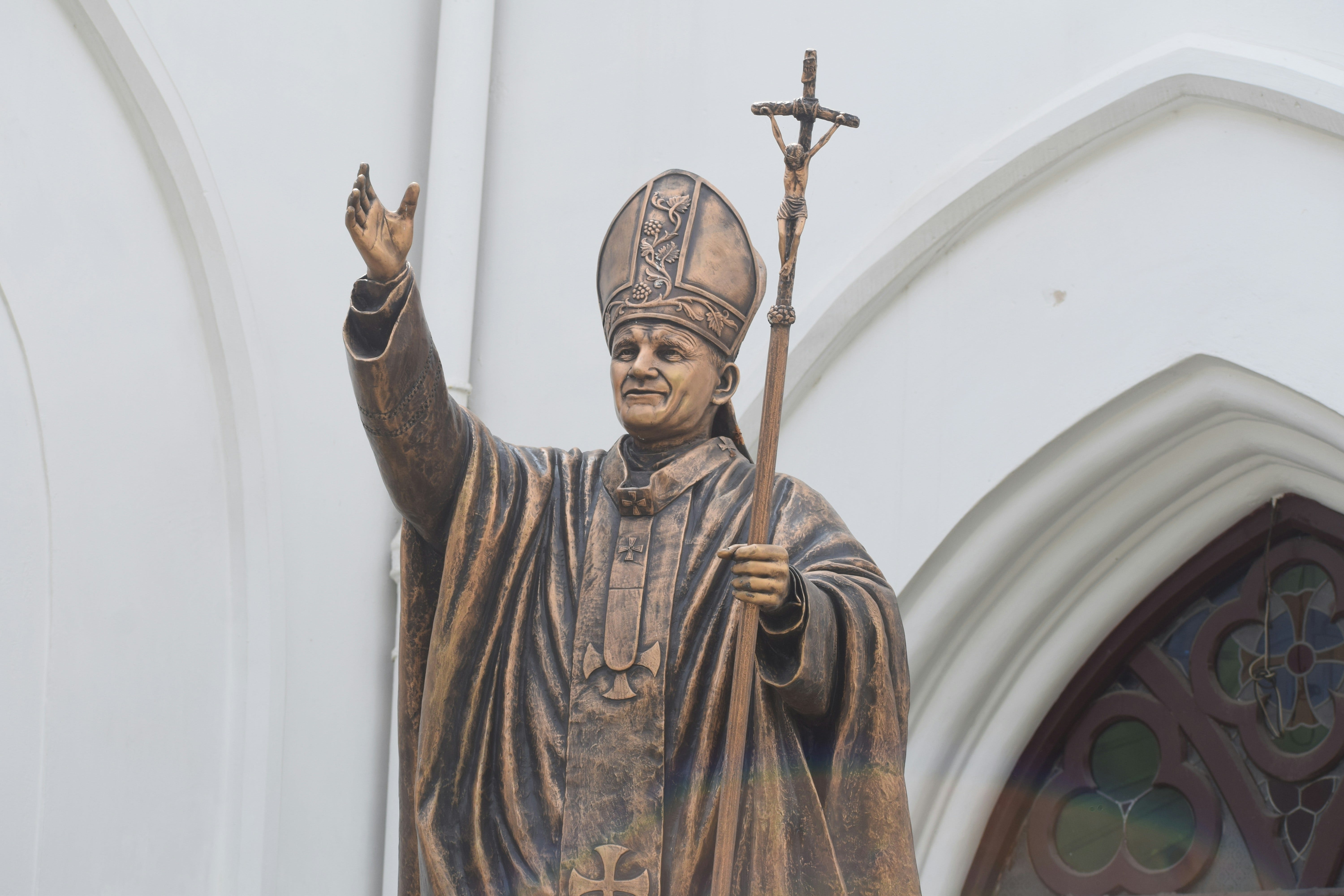
Over a hundred years after Tocqueville’s death, during the last of three papal visits that Pope St. John Paul II made to the U.S. (October 1995), the Holy Father gave a homily in Baltimore in which he discussed the significance of democracy and religious tolerance. He also called on Catholics to live out the moral truths of the faith and to defend them. JPII said:
One hundred thirty years ago, President Abraham Lincoln asked whether a nation “conceived in liberty and dedicated to the proposition that all men are created equal” could “long endure”. President Lincoln’s question is no less a question for the present generation of Americans. Democracy cannot be sustained without a shared commitment to certain moral truths about the human person and human community. The basic question before a democratic society is: “how ought we to live together?” In seeking an answer to this question, can society exclude moral truth and moral reasoning? Can the Biblical wisdom which played such a formative part in the very founding of your country be excluded from that debate?
... Surely it is important for America that the moral truths which make freedom possible should be passed on to each new generation. Every generation of Americans needs to know that freedom consists not in doing what we like, but in having the right to do what we ought.
The pope speaks positively of democracy but also reminds Americans that such a democratic society cannot “long endure” without the commitment to truth and morality. We prioritize these goals, as Tocqueville and even Washington alluded to, through authentically living our faith. God has blessed us by placing us in a land of religious freedom where we “might serve him without fear, in holiness and righteousness before him all the days of our life” (Lk 1:74-75).
Religious liberty, at least in the U.S., owes some of its conceptualization to Locke’s tolerance and the democratic ideal of freedom. But this freedom has been taken up by Catholic social teaching, which seeks to defend the dignity of the person in every dimension of his or her humanity. Vatican II’s declaration on religious freedom, Dignitatis Humanae, solidifies as a basic human right this liberty to practice one’s own faith, which can be traced back to the divine institution of man’s free will and weighed out of deep respect for the dictates of every individual’s conscience.
The Catechism of the Catholic Church also states:
The right to religious liberty is neither a moral license to adhere to error, nor a supposed right to error, but rather a natural right of the human person to civil liberty, i.e., immunity, within just limits, from external constraint in religious matters by political authorities. This natural right ought to be acknowledged in the juridical order of society in such a way that it constitutes a civil right. (CCC 2108)
Such allowance is made (albeit not perfectly practiced) thanks to the very First Amendment of the U.S. Constitution, which reads:
Congress shall make no law respecting an establishment of religion, or prohibiting the free exercise thereof; or abridging the freedom of speech, or of the press; or the right of the people peaceably to assemble, and to petition the Government for a redress of grievances.
This ensures that the federal government offers neither favoritism nor persecution to any particular religion. It does not constrict public mass communications, thus giving the people of this country the opportunity to speak the truth. It permits us to express, in a peaceful manner, our concern and disapproval – again, an opportunity for us to stand up for the truth.
Though there has existed a longstanding prejudice against Catholics in this country since colonial times, the Church in America today celebrates the recognition of our religious liberties. The USCCB’s annual observance of Religious Freedom Week, which came to a close on Monday, seeks to draw the public’s attention (and the prayers of the faithful) to forms of religious persecution and discrimination in our own nation and abroad.
As we celebrate the 250th anniversary of the official adoption of the Declaration of Independence, we ought to recall the faith-filled sentiments that undergird our founding and inform the ethical decisions we make throughout our lives. As we say “God bless America!” with patriotic fervor, we are called not only to celebrate but also to cogitate upon the principles of freedom – to recognize that real freedom “consists not in doing what we like, but in having the right to do what we ought.” And how should we live our lives? How can we flourish alongside our peers, even those we disagree with but whom God loves equally as much as he loves us? Maybe it starts with reading the Word of God, listening and then acting upon the Divine Will.
Note: A shorter version of this article first appeared on the Midwest Theological Forum blog here.