
Glory and Magnificence: The Blessed Trinity
Saturday, May 30th Readings Reflection: Saturday of the Eighth Week in Ordinary Time

On this eve of Trinity Sunday, I would like to focus on the doxology at the end of today’s Epistle, written by St. Jude. The doxology reads as follows: “Now to [H]im [W]ho is able to preserve you without sin, and to present you spotless before the presence of [H]is glory with exceeding joy, in the coming of our Lord Jesus Christ, to the only God our Saviour through Jesus Christ our Lord, be glory and magnificence, empire and power, before all ages, and now, and for all ages of ages. Amen” (Jude 1:24-25 DRB).
St. Jude begins by identifying God’s ability to preserve man from sin. We know from our experience that every fallen human being—that is, except for Our Lord and Our Lady—commits a multitude of sins in his life. This experience does not contradict St. Jude’s words here but rather confirm the harmful mentality that leads to all sin, namely, the prideful rejection of divine grace. Pride causes us to reject God’s knowledge of our objective and ultimate good, which is union with Him. When we rely on God’s grace rather than our own fallen desires and erroneous idea of our good, we are able to resist even the greatest of temptations. When we do this, our souls remain in the state of grace, and we will be able to stand before Christ our Judge with joy rather than fear.
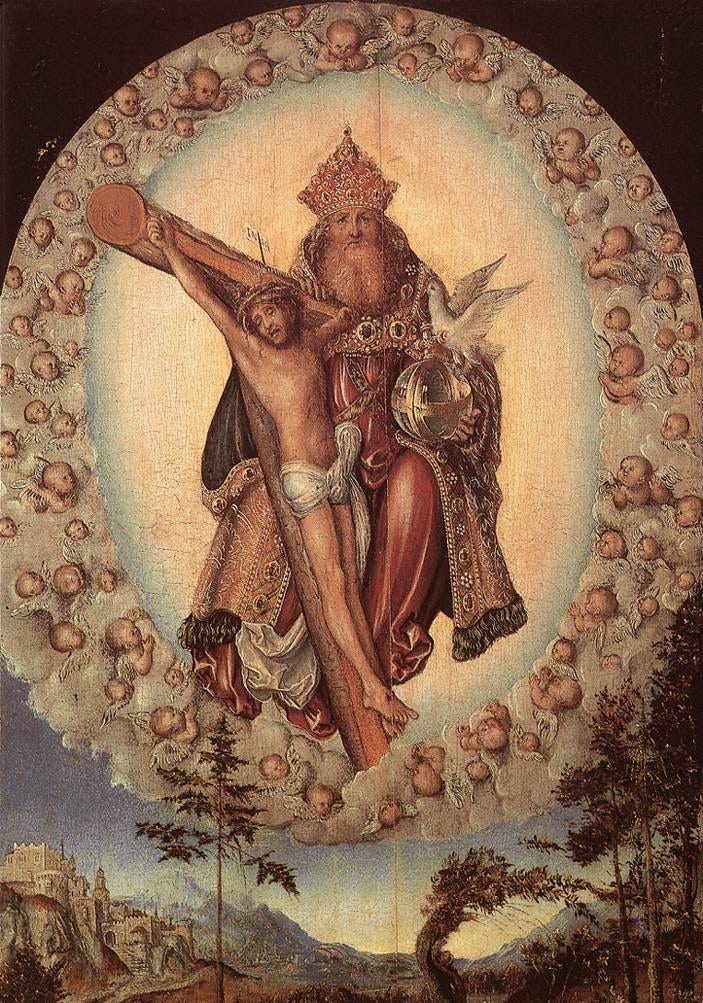
St. Jude refers to the “only God our Saviour through Jesus Christ our Lord.” This is not a heresy denying Christ’s divinity; rather, as the 18th century Bishop Challoner explains in his biblical annotations, St. Jude is referring to a beautiful reality and facet of our faith in the Trinity. We know there to be three divine Persons in one God; the three divine Persons are co-equal and co-eternal, sharing the same divine nature. As such, all three divine Persons participated in the redemption of mankind. While Christ gave His bodily life as the price of our redemption, the entire Blessed Trinity is the first cause of His doing so, as all three divine Persons participated in the Incarnation and inspired Christ to give His life for man (see Summa theologiae, III, q. 45, a. 5, respondeo).
St. Jude ends his epistle with the beautiful prayer for God to receive “glory and magnificence, empire and power, before all ages, and now, and for all ages of ages.” As we prepare to liturgically honor the Blessed Trinity tomorrow, may we make this our prayer too, filling our hearts with gratitude to the three divine Persons of the Blessed Trinity for Their infinite love by which we are able to attain eternal salvation.
There is something deeply sane about kneeling before God. It puts the soul back in order, like a room after a storm.