
Divine Providence in the Betrayal of Judas
Gospel Reflection for Wednesday, April 1st, 2026: Wednesday of Holy Week (Spy Wednesday)

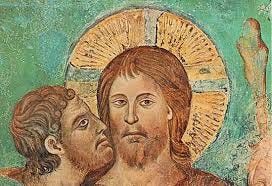
“…and as they were eating, he said, ‘Truly, I say to you, one of you will betray me… The Son of man goes as it is written of him, but woe to that man by whom the Son of man is betrayed! It would have been better for that man if he had not been born.’” Matthew 26:21; 24
Wednesday of Holy Week is traditionally called Spy Wednesday, as the Gospel records that Judas received the blood money for the betrayal of the Lord. The Scriptures do not speak well of the fate of Judas; the synoptics say that he should never have been born,1 while John records him being called the Son of Perdition,2 and the Acts of the Apostles records St. Peter quoting the Psalms that his habitation was to become desolate and his office let another take.3
It does not take much research to figure out that the writers of Scripture do not have hope for Judas’ fate. In the Gospel for today, Our Lord remarks that The Son of Man goes as it is written of Him. But does this include the betrayal? Was Judas only there to betray the Lord? And if this is the case, does that mean God created Him specifically for damnation? As we cross the threshold into the Sacred Triduum, let us contemplate Judas and the providence of God, and through that, I pray that recourse to God’s mercy is enlivened in the reader.
As Our Lord tells us, it was written that He would be betrayed:
“Even my bosom friend in whom I trusted, who ate my bread, has lifted his heel against me.” Psalm 41:9
And again:
“And they weighed out as my wages thirty shekels of silver. Then the Lord said to me, ‘Cast it into the treasury’—the Lordly price at which I was paid off by them. So I took the thirty shekels of silver and cast them into the treasury in the house of the Lord.” Zechariah 11:12–13.
Our Lord’s trusted friend, one of His Apostles, whom He had set aside for the mission of souls, whom He had made priest and bishop at the last supper, betrayed Him. Even after taking His bread, as the Psalm says. Surely this is a reference to the Holy Eucharist, as it was after reception of Holy Communion that Judas left.4 Further, the Prophet Zechariah comments on the price that Our Lord was bought for, 30 pieces of silver, the price of a slave. When taken with the application of Psalms 69 and 109 to Judas by St. Peter, we can see ample prophetic evidence that the Son of Man, indeed, goes as it is written.
Our Lord was bought for 30 pieces of silver, the price of a slave. When taken with the application of Psalms 69 and 109 to Judas by St. Peter, we can see ample prophetic evidence that the Son of Man, indeed, goes as it is written.
It would seem, then, that Judas was trapped in a fate that he could not get out of. But this is not correct. We have to look at the mystery of providence in order to fully understand that Judas chose to do this of his own volition and that even until the end, Our Lord willed his salvation.
It is important to begin with the understanding that God is closer to us than we are to ourselves, and so, ultimately, God is the first cause of the movement of our free will. St. Thomas teaches:
“And just as by moving natural causes He does not prevent their acts being natural, so by moving voluntary causes He does not deprive their actions of being voluntary: but rather is He the cause of this very thing in them; for He operates in each thing according to its own nature.5
Man is created for good and thus has a prelapsarian inclination to the good. Our wills naturally flow toward God. This inclination is given to man by God since He is the maker of his nature. Since He is the first cause, God is able to incline our wills toward anything. But this is not an external movement, but an internal movement, lest it be violent. But God has, by His providence, permitted that we sometimes inhibit our flow toward God. This is through sin. God permits the defects that allow man to place a barrier between them and God. St. Thomas writes:
“Since God, then, provides universally for all being, it belongs to His providence to permit certain defects in particular effects, that the perfect good of the universe may not be hindered, for if all evil were prevented, much good would be absent from the universe.”6
Here is where the mystery of providence shines through. Judas is moved by God toward the good, naturally. God wills his salvation according to His goodness. But He permits Judas to set up that barrier of sin so that the perfect good of the universe may not be hindered. What is the good in this case? The redemption of mankind. Make no mistake, Our Lord could have redeemed the human race in any manner He saw fit. He could have gone to the cross in any way He saw fit. But Judas, permitted by God, loved the silver more than he loved the Lord. His will was oriented toward the love of money and turned away from love of the Lord.
To that end, God allows Judas to fall away, and from this evil, He brings the perfect good: redemption of mankind. God knew, from the very foundation of the world, that Judas would be willed for salvation, in a general sense,7 but that he would choose to go to his own place.8 Even in the betrayal of Judas and even though Judas has utterly rejected God, in His providence, God still wills some good for Judas:
“But from the fact that He does not restrain the wicked from the evil of sin, He is said to abandon them: not that He altogether withdraws His providence from them; otherwise they would return to nothing if they were not preserved in existence by His providence.”9
It is here that we can see God’s great mercy. That even in Judas’ complete rejection of God, He still holds him in existence, which is always a greater good than not existing at all. God’s justice is united to His mercy.
These are difficult mysteries. It is difficult to wrap our minds around God allowing any man to choose to go his own way. Truly, though, the love of God must be chosen. God gives us everything we need so that we choose Him. He creates us and orders our will; He supplies sufficient grace to sustain our wills in the good, and He supplies sanctifying grace through the sacraments to continue our flowing out toward Him. Truly, it is up to each individual to cooperate with what God is granting that soul and to persevere to the end. Judas was called, in a general way, but he ignored it, and so God used that sin to bring about man’s redemption.
I pray you have a blessed Triduum and a Holy Easter!
For more from Dr. McGovern, visit his Substack at A Thomist, Dedicated to the Theological tradition of St. Thomas Aquinas. Exploring Thomas’ Spiritual Theology and topics in Christology and Mariology.
Matthew 26:24 and Mark 14:21.
John 17:12.
Cf. Acts of the Apostles 1:20. Cf. Psalm 69:25 and Psalm 109:8.
While this has been debated by some, St. Thomas teaches that Our Lord did give the Eucharist to Judas at the Last Supper, and Judas left afterward. His reasoning is that Christ serves as an exemplar of justice, as He did not deny a hidden sinner the Eucharist. Cf. Summa Theologiae IIIa q. 81, a. 2.
ST Ia q. 83, a. 1.
ST Ia q. 22, a. 2.
This willing his salvation is according to God’s antecedent will. Allowing him to fall away is according to God’s consequent will. Cf. ST Ia, q. 19, a. 6.
Cf. Acts of the Apostles 1:25.
ST Ia q. 22, a. 2.
The important point to note is that the Catholic Church currently does not make a claim on the final judgment of Judas. The Catechism of the Council of Trent states: Others, on the contrary, give themselves to such melancholy and grief as utterly to abandon all hope of salvation. Such, perhaps, was the condition of Cain when he exclaimed: My iniquity is greater than that I may deserve pardon. Such certainly was the condition of Judas, who, repenting, hanged himself, and thus lost soul and body.
But the current catechism states CCC 597:
The personal sin of participants (Judas, the Sanhedrin, Pilate) is known to God alone.
The important point Bishop Barron made in his now viral sermon on the topic is that there is no reverse canonization within the Catholic. It certainly is in the theological tradition: Augustine, Aquinas, etc. that Judas is in hell. I think Sacred Scripture reveals a lot toward that conclusion, "it is better if he were never born," or "son of perdition," etc.
I think the question that needs to be asked & I will address this in our video. What is the pastoral purpose of this line of thought? Why did the Church soften its view of Judas from the Catechism of Trent and the current Catechism? There will certainly be some cynicism to that question, but I think the Church has a much better understanding of depression as a medical condition. What Bishop Barron points out regarding this particular Passion reading of Matthew's gospel, a detail not present in the other two, Judas shows contrition for his action against the LORD:
"Then Judas, his betrayer, seeing that Jesus had been condemned,
deeply regretted what he had done.
He returned the thirty pieces of silver
to the chief priests and elders, saying,
"I have sinned in betraying innocent blood."
What I think folks are getting so upset about with Barron is looking at this from a more dynamic pastoral consideration: What if a priest is giving a homily for a family of someone who has committed suicide?
+Barron's sermon is ultimately about the radical mercy of our LORD Jesus Christ. We're about proclaiming the gospel?! What better good news to say to a family that depression, despair, anxiety, etc. can greatly reduce your son, daughter, brother, etc. culpability. Look here...the most horrible of actions to betray Jesus Christ; and yet, Judas...felt sorrow...was it possible that his mental health prevented him from coming back to the flock? What grace is our LORD Jesus Christ capable of?
+Barron's point isn't about an empty hell. Heck, it's not even about the fate of Judas. It's about what Jesus is capable of in the darkest of moments in the everyday lives of people.
Beautiful.