

(The following was originally written for Road To Purity by Kaleb Hammond)
One of the most painful aspects of porn addiction is shame. It’s why we hide our addiction, try to excuse or justify it and even attempt to scandalize others by tempting them to share in it with us, as though doing it with others will somehow take away our shame. In this way, shame feels a lot like guilt: we know deep down that there is something wrong with porn, no matter what pleasurable feelings it may give us in the moment, but when shame accuses and convicts us of our wrongdoing, we would rather do away with shame than with its true cause.
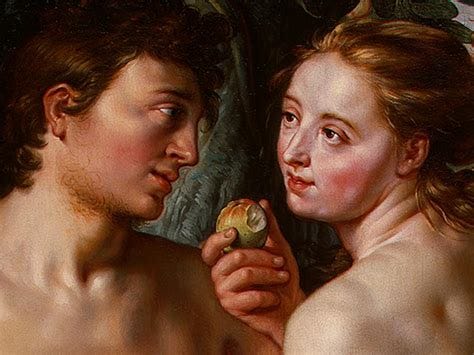
It’s easier to push down or ignore a negative feeling than it is to deal with the sin that causes it – to admit that what we feel is good for us is actually bad and harms our relationship with God, with our loved ones and with ourselves. But, like guilt, shame is a gift from God, a reminder of our dignity as human persons made in His image and created for the perfect happiness of unity with Him, not for slavery to the confused desires of the body which only serve to distract us from what we are really made for. The remedy for a gunshot wound is not to put a plaster over it and take painkillers: we have to remove the bullet causing the pain so that the wound can truly heal.
This is the message of Pope St. John Paul II in his famous work on the theology of the body. Shame, he says, was the response of Adam and Eve, our primordial parents, to original sin, which, by distorting their humanity through pride and selfishness, turned them against God and one another. Concupiscence, the disordering of our natural desires, is the most persistent and intensely personal consequence of original sin, leading us to forget that God made us in His image – not only individually, where through our spiritual soul we are far above the animals in our capacity to know and love God, but also collectively, where through interpersonal communion we image the eternal and infinite love of the three divine Persons of the Trinity.
This communal image of God in man, the Holy Father said, is the “spousal meaning of the body”[1] – the body is a sacrament of the person, expressing our subjectivity and our need for loving relationship with God and others as a sacramental sign, just as the sacramental signs of bread and wine in the Eucharist express the abiding presence and divine love of Christ for each of us. From the beginning, Adam and Eve knew this meaning of the body and lived it in their marital fidelity, giving themselves to one another freely as gifts in marriage, the “primordial sacrament”[2] representing God’s love and desire for union with man.
Since concupiscence was introduced into human nature, however, the spousal meaning of the body, its deeply personal and interpersonal character, has been corrupted through selfishness. Now, instead of giving ourselves in the freedom of the gift to one another within the properly marital expression of total commitment given to us by God, we use one another, depersonalizing and objectifying others and ourselves. In doing so, we conceal the image of God in us, both individually by enslaving our spiritual freedom and dignity to bodily passions, and collectively by seeing other persons as mere objects to satiate our desires and to be cast aside when we’re through with them. Accordingly, through concupiscence, the body is no longer a sacrament of the person, nor is sexuality a sacrament of the marital union between Christ and His Church which human marriage is meant to signify. Instead, it is just an instrument for my gratification, and I am only a slave to its lusts. As the Holy Father explains:
‘Concupiscence’ removes the intentional dimension of the reciprocal existence of man and woman from the personal perspectives ‘of communion,’ which are proper to their perennial and reciprocal attraction, reducing this attraction and, so to speak, driving it toward utilitarian dimensions, in whose sphere of influence one human being ‘makes use’ of another human being, ‘using her’ only to satisfy his own ‘urges.’[3]
Within this understanding of the theology of the body from Pope St. John Paul II, pornography is one of the most grievous, as well as prolific, expressions of concupiscence in the modern world. It teaches everyone, both men and women, young and old alike, whether in its explicit forms online or its more subtle influence in the over sexualized movies, TV series, commercials, novels and music that are accepted as normal today, that the human person is just an animal, without a spiritual intellect and free will destined for loving union with God and the saints in Heaven.
From a young age, men in particular today are taught that we are not designed to be loving husbands and fathers, sacrificing ourselves for the good of the family and thereby imitating the self-giving love of the Trinity; instead, we’re taught that to be a man is to be an animal, pulled by whatever urge is strongest, and that to deny these urges, to exert any kind of virtuous self-discipline is “dishonest,” “fake” and even “elitist” or “fanatical.” Likewise, women are taught that to be “feminist” means to imitate the supposed promiscuousness of men, objectifying themselves for the sake of sexual “conquests” and allowing or even encouraging other women to treat themselves as merchandise to be sold in the pornography marketplace (or, increasingly today, in prostitution, which is ultimately no different than pornography).
What answers does Pope St. John Paul II offer to this dehumanization and depersonalization caused by concupiscence and pornography? He gives several pieces of practical advice which can help anyone struggling with porn addiction or any other form of lust to escape from their secret slavery and rediscover their dignity as persons made in the image of God:
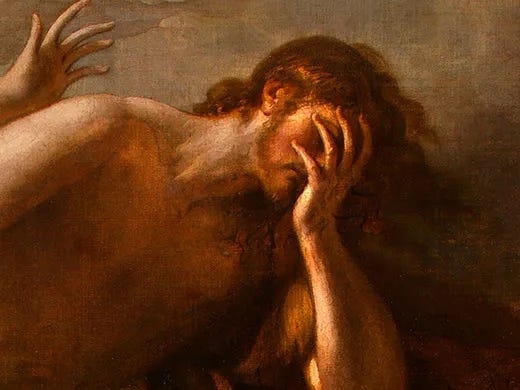
· Shame: The Holy Father teaches that, like guilt, we shouldn’t run away from shame. Although Adam and Eve felt shame first as an expression of guilt, of hiding from God in their sins, it also functions as a “boundary experience”,[4] as a natural way of protecting our God-given human dignity from the abuse of concupiscence, to reassert our subjectivity against objectification. Therefore, when we feel ashamed of our porn addiction, we should try and see it as a reminder that we are made for more, that we are made in the image of the Trinity and that the body is a sacrament of the person whose true freedom comes only through the self-giving love of interpersonal communion, whether in the sacrament of marriage or its higher elevation in “continence ‘for the kingdom of heaven’”.[5] This is why Adam and Eve felt no shame in their nakedness prior to original sin, and why married couples can be intimate without shame: “Only the nakedness that turns the woman into an ‘object’ for the man, or vice versa, is a source of shame.”[6]
· Modesty: Fashions, including clothing, change over time and vary by culture, but the principle of modesty is universal and perennial. The Holy Father says that modesty, like shame, promotes and preserves human dignity by shielding the body from what Scripture calls “the concupiscence of the eyes” (1 Jn 2:16 DRA), the “look” of lust mentioned by Christ (Mt 5:28) which turns the other person into a mere object of desire. This virtue is little promoted today, when both men and women dress in a way that is sexually provocative or at least undignified, concealing their nature as human persons made in the image of God for the sake of interpersonal communion. Contrary to modern attitudes, both men and women are to blame for this trend, and both are harmed by it. Averting your gaze from a woman who is half-naked or wearing clothes that accentuate, rather than veil in their sacredness, the sexual parts of the body, and dressing in a more dignified, masculine way yourself, can help to recover the virtue of modesty and hold up a countercultural mirror to the sexual exploitation which is now so rampant and leads countless men and women into sin. The Holy Father thus teaches,
When culture shows an explicit tendency to cover the nakedness of the human body, it certainly does not do so only for climatic reasons, but also in relation to the process of the growth of man’s personal sensibility. The anonymous nakedness of the man-object contrasts with the progress of an authentically human culture of morality. It is probably possible to confirm this point also in the life of so-called primitive peoples. The process of sharpening personal human sensibility is certainly a factor and fruit of culture.[7]
· Purity of Heart: In order to overcome “the concupiscence of the flesh, and the concupiscence of the eyes, and the pride of life” (1 Jn 2:16), it is necessary to cultivate what the Holy Father calls “purity of heart”.[8] By practicing the virtues of chastity and temperance, the human person can recover its place as the charioteer of the body, reining in its passions and appetites through the spiritual faculties of reason and free will, instead of being dragged behind them by the lusts of concupiscence. In the light of Christ, this virtue can then be combined with a piety which treats the body as “the temple of the Holy Ghost” (1 Cor 6:19).[9] By freely choosing to discipline the passions, the goal is not to destroy eroticism – quite the opposite. Liberated from concupiscence and properly ordered to the good of the person, the erotic is elevated to appreciate what the Holy Father, borrowing a term from Humanae vitae, calls “affective manifestations”[10] in the other person, signs of their individuality and personality, thereby strengthening relationships and causing sexual intimacy to become one of total self-giving love, with each seeking the good of the other instead of using them for mere gratification. This purified eroticism can then lead the heart to appreciate even higher beauties, up to God who is Beauty-itself, the true fulfillment of eros.[11]
To the modern world, all these explanations and answers from Pope St. John Paul II seem like outdated nonsense, the holdover of an age before Freud when religion denied our natural, animal drives and made everyone sexually repressed and miserable. But the truth is, you are more than just an animal. You are a human person made in the image of God, whose intellectual nature and capacity to love others in interpersonal communion through the body raises you above all material beings and destines you for participation in the Trinitarian beatitude of God – and so are the daughters, sisters and mothers which porn objectifies. You are made for more than slavery to bodily desires, or else to a puritanical denial of the body: through the heroic adventure of virtue, you can live as you were meant to, an incarnate spiritual soul and an ensouled human body all at once, fulfilled in every sense and in right order. Porn is ultimately a lie, a shallow, empty distraction from the divine mission for which you were made – never let the world tell you otherwise. If you dedicate yourself to the truth, by the power of God’s grace, you can overcome it.
Citations:
If shame and guilt are part of concupiscence, why should we not run away from them? Of themselves, they cannot do away with the tendency towards sin. They may temporarily help us refrain from acts of sin, which are attempts to practice virtue; but virtue is the fruit of the Spirit, which comes from living and walking in the Spirit (cf. Galatians 5:16-25). Holiness is beyond reason and self-restraint; and is a work of grace. Purity of heart cannot be practiced into existence. It is a function of relationship with God that opens us up to the grace to avoid sin. It enhances our will-power so that we can avoid sin from a position of strength rather than weakness; and it deals with our tendency towards sin.