
A Recap of A Faith That Builds Worlds Conference at Loyola University
Two weekends ago, Loyola University Chicago's Hank Center and Jesuit Media Lab collaborated to assemble authors, professors, and the "Pope's astronomer" for a day devoted to Catholic storytelling.

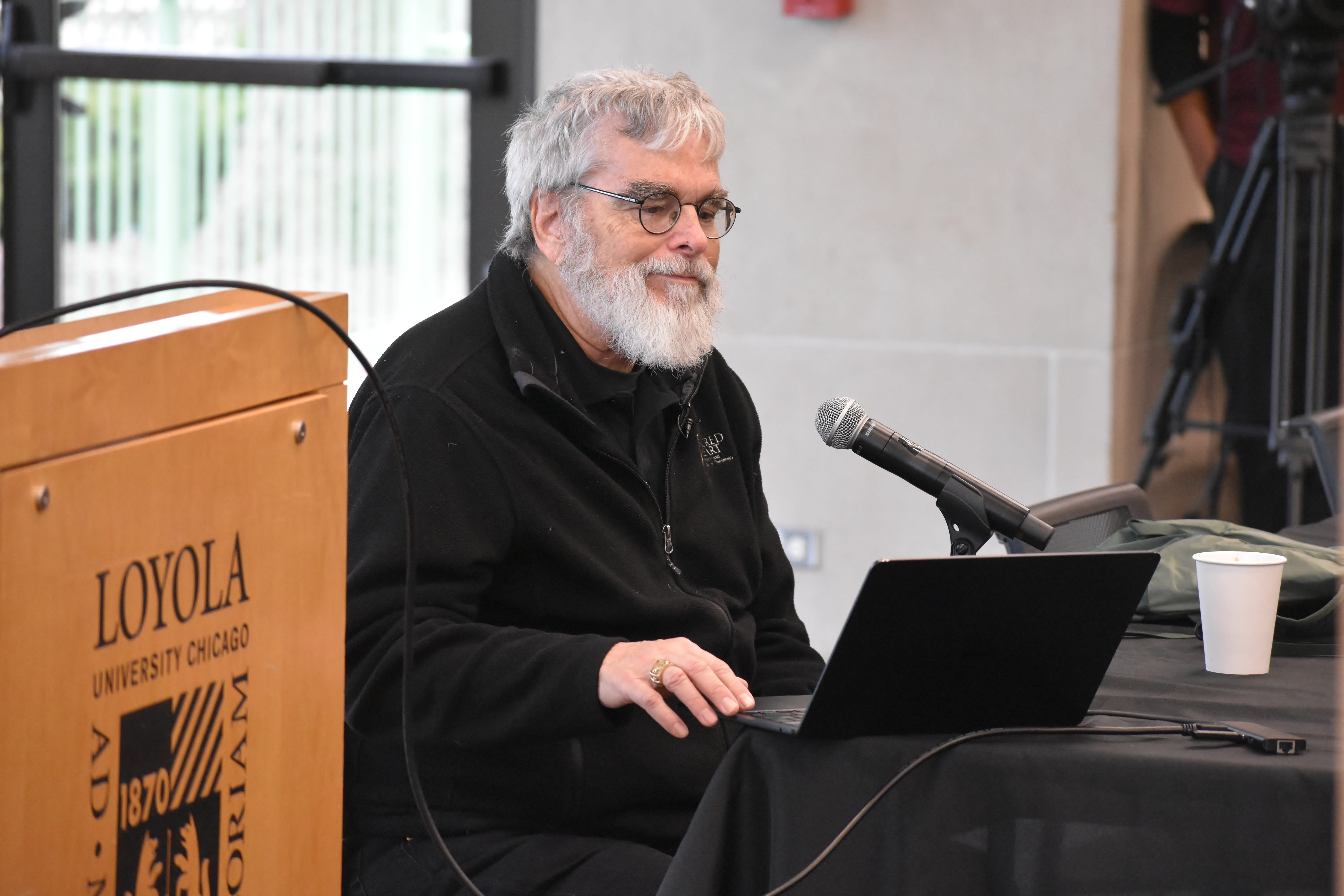
Attending the Faith that Builds Worlds Conference was a pretty last-minute decision. I asked my wife Ellen the weekend before if she was alright with me going. After all, it was a conference delving into the Catholic imagination that was only an hour and a half away! It would give me the rare chance of meeting the “Pope’s astronomer,” Brother Guy Consolmagno, SJ, who has also written some science fiction and Eric Clayton, author of My Life with the Jedi, whom I interviewed in 2024. It would also let me hear firsthand from Catholic sci-fi writers about their craft, something an aspiring fiction writer can always learn more about. Anyway, Ellen let me go to Chicago to get my nerdy creative juices flowing.
The panel discussion before lunch ran the gamut of imagination from robots to tabletop RPGs to St. Ignatius’s Spiritual Exercises to the role of monsters in horror films. Fr. Ryan Duns, SJ, noted that imagination doesn’t get cultivated much these days as it’s not something immediately monetizable.
The lunch break gave me time to peruse the Loyola University campus, checking out a nearby grotto with a Sacred Heart statue and the grandiose Madonna Della Strada Chapel. After the break, it was a treat to hear author/illustrator John Hendrix speak about the relationship shared between Tolkien and Lewis, how this relationship produced the finest fantasy of the last century, and walk us through his splendid book about these two literary behemoths, The Mythmakers. He amusingly noted how Tolkien disliked much of what he read, including the novel 2001: A Space Odyssey. The fact that he had read Arthur C. Clarke came as a surprise.
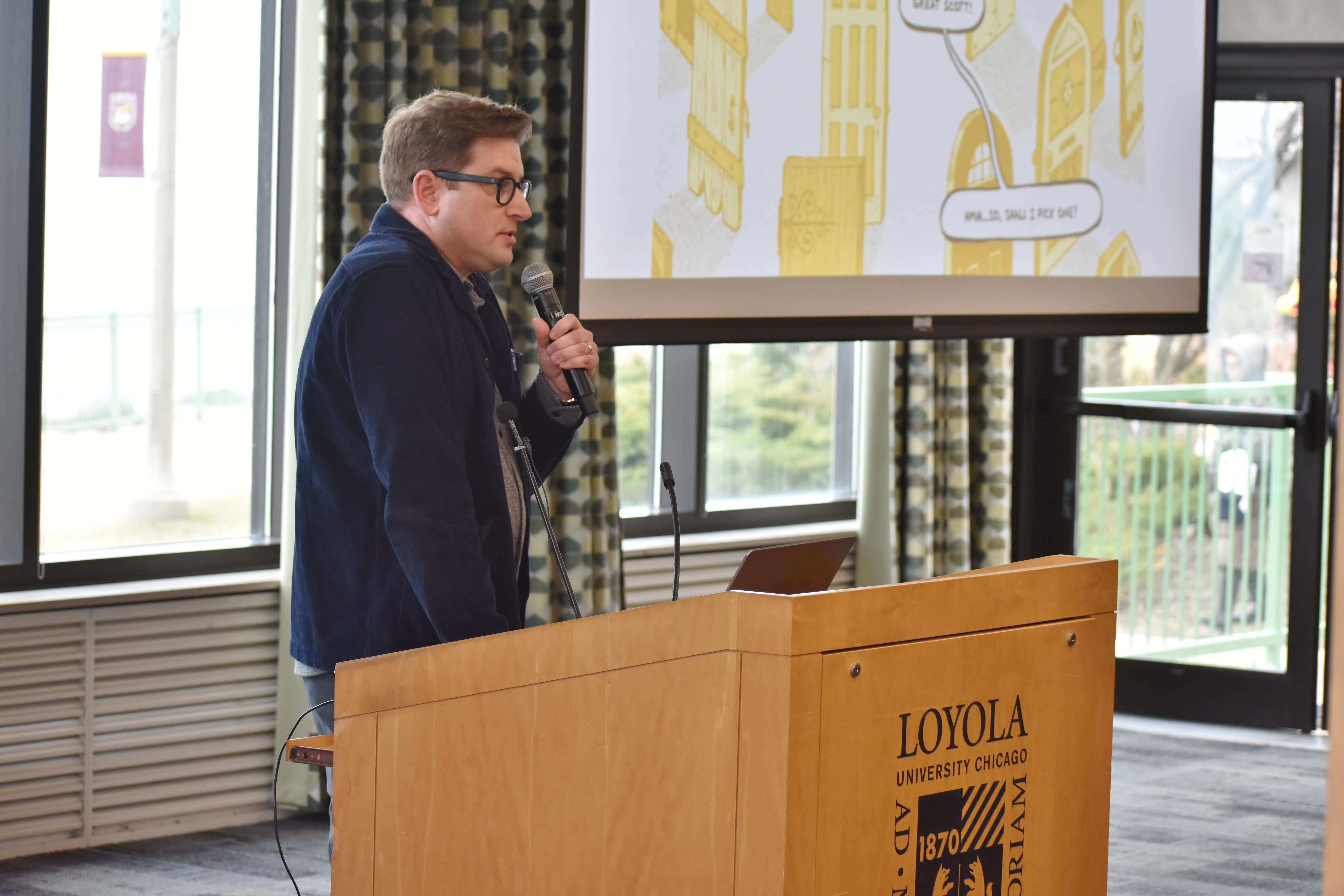
Hendrix’s topic served as a terrific segue into Dr. Joseph Vukov’s guided break, where he used the last paragraph from The Return of the King to illustrate how Samwise Gamgee displays the importance of the hearth (or home) and of humility, both of which are important for us as Christians to prioritize. Sam comes home, not as the hero of all Middle-earth but as a husband and father. When he arrives, he makes the anticlimactic observation, “Well, I’m back.” This is the peace of a good home and the humility of someone who has done great things. The Hobbits are exemplars of humility. It’s good for creative types, so often caught up in the imago that they sometimes forget to keep an eye on the ego, to hear about this essential virtue.
The keynote given by Brother Consolmagno was stellar. For a man who analyzes asteroids and meteorites and the things of the heavens, he’s a pretty down-to-earth guy. His talk revolved around sci-fi and the marks of good storytelling, bringing his own experience and experiments to bear on the topic.
The most sagacious and versatile thinkers of modern science have also been pioneers of the imagination. Clarke was not only a novelist but designed a communications satellite. Asimov was a professor, biochemist, and sci-fi writer. And Einstein expressed high esteem for the faculty of imagination. Consolmagno fits in nicely with this legacy, his mind teeming with exploration in both the literal and literary realms.
One of three necessary ingredients for good storytelling is honesty or whether the story is realistic, true to reality. Brother Guy is not the first in the Jesuit tradition to mention this. Harold C. Gardiner, SJ, who was a literary editor for America Magazine in the 1940s, stresses the absolute need for verisimilitude in the novel, as expressed in his booklet Tenets for Readers and Reviewers. Verisimilitude is a thing’s similarity to reality. To gauge a thing’s verisimilitude, we ask how realistic the depiction is compared to our lived experience. Consolmagno reiterates that if you’re not honest with your reader, you’re slighting them, and it’s not good storytelling.
This imperative for truthfulness is a cornerstone of our faith. Our Lord speaks of Himself saying, “I am the way, and the truth, and the life” (see John 14:6). And the Holy Spirit, the Paraclete, “the Spirit of truth,” guides us “into all the truth” (see John 16:13). We’d be remiss of our calling if we aimed at anything less than a realistic representation of human nature in fictional stories, especially when representing fallen human nature. Reality is what happens; stories are how we tell others about it, says Brother Guy.
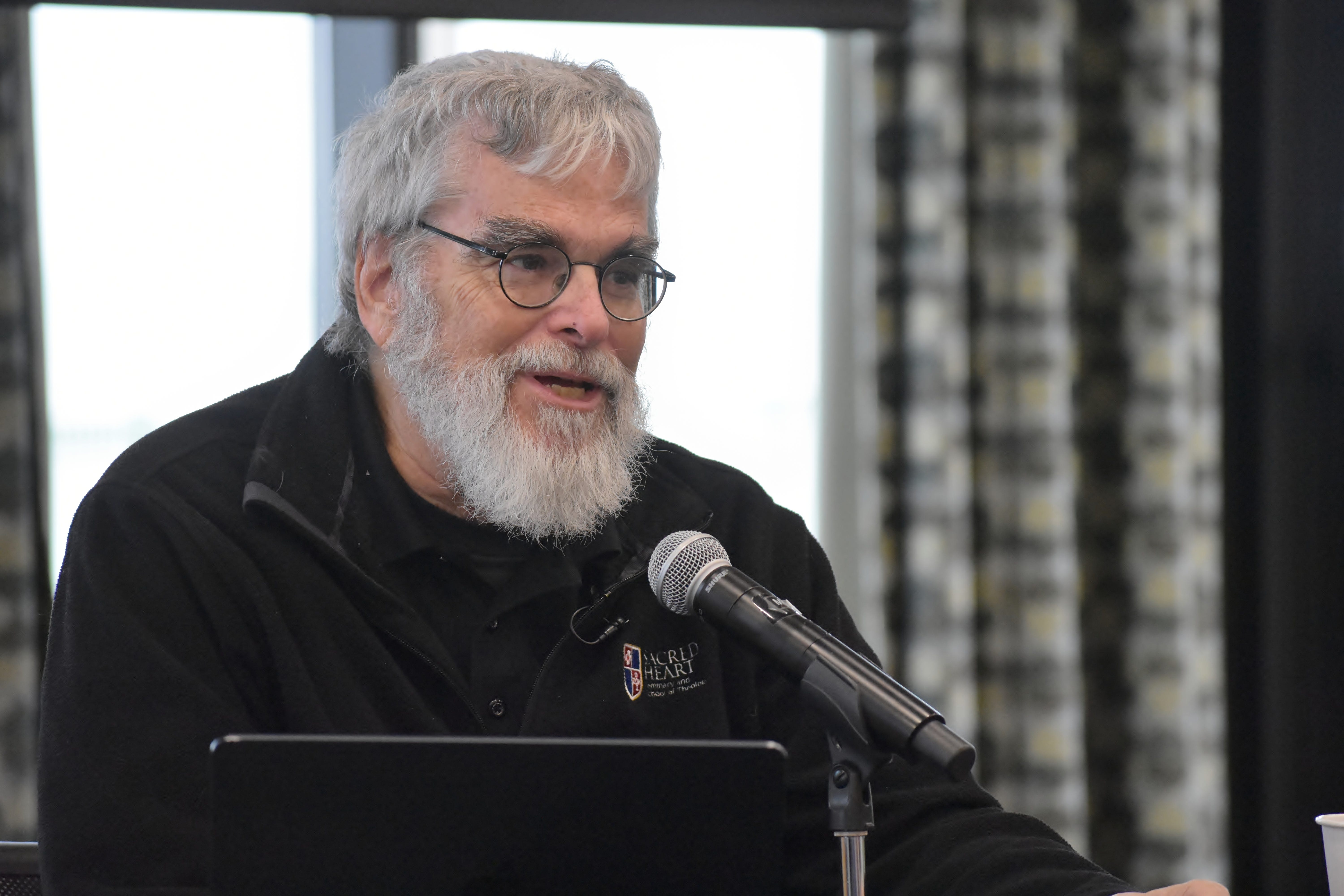
I had read a profile piece on Brother Guy some months ago, and in it, he told the interviewer that he sees God in the beautiful things of the cosmos, things that are often poignantly sad too. I had the opportunity to walk with the Jesuit scientist from one campus building to another on our way to the reception following his lecture. With the tether of a shared fixation on the beautiful, I posited to him a metaphysical query: “What is beauty?”
A true storyteller at heart, he sought to illustrate it, rather than produce a textbook definition. He related how, in college, he geared up for a 12-hour car ride back home. He went and bought some gooey donuts for the trip. When he returned to his family’s home and entered the kitchen filled with the aromas of his mom’s home cooking, there were only three donuts left in the box, and a wave of nausea came over him. Which food, he asked me, do you think is better? Obviously, the home-cooked meal! Beauty is like that, he told me. When you experience beauty, you feel it. Though it can’t be quantified, you know it when you sense it.
Sometime during the last two presentations of the night, through the broad windows looking out on Lake Michigan from the McCormick Lounge, I noticed snowflakes falling — at first sparsely, then in full force. The wild elements whirling about without made for a picturesque scene. I worried if the snow would make for a difficult drive back. But, by the time I left the reception, the precipitation has ceased as humbly and as silently as it began.
Like Samwise, I made the return journey. I went back to familiar faces and people. In place of Rosy was Ellen. Instead of little Elanor, there was baby Elizabeth. The next few pages of the legacy passed on to me were mine to write. As Brother Guy put it, we’re all part of a shared universe, of a story on the grandest scale. Together with God, we get to write a chapter of that story. The Vatican astronomer also reminded the audience that the unexpected is bound to occur. I wonder what our chapters in the story will look like…
Note: A shortened version of this reflection, along with other folks’ reflections of the day, can be read here.
PS: Loyola University Chicago has obviously been in the headlines for other reasons lately. Five days after this event with the Hank Center, a shooter killed 18-year-old Loyola business student Sheridan Gorman, not too far from the lakeside campus. This happened in the earlier morning hours of March 19, the Solemnity of St. Joseph, Spouse of the Blessed Virgin Mary. A memorial service was held that evening in the same Madonna Della Strada Chapel I had visited days before. Sheridan’s father, Thomas Gorman, said parents should always hug their kids tighter. Let’s pray for Sheridan, for the repose of her soul and the healing of her family and friends, and for her shooter’s repentance.
A week before the Faith that Builds Worlds conference, Loyola was in the headlines for more positive reasons. Pope Leo XIV sent a written message to those who participated in the Building Bridges Initiative: International Encounter for Peace and Reconciliation conference, which the university hosted on March 7. The pope encouraged those present to “be co-workers for peace with Christ.”