
A Hundred Times More
Memorial of Saint Philip Neri, Priest | 1 Peter 1:10-16 | Psalm 98 | Mark 10:28-31

Peter has done the math and he wants credit.
“We have given up everything and followed you.” It is not quite a complaint - the life has been worth it, and Peter knows this - but it is an accounting. He has left nets, a boat, a house, a father. He is presenting the ledger and waiting to see what Jesus makes of it.
Jesus does not rebuke him. He receives the accounting and returns it with interest so excessive it becomes almost comic: “There is no one who has given up house or brothers or sisters or mother or father or children or lands for my sake and for the sake of the Gospel who will not receive a hundred times more now in this present age.”
Not eventually - not in the age to come only. Now. In this present age.
And then, before moving to the eternal life that waits in the age to come, Jesus adds something in almost the same breath, in a clause so quiet it is easy to miss: “with persecutions.”
He does not explain it. He does not soften it or qualify it or develop it into a theology of suffering. He simply includes it in the math, as though it belongs there naturally alongside the houses and brothers and sisters and lands. Persecutions too. The hundredfold comes with a cost that is named but not dwelt on. It is part of the promise, not a footnote to it.
Peter’s first letter, written to communities scattered across Asia Minor, opens with a reflection that gives the Gospel promise deep context. The prophets who foretold the grace of Christ, Peter says, did not live to see what they proclaimed. They searched and investigated, the Spirit within them pointing past their own horizon, and then it was “revealed to them that they were serving not themselves but you” - the generations that would come after, the people who would receive what the prophets had announced without living to see its fulfillment.
This is a profound and humbling theology of vocation. The work we do in faithfulness to God is not primarily for ourselves. We are serving people we may not live to meet, in a time we cannot see, through a grace that is always already pointing past us. The prophets did not receive the hundredfold in their own lifetimes, at least not the fullness of it. They served the future on the testimony of the Spirit.
“Things into which angels longed to look.”
What the prophets announced, what the angels strain toward, what Peter and the disciples are living inside without yet fully comprehending - this is the grace that 1 Peter calls us to receive with girded minds and sober hope. “Set your hopes completely on the grace to be brought to you at the revelation of Jesus Christ.” The full hundredfold is still arriving. We live in the middle of the promise.
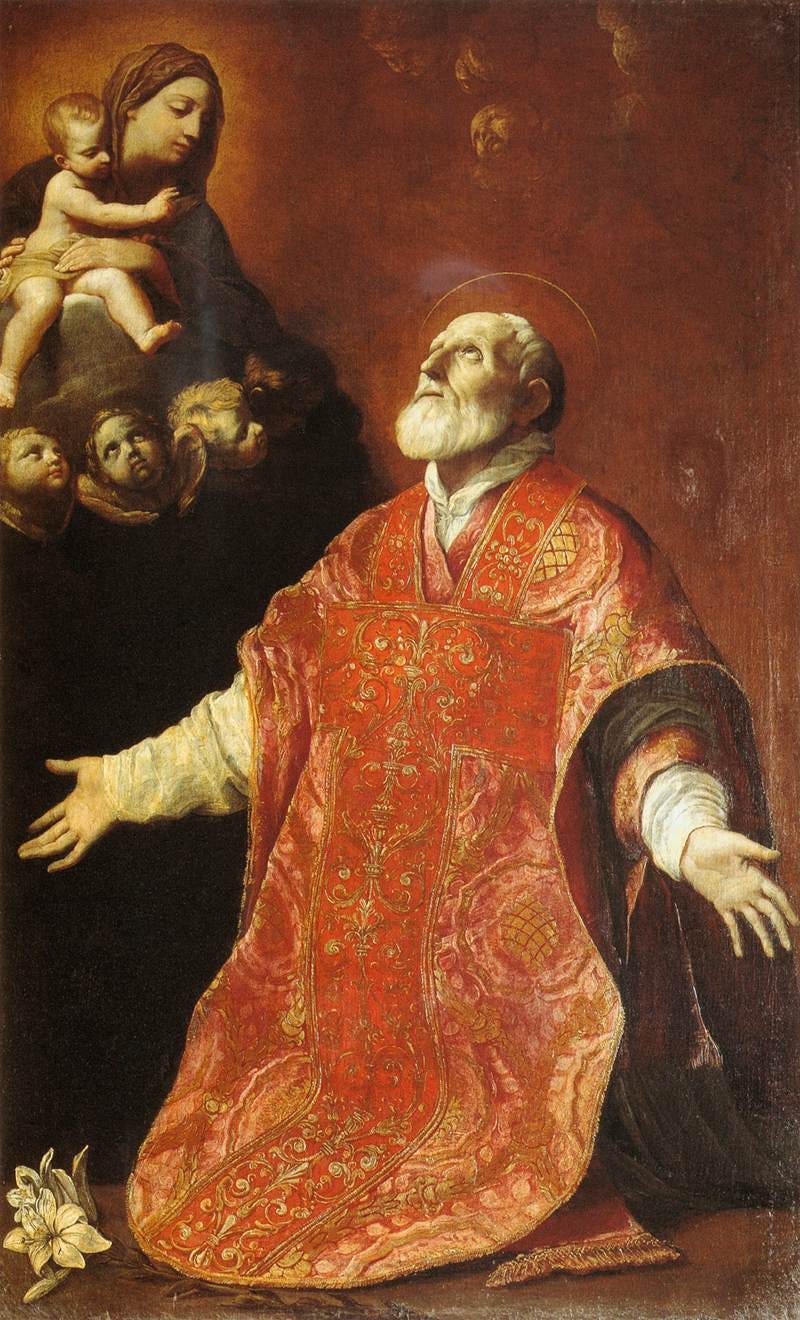
Today the Church celebrates Philip Neri, who went to Rome in 1534 with almost nothing and spent the next eighteen years living in poverty, working among the poor, spending hours each night in prayer in the Catacombs of San Sebastiano. He did not found a religious order by plan. He built - slowly, almost accidentally, through friendship and joy and the daily encounter with Scripture - a community that gathered around him because something in him was worth gathering around. The Congregation of the Oratory grew out of conversations, out of laughter, out of the cheerfulness of a man who had discovered that holiness was not grim.
Philip Neri received the hundredfold in the present age. Not houses and lands in the literal sense, but brothers and sisters beyond counting - the community of souls who found in his company something they could not find elsewhere. He served not himself but them, and through them a tradition of formation that has shaped Catholic intellectual and spiritual life for five centuries.
He is also, perhaps, a gentle corrective to Peter’s accounting instinct. Philip was famous for deflecting credit, for refusing to let the spiritual life become a ledger of sacrifices offered and rewards expected. The hundredfold, in his life, arrived as gift rather than wage, and he received it as such, with the joy of someone who had never quite believed he deserved it.
“Many that are first will be last, and the last will be first.”
Jesus ends with the reversal, and it follows Peter’s accounting directly enough that the connection is difficult to miss. The one who presents the ledger most carefully - who has calculated the sacrifice and is waiting to see the return - may be the one most surprised by where he ends up. Chrysostom, preaching on this passage, notes that Jesus receives Peter’s declaration without rebuke but immediately introduces the reversal as a warning: the hundredfold is a gift, not a wage, and the accounting instinct may itself be the thing standing in its way.1 The hundredfold is not a transaction. It cannot be managed, optimized, or claimed. It arrives, in the present age, in the form of a community you did not build on purpose, a household larger than your walls, brothers and sisters you did not choose who turn out to be exactly what you needed.
The domestic church lives this. The family that organizes its life around the Gospel - that prays together, receives the Sacraments together, forms its children in the faith, opens its table to the people God sends - discovers that its household is not diminished by the giving, but rather expanded. The Second Vatican Council, in Lumen Gentium, names the family precisely as “the domestic church”2 - not a lesser version of the Church’s life but a genuine participation in it, the site where the hundredfold community takes its most fundamental, immediate, and irreplaceable form.
And the generational thread from 1 Peter runs through the domestic church too. Gaudium et Spes describes the family as a participation in the covenant, called to manifest Christ’s presence in the world through fidelity across generations.3 The parent who prays beside a child who seems not to notice, the grandparent who keeps faith through the long years, the household that forms its children in what it cannot be certain they will carry - these are the prophets of the domestic church, serving not themselves but a generation they may not live to see fully formed. The fruit may arrive after the farmer. The angels are watching.
Philip Neri served Rome for fifty-five years and died at the age of eighty, on the feast of Corpus Christi, surrounded by the community his joy had gathered. He had given up Florence and a merchant’s future and received in their place a household of saints. The math, in the end, was not even close.
Domus Formation offers tracks of daily prayer and formation for families, men, women, teens, and those in the second half of life. The first school of faith is the home, and every member of it deserves to be formed. WeAreDomus.com
If Catholic fiction that takes the Communion of Saints seriously - as doctrine, not sentiment - is what you are looking for, I am writing two things. Lux Perpetua is a serial novel publishing weekly in two tracks, set in Alton, Illinois, at the edge of the Mississippi - a story of custody and fidelity and a flame passed forward across centuries. And Two Lamps is a weekly short story on Substack, each one braiding two saints from different centuries into a single imagined meeting. Both are for the kind of reader who believes the imagination is also a faculty of faith.
Deacon Michael Halbrook is husband to Suzanne, father of four sons, and a permanent deacon of the Diocese of Springfield in Illinois. He serves at St. Elizabeth Parish in Granite City. He is the founder of Domus Formation, a collection of Catholic prayer and formation resources for every stage of life, and he writes at DeaconMichael.net.
John Chrysostom, Homilies on the Gospel of Matthew, Homily 64 - on Peter’s declaration “we have forsaken all” and the promise of the hundredfold, with a warning against the accounting instinct that expects reward as wage rather than receiving it as gift.
Second Vatican Council, Lumen Gentium §11 - “The family is, so to speak, the domestic church.” The household ordered around the Gospel is itself the site of the hundredfold community in the present age.
Second Vatican Council, Gaudium et Spes §48 - on the family as a participation in the covenant, manifesting Christ’s presence in the world through fidelity across generations - the theological grounding for the 1 Peter argument about serving not ourselves but those who come after.
Fabulous reflection Michael, thank you.